Deadly Gondola Crash Shakes Swiss Ski Resort of Engelberg
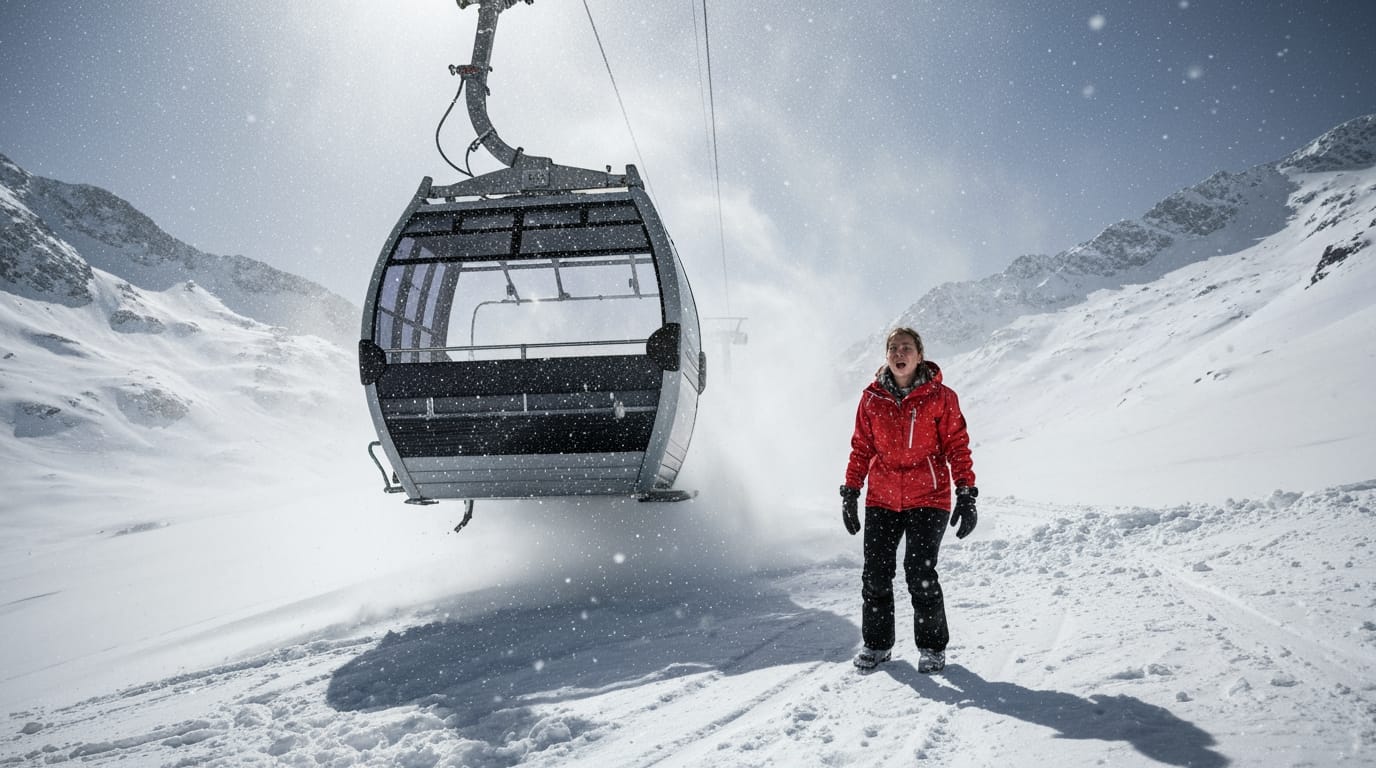
Engelberg, Switzerland – A routine ski day in the heart of the Swiss Alps turned tragic Wednesday morning when a gondola cabin detached and plunged down a snowy mountainside at the popular Engelberg-Titlis resort, resulting in one fatality. The incident, which occurred amidst strong winds, has prompted a full-scale investigation and led to the evacuation of scores of other passengers, casting a somber shadow over the usually bustling winter sports destination.
Tragic Incident Unfolds on Titlis Xpress
The fatal accident took place shortly before 11:00 AM local time on the Titlis Xpress Trübsee-Stand gondola line, a key artery transporting skiers and snowboarders to the higher reaches of the resort. A single gondola cabin separated from its cable, plummeting down the steep, snow-covered slope. Authorities confirmed that one individual, who was the sole occupant of the cabin, sustained fatal injuries. The identity of the victim has not yet been released.
Emergency services, including air-rescue service Rega, were swiftly dispatched to the scene, where a major operation unfolded. Nidwalden cantonal police, along with resort officials, initiated an immediate response, securing the area and beginning the complex task of evacuating approximately 100 to 200 people from 40 other gondolas that remained suspended on the now-halted lift.
Winds Eyed as Potential Factor in Accident
While the precise cause of the gondola's detachment remains under investigation, strong winds have emerged as a significant area of inquiry. Weather reports indicated gusts up to 93 kilometers per hour (58 miles per hour) in the region at the time of the crash. Norbert Patt, managing director of Titlis Bergbahnen, the lift operating company, noted that the Titlis Xpress has wind alarms that trigger at 40 km/h and operations are required to cease when speeds reach 60 km/h. However, it remains unclear whether an alarm was triggered or if operations were suspended before the incident.
Senad Sakic, an official with the Nidwalden cantonal police, stated that preliminary information suggests the gondola crashed "shortly after the Trübsee middle station." The gondola cabin reportedly detached and rolled over multiple times after impact. The ongoing investigation, spearheaded by the Nidwalden cantonal police in cooperation with the Swiss Accident Investigation Board (SAIB), will meticulously examine all factors, including weather conditions, technical malfunctions, and operational procedures.
Swiss Cable Car Safety Under Scrutiny
Switzerland boasts an extensive and generally highly regarded cable car network, with approximately 2,400 installations in operation across the country. Safety is paramount in their operation, overseen by federal bodies like the Federal Office of Transport (FOT) and the Intercantonal Concordat for Cable Cars and Ski Lifts (IKSS). These bodies conduct regular inspections and enforce stringent regulations to ensure passenger safety.
Ski lift accidents, particularly those involving fatalities, are rare occurrences in Switzerland. The most devastating incident in recent history occurred on July 12, 1972, when a cable car's traction cable snapped between Betten and Bettmeralp, leading to 13 deaths and a subsequent tightening of safety regulations and increased inspections across the industry. More recently, a 1996 gondola accident at Riederalp, which killed one ski instructor and injured 18, resulted in convictions for negligent homicide against two engineers and a government inspector for design errors. In 2024, the IKSS reported 65 incidents and accidents, resulting in 20 injuries, a decrease from previous years. However, the Swiss National Accident Insurance Fund (SUVA) indicates that, on average, one person loses their life each year in a workplace accident within the cable car industry.
Norbert Patt of Titlis Bergbahnen expressed the company's profound shock following Wednesday's event. "This was an extraordinary event that came 'out of the blue'," Patt stated, emphasizing that safety is the foremost priority for mountain railway operators. He extended condolences to the victim's family and assured full cooperation with the investigation, pledging to make all available camera footage accessible to investigators.
Broader Implications for a Ski Nation
The incident at Engelberg-Titlis, a major draw for both domestic and international tourists, inevitably raises questions about the inherent risks associated with mountain transport, even in a country renowned for its safety standards. The resort, the largest in central Switzerland, offers extensive marked runs and relies heavily on its cable car systems to access high-altitude skiing.
The comprehensive investigation by the SAIB and cantonal police will be crucial in determining not only the immediate cause but also any systemic issues that may have contributed to the accident. The findings could potentially lead to further enhancements in already robust Swiss cable car safety protocols. For now, the focus remains on understanding how such a rare and tragic event could occur, providing support to those affected, and reinforcing public confidence in a mode of transport essential to Switzerland's alpine economy and identity.


