Berlin Rejects U.S. Security Strategy's "Outside Advice," Signaling Deep Transatlantic Fissures
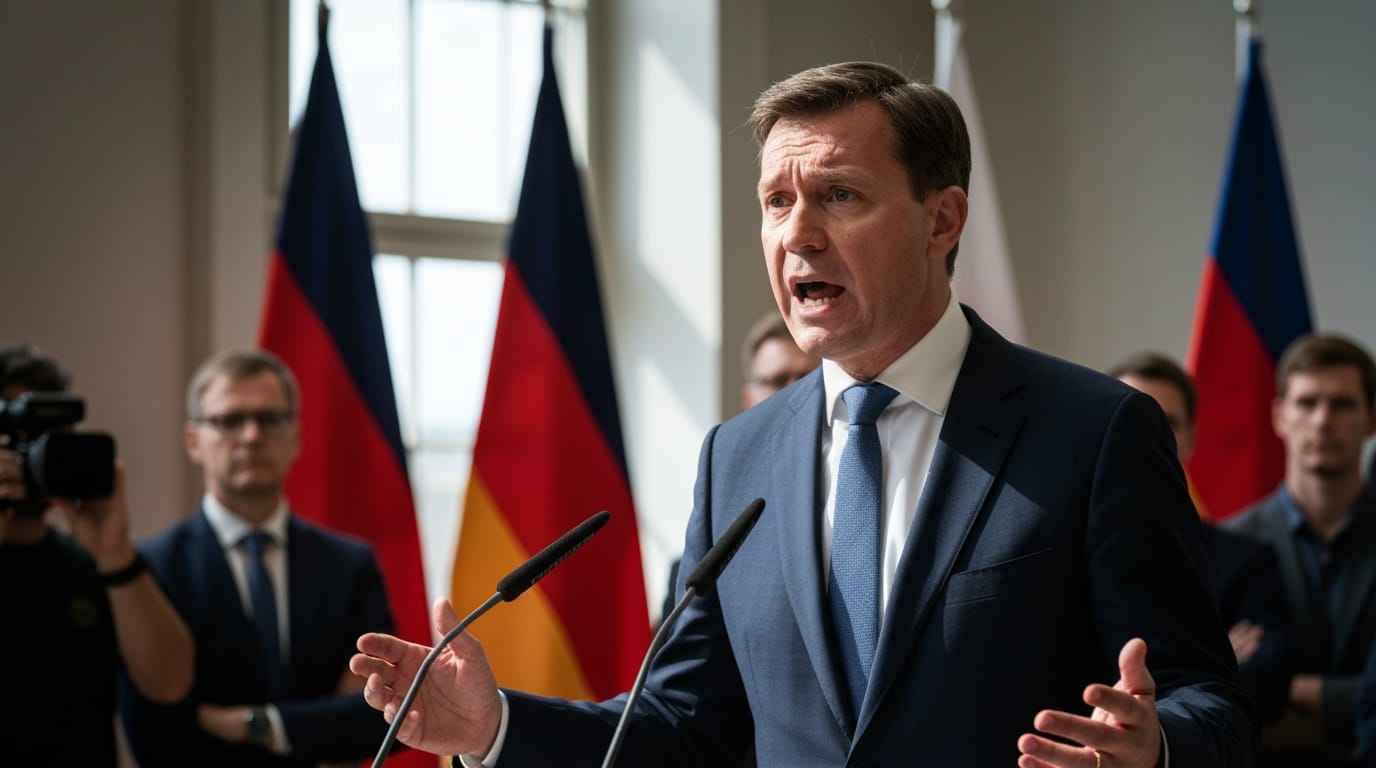
Berlin has sharply rebuked the latest U.S. national security strategy, unequivocally stating that it "does not need 'outside advice'" on its internal affairs or geopolitical direction. The pointed criticism from German officials underscores a growing divergence in strategic vision across the Atlantic, particularly concerning Europe's societal trajectory, foreign policy autonomy, and the handling of critical international conflicts. This unprecedented public dismissal highlights fundamental disagreements that threaten to reshape the long-standing alliance between two pivotal Western powers.
The diplomatic friction emerged following the release of a U.S. security document that, according to German representatives, contained "extraordinary language" directly critical of European allies. Far from traditional alliance discussions on military burdens or shared threats, the U.S. strategy ventured into highly sensitive areas, alleging that Europe is experiencing "civilizational erasure" due to migration policies, suppressing free speech, and stifling political opposition. It further called for "cultivating resistance to Europe's current trajectory within European nations," implicitly endorsing nationalist-populist movements across the continent. Such declarations have struck a raw nerve in Berlin, challenging the very foundations of transatlantic trust and cooperation.
An Unprecedented Rebuke and Shifting U.S. Priorities
The U.S. national security strategy, unveiled on December 4, signals a pronounced reorientation of American foreign policy under the current administration, pivoting sharply from decades of global engagement towards an "America First" worldview. This strategic shift reportedly prioritizes a regional focus, notably emphasizing a "Trump Corollary" to the Monroe Doctrine, which asserts U.S. dominance in Latin America. The document's explicit call for "burden-shifting" on Europe, encouraging the continent to "stand on its own feet" for defense, marks a significant departure from previous approaches where the U.S. actively led and guaranteed European security.
The contentious sections of the U.S. strategy have been interpreted by many European capitals, including Berlin, as an overt attempt to influence their domestic political landscapes and an endorsement of anti-establishment forces. By praising the "growing influence of patriotic European parties," a clear reference to far-right and Eurosceptic movements, the U.S. administration appears to be actively seeking to undermine the very institutions it once championed. Germany's swift and firm rejection reflects not just policy disagreements but a profound concern over the integrity and sovereignty of European political discourse. The U.S. document's tone also echoes sentiments expressed by Vice President JD Vance at the Munich Security Conference in February, where he downplayed Russian and Chinese threats while highlighting Europe's internal democratic failings and "uncontrolled migration" as primary security challenges.
Divergent Strategic Philosophies and the Ukraine Conundrum
The differing perspectives on Europe's internal challenges are mirrored by contrasting approaches to external threats, particularly the ongoing conflict in Ukraine. The U.S. strategy advocates for an "expeditious cessation of hostilities" and aims to "reestablish strategic stability with Russia," a stance viewed with considerable apprehension in European circles. This objective has sparked fears that Washington may push for a rapid peace deal that could compel Ukraine to make significant territorial concessions, potentially compromising its sovereignty and rewarding Russian aggression. Such a development would run counter to Germany's consistent and robust support for Ukraine's defense and territorial integrity.
Germany, under Chancellor Friedrich Merz, has been a leading voice in supporting Ukraine, providing substantial financial, humanitarian, and military aid. While recognizing the need for dialogue, Berlin's foreign policy tradition emphasizes multilateralism and a rules-based international order, favoring a more nuanced engagement with global powers like China and Russia rather than outright confrontation. This contrasts sharply with the U.S. strategy's more confrontational stance, particularly its long-standing focus on China as a primary competitor. Germany has historically sought to balance its transatlantic ties with its own economic interests and a desire for stability, often advocating for engagement over isolation.
Germany's "Zeitenwende" and the Quest for European Autonomy
Ironically, Germany itself has embarked on a significant overhaul of its security and defense policy, termed the "Zeitenwende" (turning point), in response to Russia's 2022 invasion of Ukraine. This shift has seen Germany pledge a substantial increase in defense spending, aiming to meet NATO's 2% GDP target, and aspiring to become a "main provider of security in Europe." Chancellor Olaf Scholz, in particular, has articulated a vision for Germany to assume greater responsibility for European security, signaling a departure from its post-Cold War pacifist leanings.
This German push for greater self-reliance, however, differs fundamentally from the U.S. strategy's coercive tone. Germany's efforts are largely framed within the context of strengthening the "European pillar in NATO" and fostering "European strategic autonomy," which is understood as the ability to make and act upon its own decisions in foreign and security matters, either in cooperation with partners or independently if necessary. This concept does not imply a rejection of alliances but rather a greater capacity to contribute to and lead within them. French President Emmanuel Macron has been a vocal proponent of European strategic autonomy, sometimes advocating for a more independent path from the U.S., a position Germany approaches with caution, preferring to integrate such autonomy within the existing NATO framework. The debate within Germany often centers on how to achieve this autonomy without undermining the crucial role of the U.S. in European security.
The Fragile Transatlantic Bond and Future Challenges
The recent exchange underscores the increasing fragility of the transatlantic bond, which has historically been a cornerstone of global stability. While Germany and the U.S. share deep cultural, societal, political, and economic ties, persistent policy differences and an evolving global landscape are testing the alliance. The U.S. strategy's critical stance on European values and institutions risks alienating key allies and potentially exacerbating existing tensions within the EU by empowering Eurosceptic factions.
For Germany, the U.S. shift presents a complex challenge. While Berlin has long valued the U.S. as an indispensable security guarantor, especially within NATO, it also recognizes the imperative to bolster European defense capabilities and develop its own strategic voice. A potential reduction of the conventional U.S. presence in Europe, as hinted by the U.S. strategy, would necessitate an even greater commitment from Germany and its European partners to collective defense. This delicate balancing act involves not only increasing military readiness and spending but also navigating diverse perspectives among European allies on the nature and scope of strategic autonomy.
Conclusion
Germany's forceful rejection of the U.S. security strategy's "outside advice" marks a critical juncture in transatlantic relations. It highlights a widening chasm in fundamental values, strategic priorities, and approaches to international order. As the U.S. doubles down on an "America First" posture, advocating for European self-reliance while simultaneously criticizing its internal policies, Germany is left to champion a multilateral, values-based approach. Berlin's ongoing "Zeitenwende" reflects its commitment to a more robust and autonomous role in European and global security, but it also faces the daunting task of fostering greater European unity and capacity in an increasingly volatile world. The coming years will determine whether the transatlantic alliance can adapt to these profound shifts or if the divergent paths of these key partners will lead to a more fractured international landscape.


