Berlin Transforms Potato Surplus into Community Bounty
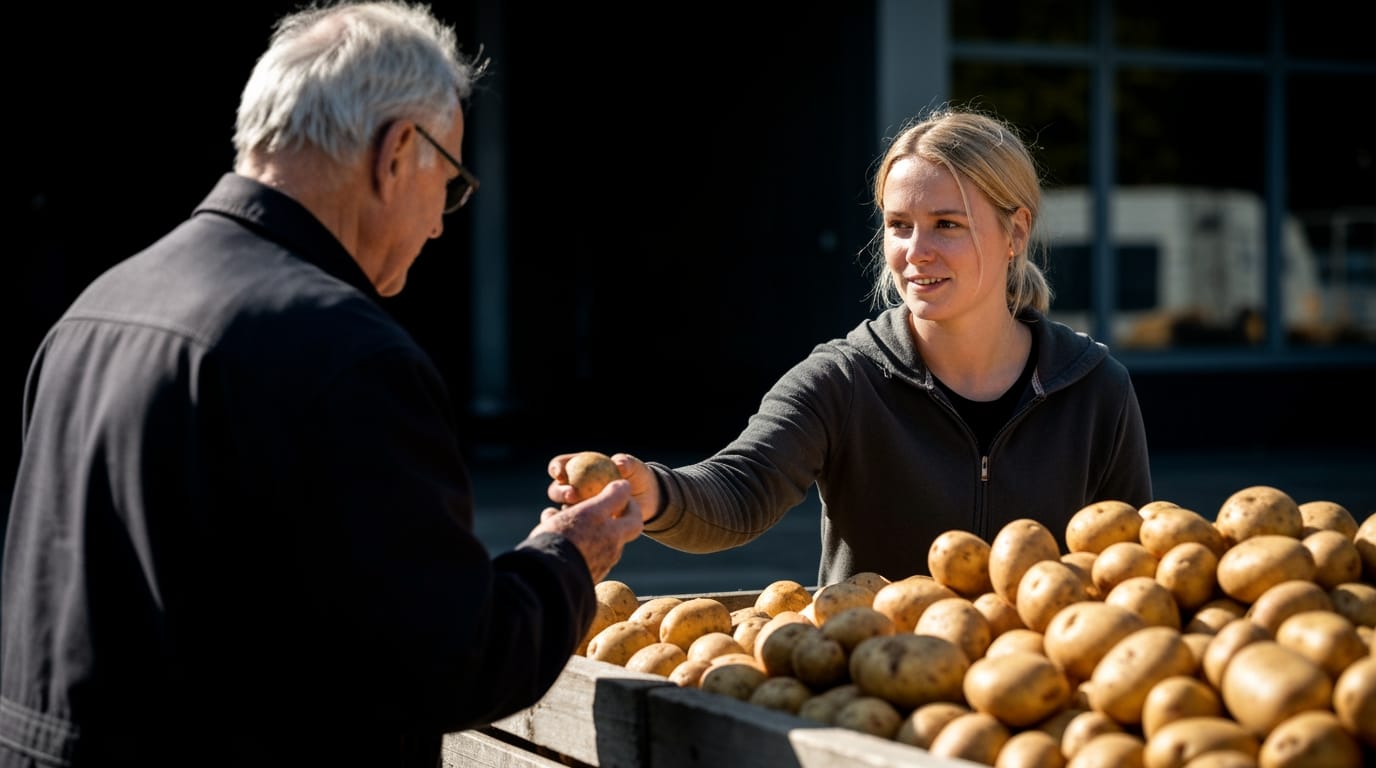
Berlin, Germany – Millions of kilograms of high-quality potatoes, once destined for potential waste due to an unprecedented agricultural surplus, are now being distributed free of charge across Berlin. A collaborative effort spearheaded by the Berliner Morgenpost newspaper and the search engine Ecosia has mobilized an extraordinary initiative to prevent 4 million kilograms (4,000 tons) of perfectly edible produce from being discarded, highlighting the complex challenges within modern food supply chains and inspiring a city-wide effort to feed its residents.
A Bumper Harvest's Unintended Consequence
The genesis of this massive giveaway traces back to an exceptionally bountiful potato harvest across Germany. This year, the nation recorded over 13 million tons of potatoes, marking the highest yield in the last 25 years and exceeding the long-term average by a significant 17%. While seemingly a positive development, this abundance created a severe market imbalance: supply far outstripped demand.
One farm in Saxony found itself with an estimated 4,000 tons of potatoes in storage near Leipzig, despite a trader having initially ordered the harvest. After the potatoes were harvested and stored under optimal conditions, the market price plummeted, rendering their commercial sale unprofitable for the trader. Although the financial agreement between the farmer and the trader was settled, the massive quantity of potatoes remained without a destination, posing a significant waste dilemma for the farmer. The situation underscored what Berliner Morgenpost termed "the absurdities of our food system," where high-quality food faces waste simply because selling it is no longer economically viable.
From Farm to City: A Collaborative Rescue Mission
Recognizing the impending waste of such a substantial and nutritious crop, the farm reached out to find a solution. This led to the formation of a crucial partnership between the Berliner Morgenpost and Berlin-based search engine Ecosia. Ecosia stepped forward to finance the considerable logistical undertaking of transporting the 4,000 tons of potatoes from the storage facilities in Saxony to various distribution points across Berlin. Concurrently, the Berliner Morgenpost took on the critical role of organizing and coordinating the free distribution within the capital.
The scale of the operation is immense; 4 million kilograms of potatoes is roughly equivalent to the weight of 800 adult elephants. Visually, this quantity could stack as high as Berlin’s iconic TV Tower. To manage the distribution, Berliner Morgenpost invited organizations and individuals capable of receiving and distributing at least one ton of potatoes to apply as drop-off points. The initiative saw an overwhelming response, with well over 1,000 organizations and individuals registering to receive the produce. Among the key beneficiaries is the Berliner Tafel food bank, which is slated to receive an entire truckload (20 tons) to distribute to social institutions and through its "loaf-and-soul" distribution points. While registration for individuals and organizations to collect potatoes has since closed, the project continues to seek support, including additional distribution locations and financial donations to cover further transport costs. The first truckloads began arriving in Berlin around January 13, 2026, with distributions scheduled to continue over several days.
Addressing Food Waste and Feeding the Community
The primary motivation behind this endeavor is a steadfast commitment to preventing food waste. In a world where food insecurity remains a pressing issue, the prospect of 4,000 tons of fresh, high-quality potatoes being discarded is particularly jarring. This quantity of potatoes possesses the caloric value to feed hundreds of thousands of people or provide an estimated 20 million meals, assuming a standard 200g serving per meal.
The initiative serves as a tangible example of how surplus food can be redirected to benefit communities. By distributing these potatoes freely, the project not only prevents waste but also provides essential sustenance to countless households, charities, and social institutions across Berlin. The positive community response underscores the need for such programs, especially in times of economic uncertainty. The quality of the potatoes, stored in cool, dry halls, ensures that beneficiaries receive excellent produce.
A Broader Look at the Food System
Beyond the immediate relief it provides, the Berlin potato giveaway casts a critical light on the structural inefficiencies and environmental considerations within the broader food system. The incident reveals the delicate balance of supply and demand, where even a successful harvest can lead to significant losses for farmers and potential waste if market conditions are unfavorable. The farmer's dilemma, caught between an abundant crop and a lack of buyers, highlights the vulnerability of agricultural producers to market fluctuations and the often-unseen challenges they face.
Furthermore, the initiative implicitly champions a more sustainable approach to food consumption. Ecosia noted that the caloric value of these 4,000 tons of potatoes is equivalent to approximately 1,800 tons of chicken meat, but with a significantly smaller environmental footprint. This comparison emphasizes how utilizing plant-based surpluses can reduce the ecological impact associated with food production, such as the deforestation required for growing soy to feed livestock. The event serves as a powerful reminder that robust food systems require not only efficient production but also adaptable distribution mechanisms that can respond to surpluses and ensure that food reaches those who need it, rather than being squandered.
Conclusion: A Model for Resourcefulness
The unprecedented distribution of 4 million kilograms of potatoes in Berlin stands as a compelling testament to resourcefulness, community spirit, and an urgent call to action against food waste. What began as an agricultural surplus threatening to become a colossal waste problem has been ingeniously transformed into a large-scale act of communal provision. Through the collaborative efforts of a newspaper, an environmental search engine, and numerous community partners, Berlin has demonstrated a proactive model for addressing the complexities of modern food supply. This initiative not only provides immediate relief and nourishment to thousands but also sparks broader conversations about the resilience, sustainability, and ethical responsibilities inherent in our global food systems. It underscores that with ingenuity and cooperation, even an overabundance can become an opportunity for collective good.