The Enduring Echoes of Dehumanization: Leon Weintraub's Unwavering Call to Humanity
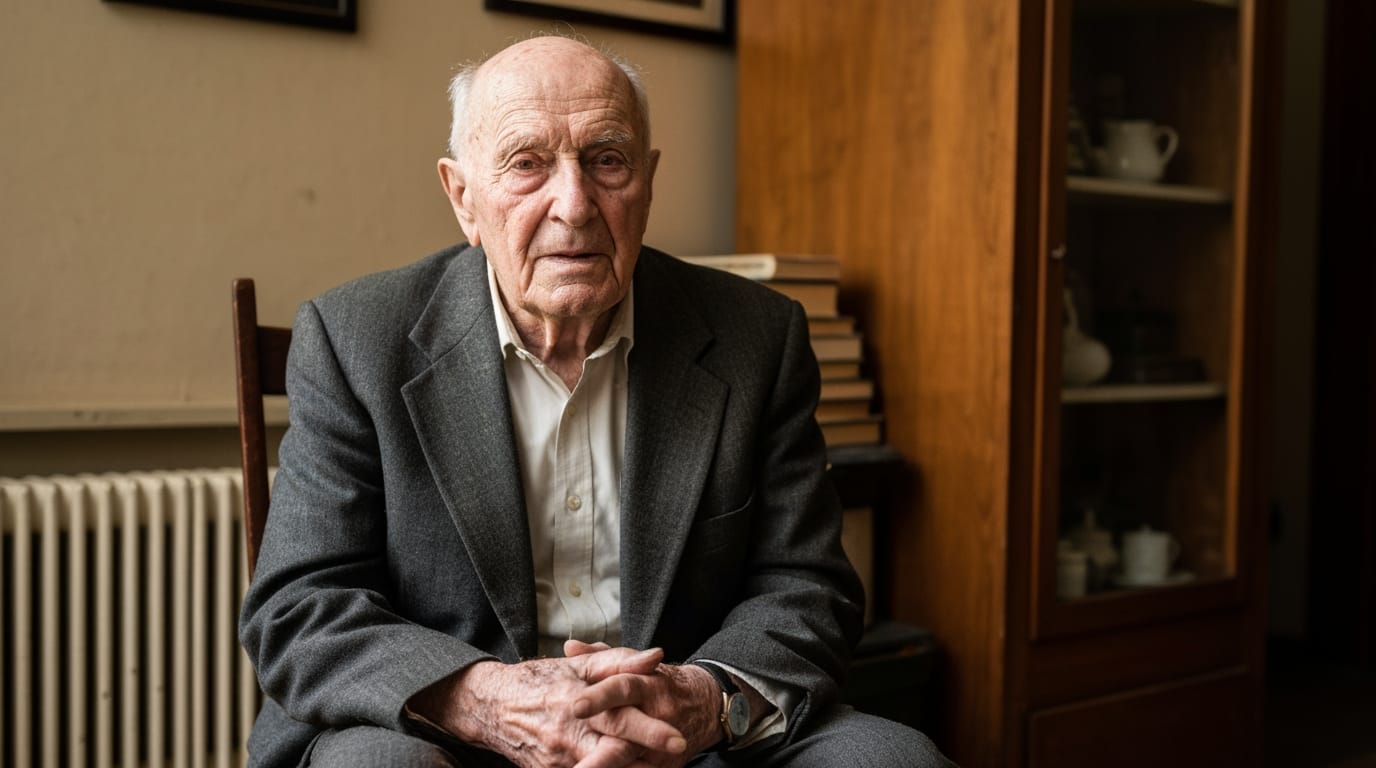
For over eight decades, Leon Weintraub, a survivor of the Holocaust, has carried the profound weight of witness, transforming unimaginable suffering into a poignant and urgent plea for humanity. At 99 years old, his life story stands as a testament to resilience and a stark reminder of the systematic dehumanization that underpinned the atrocities of the Nazi regime. Through his tireless efforts, Weintraub implores current and future generations to remember the past, learn from its horrors, and remain vigilant against the insidious rise of prejudice and hatred. His message, deeply rooted in personal trauma, underscores the fragility of human dignity and the imperative to actively safeguard it.
A Childhood Interrupted: The Descent into Persecution
Born on January 1, 1926, in Łódź, Poland, Leon Weintraub's early life was marked by humble beginnings. His father, Szula-Szlomo, passed away in 1927, leaving his mother, Natalia, to raise Leon and his four older sisters. She managed to support her family by operating a small laundry business, fostering a childhood that, despite its poverty, held moments of happiness. Weintraub recalled learning to read independently and navigating life in the vibrant, if poor, streets of Łódź, speaking Polish at home and Yiddish with his mother.
This relative normalcy shattered with the German invasion of Poland in September 1939. At just 13 years old, Weintraub and his family were among the Jewish population forced into the newly established Litzmannstadt Ghetto during the winter of 1939 and 1940. Within the ghetto's suffocating confines, the process of dehumanization began, systematically stripping Jews of their rights, possessions, and ultimately, their identities. Weintraub was compelled into forced labor, toiling for grueling 12-hour shifts in factories, including galvanization, plumbing, and electrical workshops, receiving only meager rations in return. The harsh conditions and constant threat of starvation became the daily reality, laying bare the regime's intent to reduce individuals to mere instruments of labor before their ultimate destruction.
Navigating the Abyss: Survival in the Death Camps
The liquidation of the Litzmannstadt Ghetto in August 1944 marked another terrifying chapter. Leon Weintraub and his family were deported to the Auschwitz-Birkenau concentration camp, where he was immediately separated from his relatives. In a harrowing stroke of fate, Weintraub managed to avoid the gas chambers by feigning his status as an "Arbeitshäftling," a working prisoner, and joining a transport unnoticed. This act of desperate ingenuity rerouted his fate from immediate extermination to a brutal existence of forced labor in a series of other concentration camps.
His journey through the Nazi camp system included transfers to Dörnhau, a sub-camp of Gross-Rosen, where his previous experience as an electrician proved momentarily useful as he worked for the Organisation Todt. The brutal odyssey continued with further transfers to Flossenbürg and then to the Natzweiler-Struthof concentration camp, specifically its Offenburg detachment. As the war drew to a close and the Third Reich crumbled, Weintraub found himself on another transport in the final chaotic months. He seized an opportunity to escape near Lake Constance, a testament to his sheer will to survive amidst the pervasive death and destruction. On April 23, 1945, Leon Weintraub was finally liberated by the French army near Donaueschingen. His body, ravaged by typhus and black fever, weighed a mere 35 kilograms, a stark physical manifestation of the depravity he had endured. He spent weeks recovering in military hospitals, slowly regaining strength and confronting the monumental task of rebuilding his shattered life.
From Doctor to Dedicated Witness: A Life Rebuilt
The immediate aftermath of liberation presented its own challenges, but also glimmers of hope. Weintraub discovered that three of his sisters—Lola, Franka, and Mala—had miraculously survived the Bergen-Belsen concentration camp, leading to an emotional reunion. Other cousins also survived, providing a fragile anchor in a world turned upside down. Determined to forge a new future, Leon Weintraub embarked on medical studies in Göttingen, Germany, in the autumn of 1946. His academic pursuits led him back to Poland, where he earned his doctorate in Warsaw in 1966 and subsequently became the head of obstetrics and gynecology in Otwock.
However, even a seemingly secure life in post-war Poland could not escape the shadow of anti-Semitism. In 1969, false accusations linked to rising anti-Semitic sentiments led to his dismissal from his position, effectively forcing him to emigrate. He found refuge in Sweden, where he remarried following the death of his first wife in 1970. It was after his retirement that Weintraub fully embraced his profound mission: to bear witness to the Holocaust. He dedicated his life to sharing his experiences, ensuring that the lessons of the past would not be forgotten. In 2022, his memoirs, titled Die Versöhnung mit dem Bösen: Geschichte eines Weiterlebens (Reconciliation with Evil: Story of a Survival), were published, further cementing his commitment to historical remembrance.
The Urgent Message: "We Are All Born Human"
At the heart of Leon Weintraub’s message is a powerful indictment of the dehumanization he experienced and a fervent call for collective responsibility. He consistently emphasizes how the Nazi ideology systematically divided people into categories of "superhumans and subhuman," a foundational step toward mass murder. His testimony serves as a critical counterpoint to "collective amnesia," a danger he actively combats by engaging with audiences at schools and memorials across Europe.
Weintraub's engagement with younger generations is particularly significant. He frequently warns against the resurgence of any form of Nazism or "degenerate nationalism" that seeks to foster prejudice and hostility based on origin or religion. His life's mission today revolves around impressing upon his audiences the fundamental truth: "We are all born human." He encourages individuals to cultivate imagination and emotion, urging them not to become "just a robot" in a world that often seeks to suppress individuality and empathy. He advocates fiercely for democratic values, understanding them as essential bulwarks against the ideologies that led to the Holocaust. Weintraub's consistent plea is for society to remain human, to recognize the inherent worth of every individual, and to challenge any narrative that seeks to diminish or erase another's humanity.
A Legacy of Warning and Hope
Leon Weintraub's journey from a young boy in Łódź to a powerful international voice against hatred encapsulates a remarkable story of survival, resilience, and unwavering moral conviction. His testimony is not merely a recounting of historical events, but a living, breathing warning for the present and future. As the generation of Holocaust survivors dwindles, his commitment to education and remembrance becomes ever more critical. He continues to articulate the profound dangers of unchecked prejudice, the ease with which societies can slide into dehumanization, and the vital necessity of empathy and respect. Weintraub's life stands as a beacon, reminding us that while the capacity for evil exists, so too does the enduring power of the human spirit to remember, to teach, and to ultimately strive for a world where such atrocities can never again take root. His legacy is a compelling and urgent call to action: to remain eternally vigilant and, above all, to remain human.