Greenland: An Arctic Saga From Norse Legends to Modern Geopolitical Crossroads
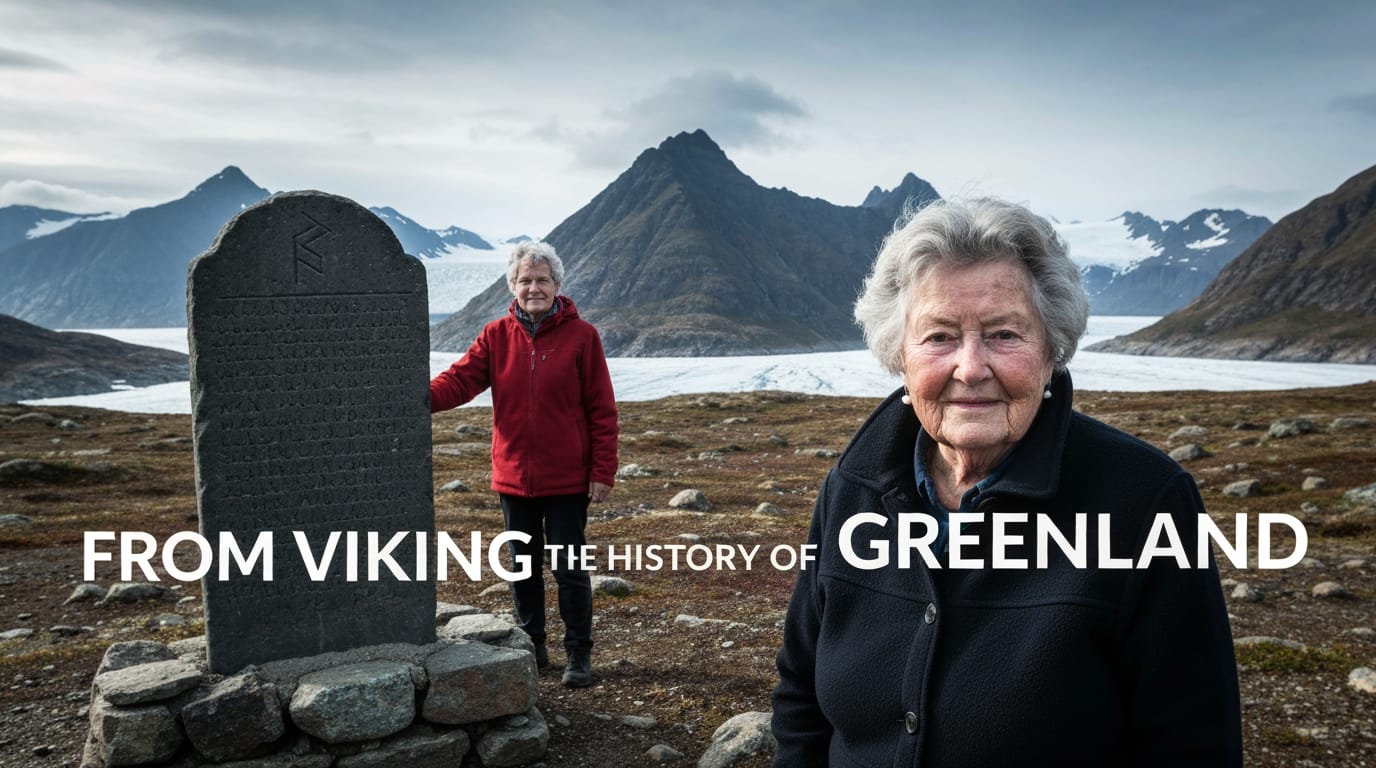
Greenland, the world's largest island, stands at a pivotal moment, its icy landscapes melting under the gaze of a changing climate and renewed global strategic interest. From its ancient Viking settlements to its modern-day self-governance and recent overtures from an American president, the island's history is a complex tapestry woven with themes of survival, colonial legacy, and evolving autonomy. This vast, resource-rich territory, home to a resilient Indigenous population, is increasingly recognized not just for its breathtaking natural beauty but also for its crucial role in Arctic geopolitics, presenting both immense opportunities and significant challenges on the world stage.
The Norse Saga and the Enduring Inuit Legacy
The human history of Greenland stretches back millennia, with the earliest known inhabitants arriving around 2500 BCE, followed by successive waves of Arctic peoples. However, the most well-known early European contact began in the late 10th century when Erik the Red, a Norse Viking banished from Iceland, established the first Norse settlements in southern Greenland around 986 CE. The name "Greenland" itself is believed to have been a strategic choice, designed to attract more settlers to the new land. These Norse communities, concentrated in the East and West Settlements, thrived for centuries, potentially supporting a population of 3,000 to 6,000 inhabitants across approximately 280 farms. Christianity arrived in the 11th century with Erik's son, Leif Eriksson, and a bishop's seat was established in 1126.
Despite their initial success, the Norse settlements mysteriously disappeared by the early 15th century. Numerous theories suggest a combination of factors, including a colder climate during the onset of the Little Ice Age, which made the land less habitable for their farming-based lifestyle, and potential conflicts with the Thule Inuit, who began arriving in Greenland from North America around the same period. Unlike the Norse, the Thule Inuit, ancestors of modern-day Greenlanders, possessed superior adaptation to the harsh Arctic environment, focusing on marine resources rather than agriculture. Their ability to thrive in extreme conditions allowed them to endure and become the predominant population on the island. Today, the Greenlandic Inuit constitute approximately 89% of the island's population of around 56,000 people.
Danish Colonial Rule and Wartime Shifts
Following the disappearance of the Norse, European contact with Greenland diminished for centuries. It was not until 1721 that Hans Egede, a Norwegian priest and missionary supported by the Dano-Norwegian crown, re-established contact, intending to find and re-Christianize any surviving Norse settlers. Upon his arrival, Egede found only the Inuit and consequently dedicated his efforts to converting them to Christianity, marking the beginning of Greenland's colonial period under Danish-Norwegian, and later solely Danish, rule. Denmark established a trade monopoly over the island in 1776, closing its coasts to foreign access until 1950 and gradually integrating Greenland into its colonial empire.
The Second World War dramatically altered Greenland's relationship with Denmark. When Germany occupied Denmark in April 1940, Greenland was effectively cut off from its colonial power. In a crucial move, Henrik Kauffmann, the Danish ambassador to the United States, signed an agreement in April 1941, transferring the defense of Greenland to the U.S. for the duration of the war. This arrangement allowed the U.S. to establish military bases, protect vital resources like the cryolite mine at Ivittuut (essential for aluminum production), and establish crucial refueling stops for transatlantic flights. Following the war, the U.S. maintained a significant military presence, and in 1946, President Harry Truman even offered to buy Greenland for $100 million, an offer Denmark rejected. Greenland transitioned from a colony to an integral part of the Kingdom of Denmark in 1953, gaining representation in the Danish Parliament.
The Journey Towards Self-Governance
The post-war era ushered in a new chapter for Greenland, marked by a growing desire for self-determination. In 1979, Greenland achieved Home Rule, establishing its own parliament and gaining significant control over internal affairs. This was a crucial step in decolonization, allowing Greenlanders to manage areas such as education, cultural affairs, and industrial relations, while Denmark retained responsibility for defense, foreign policy, and law enforcement. The journey towards greater autonomy continued, and in 2009, Greenland's Self-Government Act came into force, replacing the Home Rule arrangement. This new framework further solidified the Greenlandic people's right to self-determination under international law and outlined a blueprint for potential full independence.
While the majority of Greenlanders express a desire for eventual independence, polls consistently indicate that this ambition is tempered by concerns about the financial implications. Greenland remains heavily dependent on an annual block grant from Denmark, amounting to approximately $600 million, which supports its welfare state and essential services. The challenges of a vast territory with a small population and a harsh climate make economic self-sufficiency a significant hurdle, linking the path to independence with the sustainable development of its own resources.
Greenland in the 21st Century: Resources, Climate, and Geopolitical Focus
In the 21st century, Greenland's strategic importance has surged, primarily driven by two interconnected factors: climate change and its vast, untapped natural resources. The Arctic is warming at a rate nearly four times the global average, leading to significant melting of Greenland's ice sheet. This environmental transformation is opening new shipping routes across the Arctic Ocean, reducing distances between continents, and exposing previously inaccessible mineral deposits. Greenland possesses significant reserves of rare earth elements, uranium, zinc, and iron ore, among others, minerals crucial for modern technology and the global green energy transition.
This emerging economic and strategic potential has attracted renewed international attention, most notably from the United States. In 2019, during his first presidency, Donald Trump openly expressed interest in purchasing Greenland, describing it as "essentially, a large real estate deal." This proposition, which was swiftly and firmly rejected by both the Danish and Greenlandic governments with the unequivocal statement that Greenland was "not for sale," underscored the island's growing geopolitical significance. Trump reiterated his desire for U.S. ownership and control of Greenland, citing national security and mineral wealth, during his second presidency in 2025, even suggesting the possibility of military force or tariffs against Denmark if his demands were not met. These statements triggered what some referred to as the "Greenland crisis," highlighting the complex sovereignty and self-determination issues at play.
The United States' enduring interest in Greenland is rooted in its strategic location at the intersection of North America, Europe, and the Arctic, critical for military security and transatlantic movements. While a 1951 agreement formalized the continued U.S. military presence, particularly at Thule Air Base (now Pituffik Space Base), concerns about geopolitical competition with Russia and China in the Arctic continue to fuel strategic considerations. Despite the economic allure of its resources, developing them remains challenging due to Greenland's harsh environment, remote location, and the considerable infrastructure and extraction costs. Local concerns about environmental impacts also influence decisions, with Greenland's inhabitants deciding in 2021 against new fossil fuel projects due to climate impact concerns.
A Future Forged in Ice and Opportunity
Greenland's journey from a remote Norse outpost to a significant player in 21st-century geopolitics is a testament to its unique position and the resilience of its people. Its history is a compelling narrative of adaptation, survival, and the persistent quest for self-determination. As climate change reshapes the Arctic, opening new frontiers for resource extraction and trade, Greenland finds itself at the nexus of global interests. The challenge for Greenland, alongside Denmark, will be to navigate this complex landscape, balancing economic development with environmental stewardship, and safeguarding the rights and future of its Indigenous population, while asserting its sovereign path amidst increasing international scrutiny.