Iran's Ancient Heritage Under Siege: US-Israeli Strikes Damage UNESCO Sites, Spark International Alarm
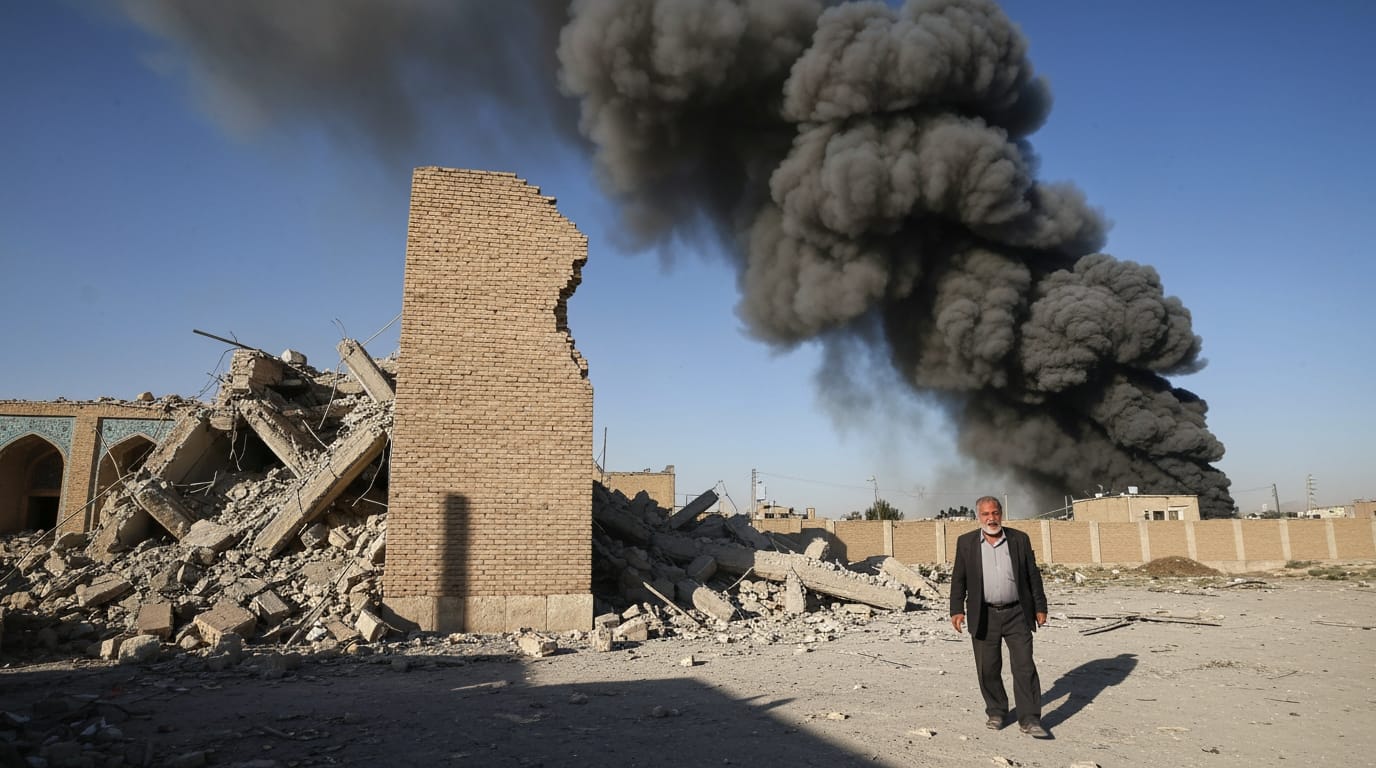
An escalating campaign of US-Israeli military strikes against Iran has resulted in significant damage to multiple cultural heritage sites, including several UNESCO World Heritage properties, triggering widespread international condemnation and raising urgent concerns about the protection of humanity's shared history during armed conflict. The destruction, reported across several Iranian cities, has left iconic palaces, mosques, and ancient citadels marred, prompting calls from international bodies for strict adherence to laws safeguarding cultural property.
The offensive, which commenced in late February 2026, has seen vital historical landmarks sustain damage from shockwaves and debris, even when not directly targeted. This collateral damage underscores the inherent risks to invaluable cultural assets in modern warfare, where the destructive power of advanced weaponry can extend far beyond immediate military objectives. The Iranian government, along with international cultural organizations, has vehemently protested the damage, emphasizing the irreplaceable loss to both Iranian identity and the collective human record.
Devastation Across Historical Heartlands
The extent of the damage has been meticulously documented by local media and subsequently confirmed by UNESCO. In Tehran, the lavish Qajar-era Golestan Palace, a UNESCO World Heritage site, suffered extensive harm. Reports and video footage captured in early March revealed shattered glass from its intricate mirrored ceilings, broken archways, blown-out windows, and damaged molding scattered across its floors. Afarin Emami, director of the Golestan Palace World Heritage complex, stated that blast waves from nearby airstrikes on Arag Square, within the site's buffer zone, were responsible for much of the structural and decorative damage. Fortunately, museum objects housed within the palace had been moved to secure storage following earlier tensions, mitigating further loss. The Grand Bazaar of Tehran, a vast network of historic corridors, also sustained damage.
Isfahan, a city renowned for its rich artistic and architectural heritage and a capital during the Safavid dynasty, has also been significantly impacted. Local media reported on March 9 that missile attacks targeting the provincial governorate building in the Dawlatkhaneh complex damaged the 17th-century Chehel Sotoun Palace and other sites within the sprawling Naqsh-e-Jahan Square. The Chehel Sotoun Palace, part of the Persian Gardens' World Heritage inscription, exhibited shattered windows, broken wooden doors, and fissures in its famous frescoes. Blast waves also affected the nearby Ali Qapu Palace, shattering doors and windows, and dislodged iconic turquoise and calligraphic tiles from the Shah Mosque (also known as Jame Abbasi Mosque). Other historical structures in Isfahan, such as the Rakeb-Khaneh pavilion, Ashraf Hall, and Teymouri Hall, have also reportedly been damaged. Isfahan's Governor, Mehdi Jamalinejad, described the military assaults as "barbaric," asserting they "hit the heart of humanity's collective memory."
Further west, the third-century Falak-ol-Aflak Citadel in Khorramabad, dating back to the Sasanian period, sustained damage on March 8. Officials in Lorestan province reported that a strike on the perimeter of the citadel destroyed the provincial cultural heritage department offices and seriously damaged the site's archaeology and anthropology museums, injuring five staff members. While the main fortress structure of Falak-ol-Aflak remained intact, the prehistoric sites in the Khorramabad Valley, recently inscribed on the UNESCO World Heritage List in 2025, also faced threats. Even earlier, on March 2, the Golestan Palace in Tehran, the capital's only UNESCO World Heritage site, was damaged. UNESCO has also verified damage to the Masjed-e Jāme, one of Iran's oldest Friday mosques, also in Isfahan.
International Law and Ethical Obligations
The targeting or incidental damage to cultural heritage sites during armed conflict is explicitly prohibited under international law. Both the United States and Iran are parties to the 1954 Hague Convention for the Protection of Cultural Property in the Event of Armed Conflict. This convention, along with the 1972 World Heritage Convention, mandates the protection of cultural property and considers damage to such sites as a blow to "the cultural heritage of all mankind." UNESCO has repeatedly reminded all parties to the conflict of their obligations under these treaties and stated that it had provided the geographical coordinates of World Heritage Sites to all concerned parties in advance, "to take all feasible precautions to avoid damage."
The recent damage has prompted Iran and Lebanon to formally request UNESCO to add more sites to its enhanced protection list. International organizations like the International Council of Museums (ICOM) and the International Council on Archives (ICA) have echoed UNESCO's concerns, calling for the protection of museums, archives, and cultural heritage, and emphasizing adherence to international humanitarian law. The International Criminal Court's Rome Statute criminalizes intentionally directing attacks against buildings dedicated to religion, education, art, science, or charitable purposes, or historic monuments, classifying such actions as war crimes.
The United States has historically maintained that it would not target cultural sites. In 2020, following then-President Trump's threats to strike Iranian cultural sites, the Pentagon ruled out such actions, with the Defense Secretary acknowledging it would constitute a war crime. However, recent statements from US defense officials, including comments about "no stupid rules of engagement" in "Operation Epic Fury," have drawn sharp criticism and alarm from US lawmakers and human rights groups, who fear a disregard for the laws of war and a heightened risk to civilian and cultural targets.
A Shared Loss for Humanity
The destruction of Iranian cultural heritage sites represents a profound loss that extends far beyond national borders. Iran boasts nearly thirty UNESCO World Heritage sites, showcasing civilizations that span millennia, from ancient Persia to Islamic dynasties. These sites are not merely national treasures but integral components of humanity's collective memory, offering invaluable insights into the evolution of societies, religions, and artistic traditions across Eurasia. Their destruction erases irreplaceable evidence of human history and cultural development.
The human element of this crisis is palpable. Individuals with personal connections to the damaged sites have expressed profound grief, viewing the destruction of these landmarks as an attack on their identity and heritage. As one official lamented, "The destruction of cultural heritage is irreversible. It erases identity, history, and the shared memory of civilizations." While some social media discourse in Iran has questioned the proximity of military installations to historical sites, the overarching sentiment globally emphasizes the universal value of these cultural treasures and the imperative to protect them, regardless of political or military objectives.
The ongoing conflict has led to significant civilian casualties and widespread damage to civilian infrastructure across Iran, with reports indicating over 1,245 civilians killed and 12,000 injured as of March 10, 2026. The harm to cultural heritage sites adds another tragic dimension to this conflict, serving as a stark reminder of the devastating consequences of war on both human lives and the irreplaceable artifacts of human civilization. The international community continues to monitor the situation closely, urging all parties to prioritize the protection of cultural heritage and uphold their obligations under international law.