The Enduring Allure of the Arch: Trump's Vision and a Millennia of Monumental Gateways
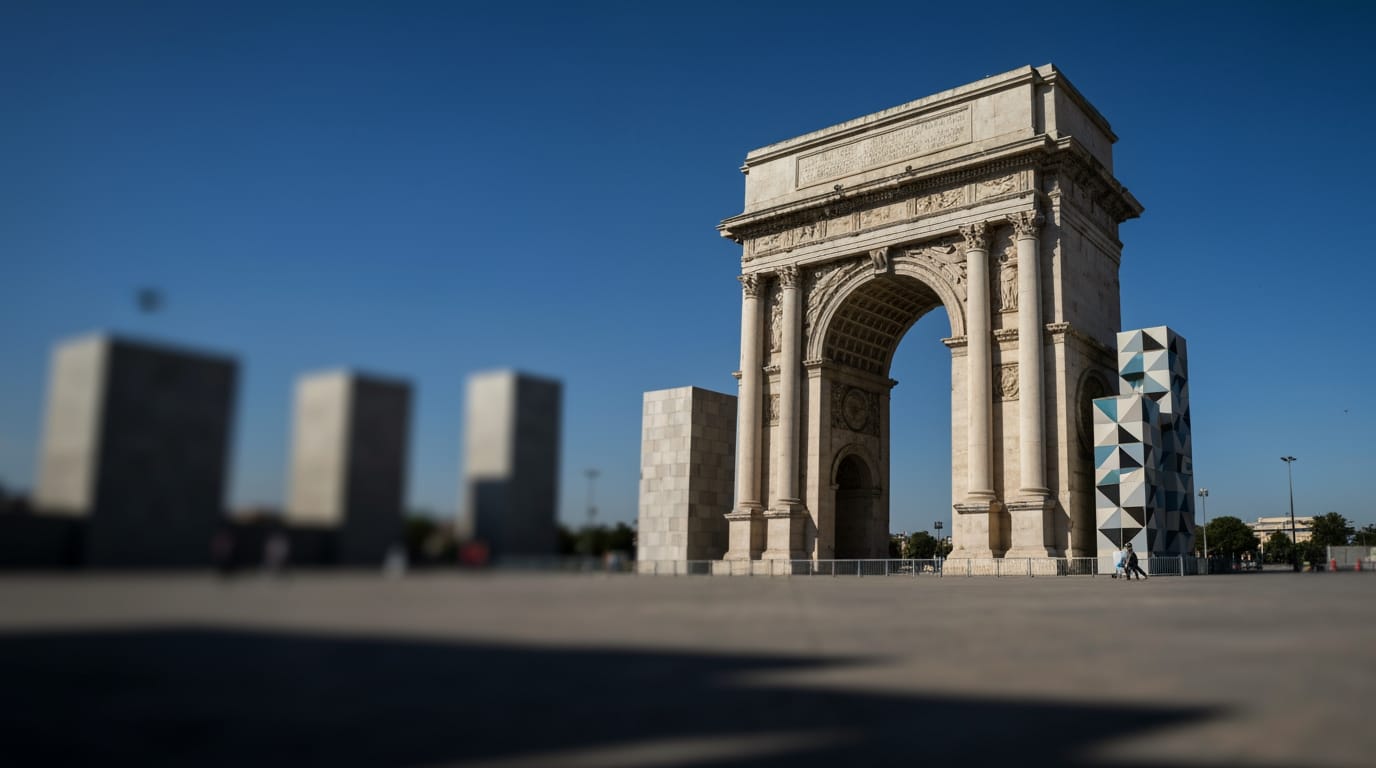
Washington, D.C. stands on the precipice of a potentially colossal addition to its monumental landscape: a 250-foot triumphal arch proposed by former President Donald Trump. Unveiled with the stated purpose of commemorating America's 250th anniversary of independence, this ambitious project, unofficially dubbed the "Arc de Trump," revives a timeless architectural form that has symbolized power, victory, and national identity across civilizations for millennia. The proposal sparks contemporary debate, but it also invites reflection on humanity's enduring fascination with grand gateways and their complex role in shaping collective memory and aspiration.
A New Colossus for the Capital? The Independence Arch Proposal
In late 2025, Donald Trump revealed detailed plans for what he formally termed the "Independence Arch," intended to stand 250 feet tall, one foot for each year of American independence, surpassing the height of Paris's iconic Arc de Triomphe. The proposed site is Columbia Island in Washington, D.C., specifically Memorial Circle, situated across the Potomac River from the Lincoln Memorial and between the Arlington Memorial Bridge and Arlington National Cemetery. Initial renderings, reminiscent of the neoclassical style and featuring a golden winged figure described as Lady Liberty, were presented to donors and shared on social media by Trump. The former president stated the arch was intended to be completed in time for the 250th anniversary celebrations in 2026 and claimed it was "fully financed," with leftover funds from a separate White House ballroom project reportedly earmarked for its construction. Nicolas Leo Charbonneau, a partner at architectural firm Harrison Design, has been identified as the architect for the project.
However, the "Independence Arch" has swiftly become a flashpoint for debate. Critics argue that the proposed structure, with its immense scale, risks overwhelming the capital's carefully planned historic landscape and obstructing significant views, including those between the Lincoln Memorial and Arlington House. Concerns have also been raised regarding potential impacts on air traffic at the nearby Ronald Reagan Washington National Airport due to the arch's considerable height. Furthermore, the project faces significant legal and regulatory hurdles, as the Commemorative Works Act mandates congressional approval for any new structures on public lands in Washington, D.C. A coalition of Vietnam veterans and several leading congressional Democrats have already filed legal challenges, asserting that the unilateral proposal violates federal law and the principle of checks and balances.
Echoes of Empire: The Triumphal Arch Through History
The concept of a monumental arch as a symbol of triumph and power dates back to ancient Rome. The Arch of Titus, erected in 81 AD to commemorate Emperor Titus's victory over the Jewish rebellion, is a prime example that significantly influenced subsequent designs. These Roman triumphal arches were not merely decorative but served as powerful statements, celebrating military successes, deified leaders, and the enduring strength of the empire. Their intricate carvings often depicted historical events, solidifying narratives of glory for generations.
The tradition of the triumphal arch experienced a resurgence in Europe centuries later. Napoleon Bonaparte, consciously echoing Roman imperial grandeur, commissioned the Arc de Triomphe in Paris in the early 19th century to honor the French Revolutionary and Napoleonic Wars. This iconic structure, itself inspired by the Arch of Titus, became a global landmark and a benchmark for later monumental arches. Other notable examples abound, such as the Wellington Arch in London, built to commemorate Britain's victories in the Napoleonic Wars and also originally modeled on the Arch of Titus. These structures universally communicated messages about national pride, military might, and the historical significance of specific events or leaders.
More Than Victory: The Broad Symbolism of Gateways
Beyond the explicit triumphal arch, the broader category of "gateways" encompasses a rich tapestry of cultural and architectural expressions. From the ancient Gate of Ishtar in Babylon, with its vibrant glazed bricks and depictions of mythical creatures, to the Brandenburg Gate in Berlin, these structures have always served as more than mere passages. They are often imbued with deep symbolism, representing transitions, protection, and the demarcation of sacred or significant spaces.
One of America's most recognizable gateways is the Gateway Arch in St. Louis, Missouri. Completed in 1965 and standing at 630 feet, it is the world's tallest arch and a celebrated feat of modern engineering. Designed by Eero Saarinen, this stainless steel monument commemorates the westward expansion of the United States and St. Louis's role as the "Gateway to the West." Unlike triumphal arches, the Gateway Arch represents exploration, hope, opportunity, and the pioneering spirit, rather than military conquest. Its design arose from a competition in the 1930s, aimed at revitalizing the St. Louis riverfront and creating a lasting memorial to a pivotal era in American history. The project took decades from conception to completion and involved significant civic and federal investment.
A Clash of Ideals: Tradition Meets Modern Ambition
The proposed Independence Arch in Washington, D.C., presents a stark contrast and intriguing comparison to historical and modern gateways. While it draws stylistic inspiration from the classical triumphal arch tradition, its contemporary context and stated purpose are distinctly American. Yet, the project has also ignited a debate over its underlying motivations. Critics suggest it aligns with what they perceive as a pattern of self-aggrandizement, drawing parallels to how autocratic leaders throughout history have used monumental architecture to solidify their personal legacies. Mr. Trump himself reportedly told a CBS reporter, when asked who the arch was for, "Me."
The historical record indicates that proposals for a triumphal arch at or near the Memorial Circle have existed before, such as a 1902 plan to honor Ulysses S. Grant, which never came to fruition. This suggests a long-standing architectural ideal for the location, a natural gateway to the nation's capital. However, previous plans often focused on collective national commemoration, a contrast to the individualistic attribution some critics perceive in the current proposal. The very act of building a colossal monument in a meticulously planned capital city invariably raises questions about artistic merit, public purpose, and democratic values.
The Enduring Quest for Monumental Meaning
Ultimately, the debate surrounding the proposed Independence Arch highlights the complex interplay between architectural ambition, historical legacy, and political messaging. From ancient Rome to modern America, monumental gateways have served as powerful physical representations of abstract ideals—victory, national identity, exploration, and commemoration. Whether it is the solemn gravitas of a Roman arch, the bold sweep of the Gateway Arch in St. Louis, or a potential new addition to Washington, D.C., these structures reflect humanity's persistent desire to leave an indelible mark on the landscape, to tell stories in stone and steel that endure through time.
The "Arc de Trump" proposal, if it proceeds, will not merely be a physical structure; it will become another chapter in this long and storied history of gateways, interpreted and reinterpreted by each generation. Its fate, entangled in contemporary political and legal battles, will undoubtedly contribute to the ongoing narrative of how a nation chooses to monumentalize its past and project its image into the future.