The Enduring Art of Deception: How Fake Photos Thrived Long Before the Digital Age
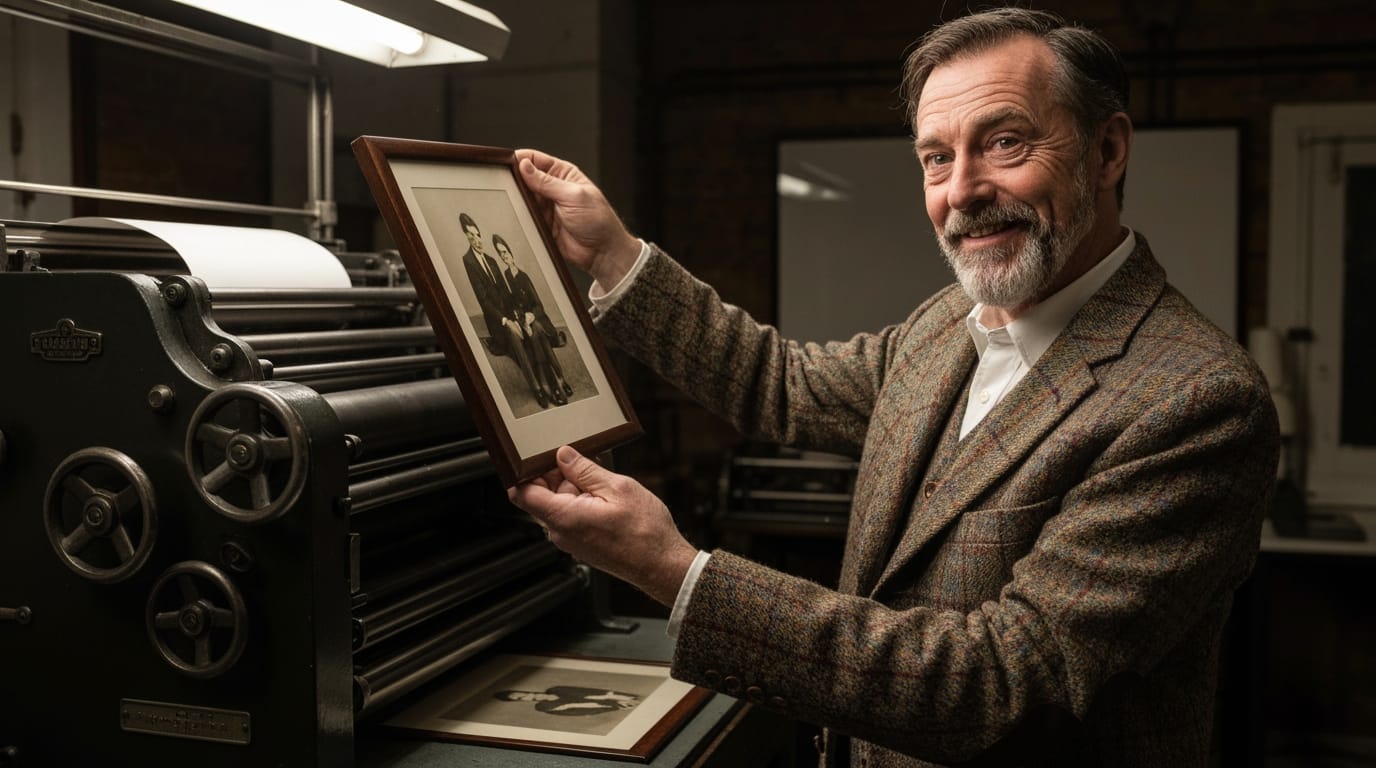
Long before the advent of artificial intelligence and advanced digital editing software like Photoshop, the manipulation of photographic images was a popular and often sophisticated practice. From the earliest days of photography in the 19th century, individuals and institutions leveraged darkroom techniques and manual alterations to create illusions, spread propaganda, enhance artistic expression, and simply entertain. This enduring history reveals that the human impulse to reshape reality through images is as old as the medium itself, fundamentally challenging the notion of photography as an inherently objective record of truth.
The roots of photographic trickery stretch back to the 1840s, almost immediately following the invention of the camera. Early photographers, facing technical limitations, quickly discovered the potential for altering images, not always with malicious intent. Techniques such as combination printing, double exposure, and hand-painting on negatives became common tools in the hands of skilled practitioners. These methods required a deep understanding of chemistry, optics, and artistic skill, transforming the darkroom into a workshop of imagination.
The Dawn of Darkroom Deception: 19th Century Pseudoscience and Artistry
The Victorian era, with its fascination for science, mysticism, and the supernatural, proved to be fertile ground for photographic manipulation. "Spirit photography" emerged as a prominent genre, capitalizing on the widespread grief following events like the American Civil War and the public's yearning to connect with deceased loved ones. William H. Mumler, an engraver from Boston, became one of the most famous spirit photographers, reportedly discovering the double exposure technique by accident in the 1860s. Mumler's work, which often showed spectral figures alongside living subjects, attracted clients like Mary Todd Lincoln, who sought images of her late husband, Abraham Lincoln. Despite being charged with fraud in 1869, Mumler was not convicted, although his career ultimately suffered. The famed illusionist Harry Houdini later played a significant role in debunking many such claims, demonstrating how easily such "ghosts" could be faked.
Beyond spiritualism, early photo manipulation served artistic ambitions. Oscar Gustave Rejlander, often dubbed the "father of art photography," pioneered combination printing in the mid-1800s. His monumental work, "The Two Ways of Life" (1857), was a composite image created by meticulously combining 32 separate negatives over six weeks. This intricate process allowed Rejlander to overcome technical constraints and construct elaborate narrative scenes that were impossible to capture in a single exposure. Similarly, Henry Peach Robinson's "Fading Away" (1858) was created from five negatives, captivating audiences and even garnering a standing order from Prince Albert, Queen Victoria's husband. These early artistic endeavors demonstrated that photography, from its inception, was not merely a record but a medium for creative construction.
Erasing History: Photo Manipulation as a Political Weapon
As photography matured, its power to shape perceptions was increasingly recognized and exploited for political ends. The 20th century, in particular, saw photo manipulation become a potent tool for propaganda and historical revisionism, notably under authoritarian regimes. Joseph Stalin's Soviet Union became infamous for systematically altering photographs to erase political opponents from public memory. Individuals who fell out of favor, such as Nikolai Yezhov, the head of the NKVD, were not only executed but literally airbrushed out of official photographs, sometimes replaced with water or simply removed from group portraits until only Stalin remained. Leon Trotsky, a prominent figure in the Bolshevik Revolution, was similarly purged from countless images after his exile. These alterations served to rewrite history, shaping public perception and control.
Beyond the Soviet Union, photo manipulation was employed to influence public opinion in other contexts. During the rise of Nazism, artist John Heartfield used photomontage as a form of political protest, creating satirical images that critiqued Nazi propaganda, such as one depicting Joseph Goebbels disguising Hitler with a Karl Marx beard. Even earlier, an 1860 image of Abraham Lincoln was created by combining his head with the body of politician John Calhoun, an early example of politically motivated alteration. These instances highlight how photographs became instruments not just for documenting events, but for actively constructing narratives that served specific political agendas.
Beyond Deception: Entertainment, Advertising, and the Everyday
While some manipulations were aimed at profound deception or political control, many others served lighter purposes, contributing to entertainment, advertising, and even whimsical storytelling. At the turn of the 20th century, "tall tale" postcards became widely popular. These humorous images often depicted exaggerated scenarios, such as giant vegetables or impossible feats of strength, captivating a public that was less accustomed to altered visuals. Photographers like William H. "Dad" Martin and Alfred Stanley Johnson Jr. were known for these creative composites, which were mass-produced as tourism items.
The advertising industry quickly adopted photo manipulation to enhance products and create aspirational imagery. Photographs were retouched to improve appearances, a practice that continues today but was performed manually with brushes and dyes in the pre-digital era. The meticulous craft of airbrushing, for instance, originated in this period, giving rise to the modern idiom "airbrushed from history." Artistic movements like Constructivism in Russia in the 1920s and Surrealism later also embraced photo manipulation, using photomontage to explore new forms of expression and question the boundaries of reality, with artists like Man Ray and Hannah Höch being notable practitioners.
The Craft of Analog Alteration
The methods employed by pre-digital manipulators were labor-intensive and required considerable skill. Darkroom techniques formed the backbone of many alterations:
- Combination Printing: Involving the printing of multiple negatives onto a single sheet of photographic paper to create a composite image.
- Double Exposure: Exposing the photographic plate or film twice, resulting in overlapping images.
- Dodging and Burning: Selectively lightening (dodging) or darkening (burning) areas of a print during exposure in the darkroom, a technique famously used by Ansel Adams to enhance his landscape photographs.
- Retouching: Direct application of paint, ink, dyes, or pencils onto negatives or prints to smooth features, remove blemishes, or add/remove elements. Airbrush tools were commonly used for seamless blending.
- Photomontage: The physical cutting and pasting together of different photographic prints or negatives, which were then often re-photographed to create a new, seamless image.
These analog techniques transformed photography from a purely mechanical process into an art form where the photographer's hand could actively shape the visual narrative.
A Timeless Pursuit of Altered Realities
The history of photo manipulation is a testament to humanity's complex relationship with images and truth. Long before sophisticated algorithms could generate deepfakes or seamlessly alter digital photographs, people were actively engaging in the creation of fake photos, driven by motivations ranging from artistic expression and commercial gain to political power and outright deception.
The tools and technologies have evolved dramatically, shifting from darkroom alchemy to pixel-perfect digital editing, and now to generative AI. Yet, the underlying human desires to persuade, entertain, commemorate, or mislead through visual media remain constant. While digital tools have made manipulation more accessible and widespread, the historical record demonstrates that the photographic medium has never been a purely objective witness. Instead, it has always been a canvas for human intervention, shaping our understanding of reality, one altered image at a time. The debates surrounding "fake news" and AI-generated content today are, in many ways, echoes of anxieties that have accompanied photography since its very beginnings.