Jürgen Habermas, Towering Philosopher and Architect of Modern Thought, Dies at 96
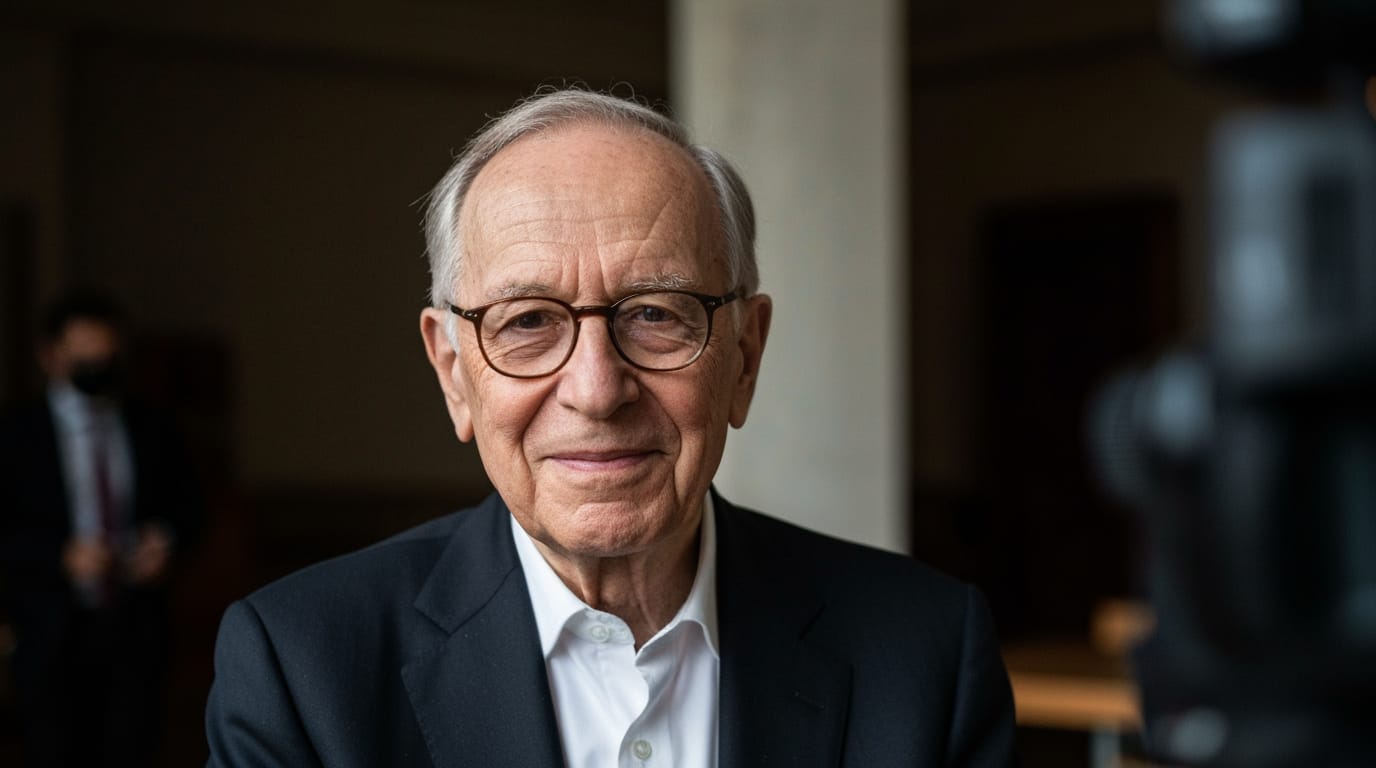
BERLIN – Jürgen Habermas, the intellectual titan whose expansive work redefined critical theory, communication, and the very foundations of modern democracy, has passed away at the age of 96. The German philosopher and sociologist died on Saturday, March 14, 2026, in Starnberg, near Munich, his publisher Suhrkamp confirmed. His passing marks the end of an era for contemporary philosophy and leaves a profound void in global intellectual discourse.
Habermas, revered for his theories on communicative action and the public sphere, was one of the most influential thinkers of the 20th and 21st centuries. His extensive writings bridged diverse academic disciplines, offering a comprehensive vision of societal interaction and the potential for rationality and emancipation in modern life. From his early engagement with the Frankfurt School to his later formidable contributions to political theory and ethics, Habermas consistently challenged and shaped our understanding of society, politics, and human communication.
A Life Forged in Post-War Germany and Dedicated to Reason
Born in Düsseldorf in 1929, Habermas's early life was marked by the shadows of Nazi Germany. He was 15 at the time of Germany's defeat in 1945, an experience he later described as pivotal, recalling the realization that "you saw suddenly that it was a politically criminal system in which you had lived". This confrontation with the crimes of the Nazi regime profoundly influenced his philosophical trajectory, steering him towards an exploration of reason, justice, and the conditions for a truly democratic society. Habermas also faced personal challenges, born with a cleft palate that required multiple corrective surgeries during his childhood, an experience he believed shaped his appreciation for the profound importance of communication and interdependence.
His academic journey led him through the Universities of Göttingen, Zurich, and Bonn, culminating in his doctoral degree in 1954. He later became a prominent figure in the second generation of the Frankfurt School, working as an assistant to Theodor W. Adorno, though he would eventually articulate his own distinct theoretical framework. His 1961 habilitation work, "The Structural Transformation of the Public Sphere," examined the historical development and decay of the public sphere, laying groundwork for his lifelong commitment to understanding the conditions necessary for rational-critical debate in society. Habermas held chairs in philosophy and sociology at several prestigious institutions, including the University of Frankfurt, the University of Heidelberg, and the Max Planck Institute for the Study of the Scientific and Technical World in Starnberg.
The Architecture of Communicative Action and Discourse Ethics
At the heart of Habermas's intellectual edifice lies his monumental two-volume work, The Theory of Communicative Action, published in 1981. This magnum opus posited that human society thrives not on instrumental rationality focused on efficiency and control, but on communicative rationality, where individuals engage in open, consensual dialogue to reach mutual understanding. For Habermas, the "ideal speech situation" – a hypothetical scenario where participants are equal, rational, and free from coercion – represents the normative standard for legitimate communication and social order.
From this foundation, Habermas developed his theory of discourse ethics, which argues that moral norms are valid only if they could be agreed upon by all affected in a rational discourse. This emphasis on dialogue, consensus, and the inherent rationality embedded in everyday communication offered a powerful counter-narrative to forms of relativism and postmodern skepticism prevalent in late 20th-century thought. His work underscored the potential for reason and emancipation through uncoerced communication, profoundly influencing fields ranging from sociology and political science to law and education.
A Public Intellectual and Advocate for Democracy
Beyond his academic contributions, Habermas was a quintessential public intellectual, frequently engaging with and weighing in on the major political and social issues of his time. He maintained an ambivalent relationship with the left-wing student movement of the late 1960s, both engaging with its aims and cautioning against what he termed "left-wing fascism" in response to certain extremist tendencies, though he later acknowledged the movement's role in driving a "fundamental liberalization" of German society.
A staunch defender of deliberative democracy, Habermas was a vocal proponent of European integration, viewing it as a crucial project for transcending narrow nationalisms and realizing a more peaceful and rational political order. He notably played a prominent role in the "Historians' Dispute" of the 1980s, where he vehemently opposed attempts by conservative historians to relativize the atrocities of the Nazi era by comparing them to other historical crimes. Habermas and his allies contended that such comparisons risked lessening the unique magnitude of Nazi crimes. His interventions consistently aimed at upholding the values of constitutional patriotism, critical self-reflection, and open public discourse in post-war Germany and beyond.
An Enduring Intellectual Legacy
Jürgen Habermas's intellectual footprint is immense and spans across continents and disciplines. His theories on the public sphere, communicative action, and discourse ethics have provided invaluable analytical tools for understanding social pathologies, democratic deficits, and the prospects for rational societal development. He challenged traditional epistemologies, offered a robust defense of reason in an increasingly fragmented world, and relentlessly sought to articulate the normative underpinnings of modern democratic societies.
His work continues to inspire and provoke, serving as a vital resource for scholars and activists grappling with issues of globalization, media influence, digital communication, and the future of democratic institutions. Habermas's profound insights into the conditions for genuine understanding and legitimate social order remain as relevant today as when they were first articulated.
The passing of Jürgen Habermas not only signals the loss of a great philosopher but also a profound voice for reason, dialogue, and democratic ideals. His legacy will undoubtedly continue to shape academic inquiry and public debate for generations to come, a testament to the enduring power and relevance of his critical thought.