Berlin's Subterranean Secrets: Archaeologists Uncover Capital's Hidden Medieval Past
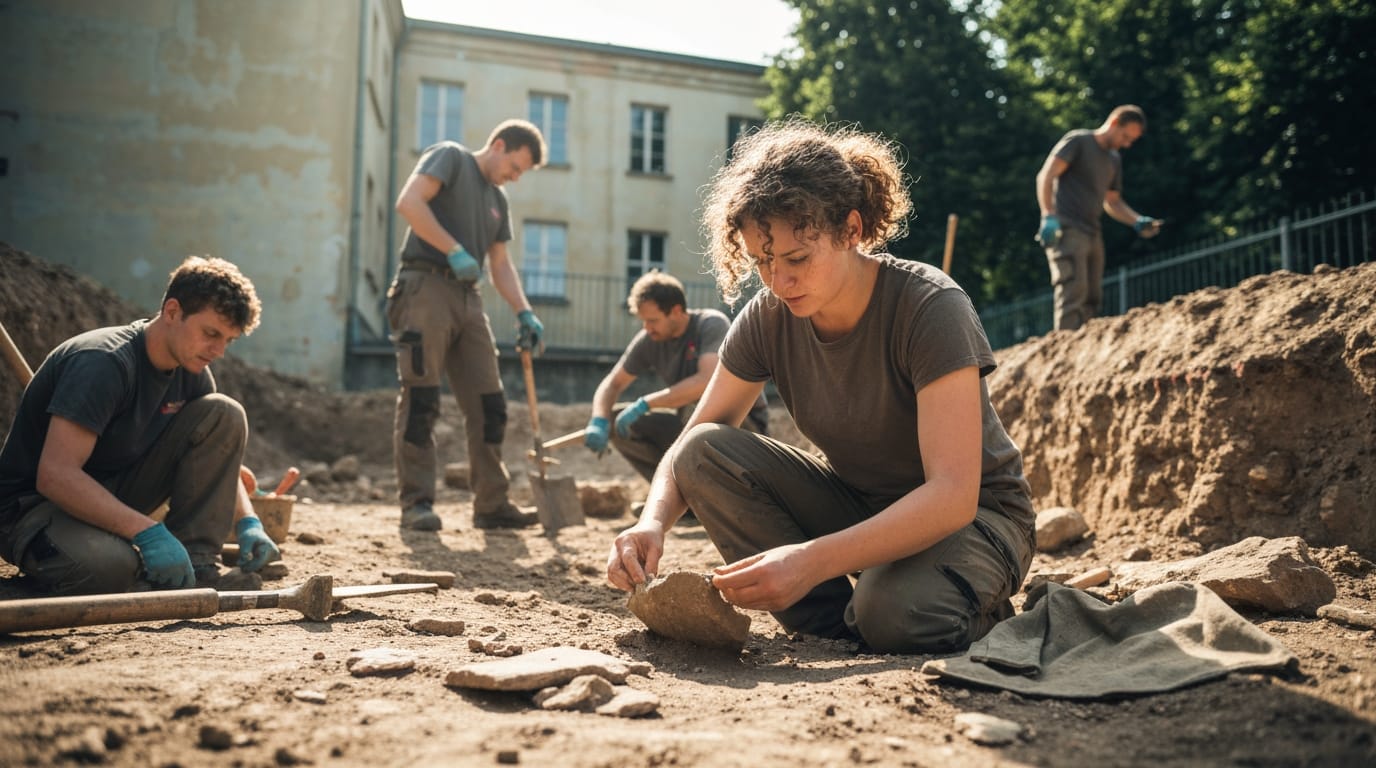
BERLIN, Germany – Beneath the bustling streets and modern infrastructure of Germany's vibrant capital, archaeologists are engaged in an extraordinary "treasure hunt," systematically unearthing layers of history that are redefining Berlin's origins and providing unprecedented insights into medieval life. These meticulous excavations, particularly at the Molkenmarkt and Petriplatz sites, are not merely recovering artifacts; they are peeling back centuries of urban development to reveal the city's formative years, one relic at a time. The ongoing work showcases the challenging yet rewarding nature of urban archaeology, where every shovel-full of earth holds the potential to rewrite the historical narrative of a major European metropolis.
The Urban Dig: Peeling Back Layers of History
Archaeological work in Berlin is a complex endeavor, often driven by the city's continuous development and its imperative to preserve cultural heritage before new construction reshapes the landscape. The Molkenmarkt project stands as a prime example, currently recognized as the largest urban archaeological excavation in Germany. Situated in the historic heart of Berlin, this expansive dig covers approximately 22,000 square meters, necessitating an average excavation depth of four meters and the removal of more than 88,000 cubic meters of "historical" subsoil. This monumental undertaking, which began in 2019 and is expected to continue into 2027, aims to safeguard historical evidence that would otherwise be irrevocably lost as a new urban quarter with apartments, commerce, culture, and recreational facilities takes shape.
The challenges faced by archaeologists in such an environment are significant. Dense modern development, encompassing streets, cellars, and wells, often overlays and obscures earlier historical layers. The rapid pace of urbanization and mega-construction projects, including roads and tunnels, frequently puts archaeological sites at risk, demanding careful planning and collaboration between development teams and heritage preservation authorities. Despite these hurdles, the Molkenmarkt excavation alone has already yielded an astonishing 700,000 objects from past centuries, demonstrating the immense historical richness embedded beneath Berlin's contemporary façade.
Unearthing Medieval Life: Remarkable Discoveries from Molkenmarkt
The sheer volume and diversity of finds from Molkenmarkt offer an unparalleled glimpse into the daily lives, beliefs, and economic activities of Berlin's medieval inhabitants. Among the most compelling discoveries are items that paint a vivid picture of medieval domesticity and commerce. Archaeologists have recovered well-preserved leather shoes and a woolen sock, both dating to around 1450, alongside a 14th-century ceramic net sinker. More recent items, such as 17th-century toy marbles and 18th-century flint from flintlock weapons, demonstrate the site's continuous occupation and evolution through centuries.
A particularly significant economic find is a small hoard of silver coins—five full and one half denarii—recovered from a medieval pit. These late 13th-century coins, bearing designs of a margrave and an eagle, provide crucial evidence for the consolidation of medieval Berlin and the intensification of trade during the reign of the Ascanian margraves Otto IV and Otto V. Further adding to the collection of everyday artifacts are oven tiles, clay vessels, and drinking glasses. One "spectacular find," a gold ring with a gemstone from around 1400, has been dubbed the "Berlin ring" as no other such ring from that era had previously been documented in the city. Even medieval toilets have been uncovered, offering insights into sanitary practices of the time, while animal bones shed light on the dietary habits of Berliners centuries ago. The survival of organic materials, such as leather and textiles, in the wet and airless ground conditions is particularly valuable for detailed analysis.
Beyond the mundane, the Molkenmarkt site has also revealed profound insights into the spiritual life of late medieval Berlin through an array of religious artifacts. Archaeologists have unearthed nearly intact statuettes of Saint Catherine of Alexandria and a Madonna with Child, both believed to be from the 15th century. The 11-centimeter-tall statuette of Saint Catherine, adorned with symbols of her martyrdom, is considered an extremely rare find. Even more astonishing is the discovery of fragments from 188 ceramic female figurines, dating to the mid-14th century, many featuring medallion-shaped chest inlays that contained human bone fragments. Researchers interpret these figurines as reliquaries, reflecting the deep popular piety and spiritual connection people had with their faith during the Late Middle Ages. The sheer quantity and preserved details of these figures underscore their uniqueness and provide invaluable historical context. In a surprising twist, a 17th-century Japanese Wakizashi sword was also recovered, hinting at the far-reaching trade networks or diverse populations present in historical Berlin.
Redefining Berlin's Origins: The Petriplatz Revelations
While Molkenmarkt offers a broad spectrum of medieval life, the excavations at Petriplatz have played a critical role in redefining the very foundation date of Berlin. This area, once the central square of Cölln—Berlin's vanished twin city—has yielded foundational evidence pushing back the city's known history. Archaeologists have meticulously uncovered the foundations of St. Peter's Church, Cölln's town hall, and even a Latin school that burned down in 1730.
Perhaps the most compelling discovery from Petriplatz is a wooden beam from a cellar, dated through dendrochronology to 1192. This finding predates the first written mention of Cölln and Berlin in a church document from 1237 by at least 45 years, suggesting that Berlin is considerably older than previously believed. This revelation has profound implications for understanding the initial settlement and development of the region.
The Petriplatz site also provided a unique window into the early inhabitants themselves. Archaeologists exhumed nearly 4,000 skeletons, offering direct evidence of the people who lived and died in nascent Berlin. Analysis of these remains has revealed intriguing details, such as the fact that early Berliners were generally tall with healthy teeth, though tooth decay became more prevalent around the 15th century. Tragic human stories also emerge, like that of a 10-year-old girl who died between 1407 and 1431, whose skeleton showed signs of severe malnutrition, highlighting the harsh realities of medieval life. Chemical traces in the bones further suggest that many of these early settlers were migrants from other parts of Germany, some traveling hundreds of miles from areas near modern-day Frankfurt and Fulda, indicating a dynamic and mobile early population. These skeletal analyses, combined with around 220,000 artifacts including animal bones, coins, jewelry, and pottery, provide a comprehensive picture of the "cradle of Berlin."
Preserving the Past for Future Generations
The extensive archaeological work in Berlin is not merely about discovery; it is fundamentally about preservation and public engagement. Recognizing the immense educational value of these finds, efforts are underway to make Berlin's subterranean history accessible to a broader audience. The PETRI Berlin exhibition, which opened in June 2025, serves as a crucial hub, connecting archaeological labs, workshops, and exhibition spaces under one roof. Here, visitors can witness conservators at work, cleaning and stabilizing artifacts, offering a transparent view into the meticulous process of archaeological science.
Furthermore, plans include the development of an Archaeological House at Petriplatz and the creation of "archaeological windows" at Molkenmarkt. These initiatives will provide dedicated spaces for displaying artifacts and interpreting the historical significance of the sites, allowing the public to connect directly with the city's ancient roots. The insights gleaned from these excavations are also actively shaping Berlin's future development. Findings inform new building codes designed to protect and preserve underground historical layers while still accommodating modern infrastructure and urban growth. Advanced technologies, such as SFM documentation, are employed to create three-dimensional virtual records of entire excavation areas, ensuring that the historical context is meticulously preserved even as sites are prepared for new construction. These ongoing efforts are bolstered by the rich archaeological collections housed in Berlin's world-renowned museums on Museum Island, such as the Pergamon Museum and the Neues Museum, which showcase millennia of human history from across the globe and within Berlin itself.
Conclusion
The archaeological "treasure hunt" currently underway in Berlin is more than just a series of digs; it is a profound journey into the very essence of the city's identity. From the everyday objects that illuminate medieval domesticity to the rare religious artifacts that reveal the spiritual devotion of its early inhabitants, and the skeletal remains that tell stories of migration and hardship, each discovery adds a crucial piece to Berlin's complex historical puzzle. These excavations are not only expanding our knowledge of Berlin's past, pushing back its known founding date by decades, but also fostering a deeper appreciation for the layers of history that lie hidden beneath the contemporary urban landscape. As the shovels continue to turn and the analysis progresses, Berlin's archaeologists are ensuring that the capital's enduring legacy, once buried and largely forgotten, is brought to light for future generations, forever changing how residents and visitors perceive this ancient yet ever-evolving city.