Board of Peace Secures $5 Billion Pledge for Gaza Reconstruction Amidst Complex Geopolitical Landscape
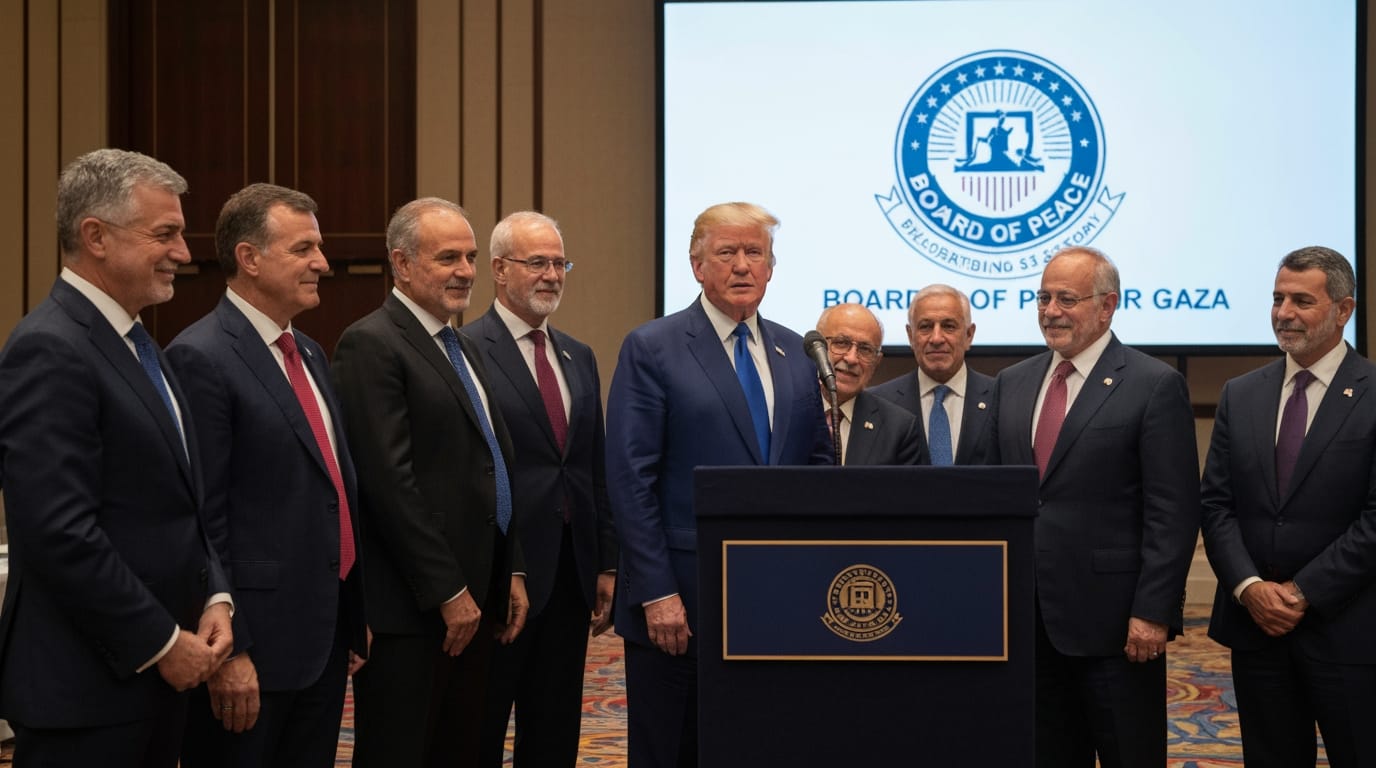
Washington D.C. – A newly formed international body, the Board of Peace, announced a substantial pledge of $5 billion for the reconstruction and humanitarian relief of war-torn Gaza, signaling a significant push for stability in the region. The commitment, revealed by President Donald Trump on Sunday, February 15, 2026, comes as the Board prepares for its inaugural meeting and aims to mobilize global resources for the beleaguered Palestinian territory. The initiative also includes the deployment of thousands of international personnel for stabilization and local policing efforts.
The announcement marks a critical juncture in the ongoing efforts to address the aftermath of prolonged conflict in Gaza. The Board of Peace, chaired by President Trump and led by the United States government, was formally established just last month, with its stated purpose encompassing global peacekeeping, initially focusing on the complex challenges of Gaza's recovery. This financial commitment is intended to kickstart what many anticipate will be a monumental and multifaceted rebuilding process.
The Genesis and Mandate of the Board of Peace
The concept of the Board of Peace first emerged in September 2025, culminating in its formal ratification on January 22, 2026, during the 56th World Economic Forum in Davos, Switzerland. President Trump initially heralded the board's formation on January 15, 2026, through a post on Truth Social, proclaiming it the "Greatest and Most Prestigious Board ever assembled at any time, any place". Its establishment was notably endorsed by United Nations Security Council Resolution 2803, designating it as a body responsible for overseeing the implementation of the Gaza peace plan. While initially focused on Gaza, the Board's mandate has since expanded to address broader global conflict resolution.
The Board's executive leadership includes prominent figures such as Nickolay Mladenov as High Representative for Gaza, U.S. Secretary of State Marco Rubio, U.S. Special Envoy to the Middle East Steve Witkoff, Jared Kushner, former UK Prime Minister Tony Blair, World Bank President Ajay Banga, Apollo Global Management CEO Marc Rowan, and American political advisor Robert Gabriel Jr.. These members are expected to oversee specific portfolios crucial for Gaza's stabilization, including governance, regional relations, reconstruction, and investment.
Membership for the Board has drawn participation from a diverse array of nations, with 25 countries signing up, including key Middle Eastern states like the UAE, Jordan, Saudi Arabia, Turkey, Egypt, Kuwait, Bahrain, Qatar, and Israel. Other participating nations include Argentina, Belarus, Bulgaria, Indonesia, Pakistan, Vietnam, and Cambodia. Argentina, notably, was formally invited to join as a founding member on January 17, 2026. However, the Board has not garnered universal support; several European allies, including France, the United Kingdom, Germany, Norway, Sweden, Spain, and Slovenia, reportedly declined to join, and Canada's invitation was withdrawn. China and Russia have remained non-committal.
The $5 Billion Pledge and Gaza's Dire Needs
The $5 billion pledge represents a significant financial injection aimed at humanitarian relief and the extensive rebuilding efforts required in Gaza. Officials indicate the funds are earmarked for restoring essential services, rebuilding destroyed infrastructure, and fostering economic recovery. This commitment also comes with the promise of "thousands of personnel" to form an International Stabilization Force and bolster local police initiatives, crucial for maintaining security and order in the territory.
However, the scale of destruction in Gaza is immense, with the United Nations, World Bank, and European Union jointly estimating the total reconstruction cost could reach an staggering $70 billion. While the $5 billion pledge is a substantial initial step, it underscores the vast financial undertaking necessary to fully restore the enclave. Jared Kushner, a member of the Board, outlined a vision for a "New Gaza," which includes mock-ups of high-rises, coastal tourism, and economic zones, with some construction estimated to be completed within two to three years. He expressed confidence in a "master plan" without a "Plan B".
Context of the Broader Gaza Peace Plan
The Board of Peace operates within the framework of a broader "Gaza peace plan," officially termed the "Comprehensive Plan to End the Gaza Conflict". This multilateral agreement, brokered by President Trump in consultation with numerous Arab and Muslim nations, was announced on September 29, 2025, and subsequently signed on October 9, 2025, becoming effective the following day. It received the endorsement of the UN Security Council on November 17, 2025.
The peace plan outlines a phased approach, with the first phase focused on a ceasefire, aid delivery, and the release of hostages and detainees. Phase two, launched in mid-January, is centered on the demilitarization, governance reform, and large-scale reconstruction of Gaza. A critical condition for the plan's long-term success, as emphasized by President Trump, is the "full and immediate demilitarization" of Hamas. Trump issued an ultimatum on January 21, 2026, demanding Hamas disarm and release any remaining hostage remains "within weeks" or face severe consequences. Under the proposed governance structure, Gaza is envisioned to be temporarily managed by a technocratic, apolitical Palestinian committee, operating under the oversight of the Board of Peace.
Challenges and International Perspectives
Despite the ambitious pledges and peace plans, the situation on the ground remains fraught with challenges and skepticism. While a ceasefire was declared, hundreds of Palestinians have reportedly been killed by Israeli fire since October 2025, with continuous attacks leading to over 590 Palestinian deaths since October 7, 2023, and a total of over 71,000 deaths since that date, predominantly women and children. Furthermore, Hamas has not publicly committed to disarmament, with senior officials indicating an intent to retain their weapons, asserting that "as long as there's an occupation, there's resistance".
The Board of Peace itself has faced criticism, with some international observers viewing it as an attempt by the United States to circumvent or even supplant the United Nations Security Council. Concerns have also been raised regarding the marginalization of sub-Saharan Africa, as few states from the region were invited or chose to participate. Critics also point to President Trump's singular veto power within the Board, which appears to be independent of his U.S. presidency. The credibility and ultimate effectiveness of the Board have been questioned by various international actors and even by Palestinians, who remain doubtful about its ability to deliver positive outcomes.
Conclusion: A Path Forward or Further Divisions?
The pledge of $5 billion by backers of the Board of Peace for Gaza's reconstruction signifies a determined effort to bring about tangible change and stability in a region long plagued by conflict. The initiative, championed by President Trump, aims to address both humanitarian needs and long-term developmental goals, supported by a diverse international coalition and a clear peace plan framework. However, the enormity of Gaza's rebuilding challenge, coupled with persistent security concerns, political complexities, and skepticism from various international quarters, underscores the formidable obstacles ahead. The upcoming inaugural meeting of the Board of Peace in Washington D.C. is anticipated to provide further clarity on the operational mechanisms and initial steps of this ambitious undertaking, setting the tone for what promises to be a closely watched international endeavor.


