Maverick Challenger Upends Hungarian Political Landscape Ahead of Pivotal Elections
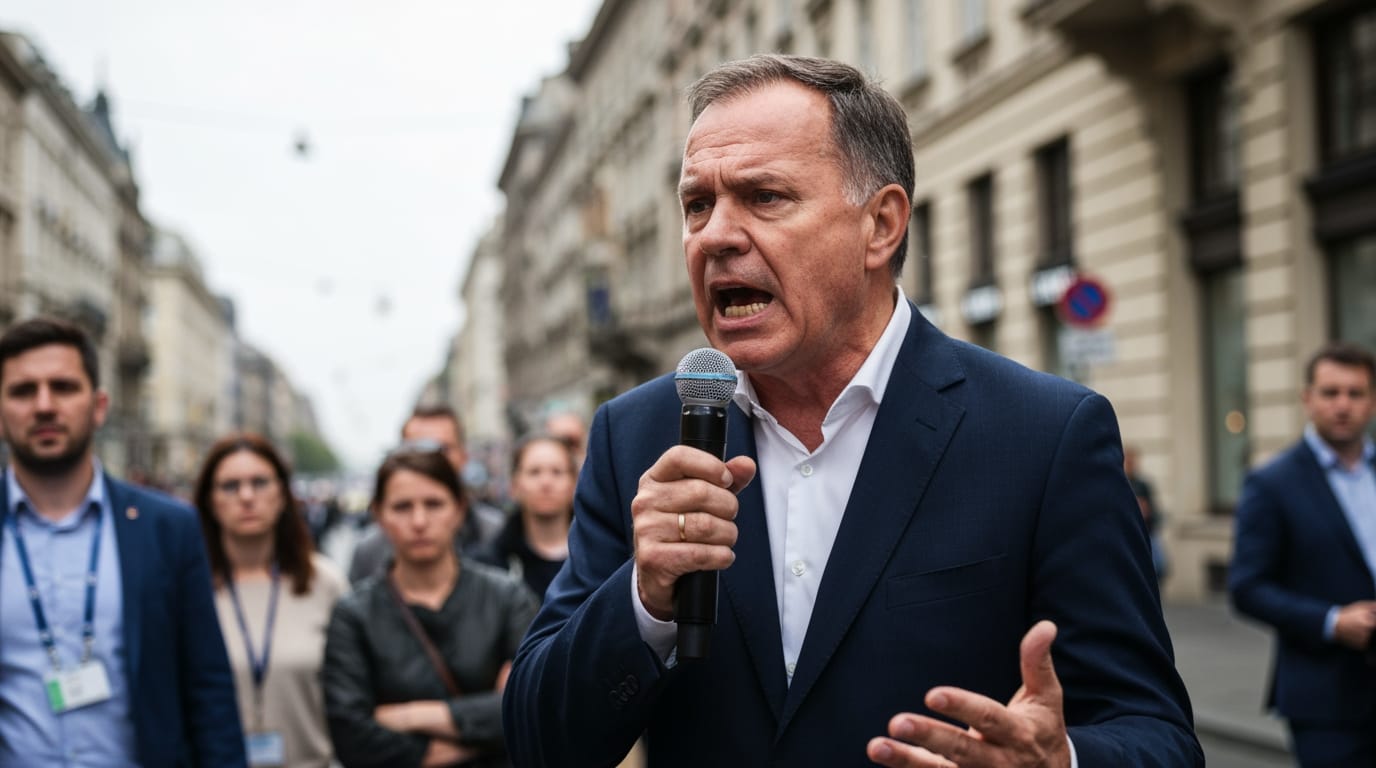
BUDAPEST, Hungary – A new and formidable political force has rapidly emerged in Hungary, significantly altering the political calculus and presenting the most substantial challenge to Prime Minister Viktor Orbán’s long-standing rule in over a decade. Péter Magyar, a former government insider, has galvanized a segment of the electorate discontent with both the ruling Fidesz party and the fragmented traditional opposition, launching an anti-corruption and pro-European campaign that has swiftly gained traction across the nation. With parliamentary elections scheduled for April 12, 2026, the political future of Hungary now appears more contested than at any point since Orbán returned to power in 2010.
The Unexpected Challenger's Ascent
Péter Magyar, a lawyer and former diplomat with deep ties to Hungary’s political establishment, began his unexpected rise to prominence in early 2024. Until then, Magyar was a relatively unknown figure to the broader public, despite holding various government-related positions and being the ex-husband of Judit Varga, Hungary’s former Justice Minister. His dramatic break from the Fidesz-led government followed a presidential pardon scandal that rocked the nation in February 2024. The controversy centered on former President Katalin Novák’s decision to pardon a man implicated in a child sexual abuse cover-up, a move that also led to Varga’s resignation from public life as she had countersigned the pardon.
In the wake of the scandal, Magyar publicly resigned from all his state-owned enterprise board positions and launched a scathing critique of the government. He accused the Fidesz administration of systemic corruption and manipulating evidence in high-profile cases, most notably the Völner-Schadl corruption affair. Magyar underscored his claims by releasing an audio recording which he alleged contained evidence of government officials attempting to tamper with documents in the corruption investigation. This public denouncement by a former insider resonated deeply with a population weary of perceived corruption, setting the stage for his political emergence. On March 15, 2024, Hungary's national holiday, Magyar announced his intention to form a new political platform for citizens disillusioned with both the government and the established opposition. To circumvent the time constraints of establishing a new party, he swiftly took over the dormant Respect and Freedom (Tisza) Party, transforming it into the vehicle for his nascent political movement.
A New Force in Hungarian Politics
The Tisza Party, under Magyar’s leadership, made an immediate and significant impact on the Hungarian political scene. In the June 2024 European Parliament elections, the party secured nearly 30% of the vote, a remarkably strong showing for a political entity that had only recently entered the public consciousness. This performance cemented Tisza’s position as the strongest opposition force, effectively displacing the traditionally fractured anti-Orbán parties and establishing Magyar as a prominent opposition leader.
Magyar's campaign strategy has involved vigorous grassroots outreach, including extensive tours across Hungary’s rural heartland—areas traditionally considered Fidesz strongholds. His message centers on combating corruption, restoring the rule of law, and reorienting Hungary toward a stronger European alignment. He has criticized Orbán's government for economic mismanagement, emphasizing domestic concerns such as low wages, rising living costs, and the need for improved social services and healthcare. The Tisza Party's detailed governing program outlines policy reforms aimed at tackling corruption, enhancing Hungary's relationship within the European Union, and committing to adopting the Euro by 2030. This blend of national focus with pro-European sentiment, coupled with his background as a former Fidesz member, has allowed Magyar to appeal to a broad spectrum of voters, including disaffected Fidesz supporters and those who previously saw no viable alternative in the traditional opposition.
Shifting Political Tides and Fidesz's Response
Magyar’s sudden emergence has fundamentally reshaped Hungary’s political landscape, posing the most significant electoral threat to Viktor Orbán's Fidesz party since 2010. Analysts suggest his rise could lead to a two-party system in Hungary, a departure from the fragmented opposition that has characterized recent elections. The upcoming parliamentary elections on April 12, 2026, are now widely seen as a critical test of this new political dynamic.
Public opinion polls present a mixed, yet compelling, picture. Some independent surveys indicate that the Tisza Party holds a substantial lead over Fidesz among decided voters, suggesting a significant shift in political allegiances. These polls highlight an "anti-incumbent mood" that Magyar has effectively harnessed by focusing on social and economic dissatisfaction. However, other polling institutes, particularly those with government affiliations, continue to show Fidesz and Orbán maintaining a lead, especially among the general population and in rural areas where Orbán enjoys higher favorability. These discrepancies underscore the polarized nature of Hungarian politics and the challenges in accurately gauging public sentiment.
Fidesz's response to Magyar's ascendance has evolved from initial underestimation to an aggressive counter-campaign. Initially, government circles reportedly "deeply despised Magyar" and viewed him as a "buffoon" who would eventually self-destruct. However, as his support grew, Fidesz launched a series of smear campaigns, including allegations of domestic abuse leveled by his ex-wife, Judit Varga, which Magyar denied, claiming she was being blackmailed by the government. More recently, Magyar has accused Fidesz of employing "Russian-style" tactics, alleging preparations for a blackmail campaign involving secretly recorded intimate videos, which he claims could only have been obtained through illegal means. Fidesz has also sought to portray Magyar as a "Brussels and Kyiv proxy," aiming to dismantle popular social programs and draw Hungary into the war in Ukraine, thereby appealing to its nationalist and Eurosceptic base.
The Road Ahead: Challenges and Uncertainties
Despite his rapid ascent, Péter Magyar and the Tisza Party face considerable challenges in their bid to unseat Viktor Orbán. Fidesz benefits from a deeply entrenched political machine, significant media dominance, and an electoral system that has historically favored the ruling party, particularly in rural districts. Sustaining the momentum generated by anti-incumbent sentiment, particularly over a longer campaign period leading up to the 2026 parliamentary elections, will be crucial. Furthermore, Magyar's policy positions, while broadly pro-European, also exhibit a degree of continuity with some Orbán-era policies, such as retaining popular social programs and a nuanced stance on Ukraine's EU accession, which could present complexities.
Magyar has pledged to unlock billions in EU funds currently frozen due to concerns over democratic institutions and rule of law under Orbán. He aims to rebuild trust with EU and NATO allies, framing his movement as a path for Hungary to regain its standing within the European mainstream. However, the path to a complete break with Orbán-era policies might be more complex, given Magyar’s own political instincts shaped by years within the Fidesz system. The political establishment, including elements within Fidesz, may also view Magyar with a mix of disdain and discomfort, given his origins within their ranks.
Conclusion
Péter Magyar's emergence as a credible challenger marks a significant turning point in Hungarian politics. His anti-corruption platform, coupled with a pro-European but nationally focused agenda, has tapped into widespread dissatisfaction, creating a dynamic election cycle unseen in Hungary for years. The success of the Tisza Party in the 2024 European Parliament elections underscored the potential for a genuine shift in power. As the country approaches the April 2026 parliamentary elections, the battle between Orbán's established political dominance and Magyar's burgeoning movement promises to be intense and closely watched. The outcome will not only determine Hungary's domestic trajectory but also its future role within the European Union, making this an election with profound implications both at home and abroad.


