Rubio Solidifies Ties with Eastern European "Trump Allies" Amidst Shifting Geopolitical Landscape
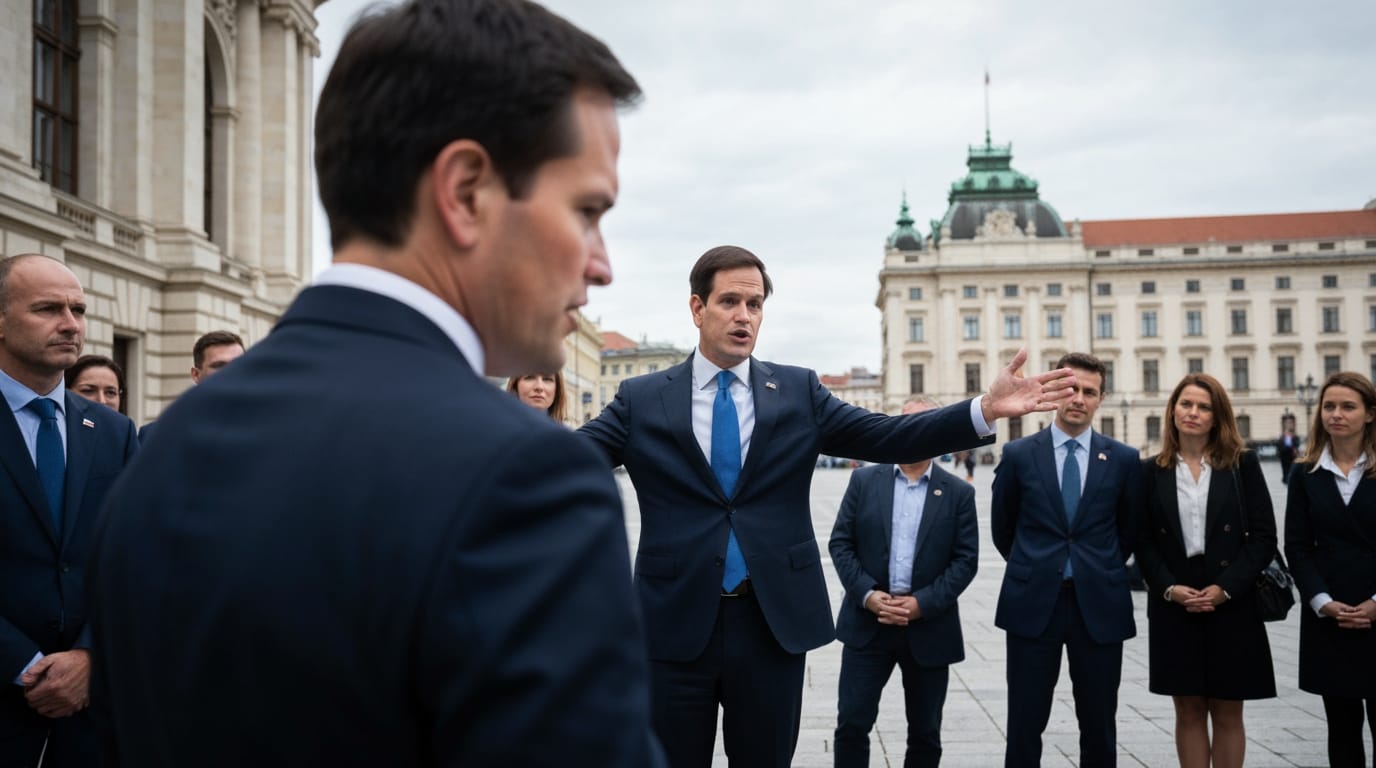
Bratislava, Slovakia / Budapest, Hungary – February 15, 2026 – U.S. Secretary of State Marco Rubio embarked on a two-day diplomatic tour of Eastern Europe this weekend, aiming to reinforce partnerships with Slovakia and Hungary. The visit underscores a strategic focus on nations whose conservative leaders, Prime Minister Robert Fico of Slovakia and Prime Minister Viktor Orban of Hungary, maintain notably warm relations with former President Donald Trump. Occurring immediately after Rubio's participation in the Munich Security Conference, where he articulated a vision for a "revitalized transatlantic alliance," the trip signals a deliberate effort to strengthen bonds with ideologically aligned governments within a complex European political environment.
Diplomacy Amidst Shifting Alliances
Secretary Rubio, serving in the dual capacity of Secretary of State and National Security Advisor, commenced his Eastern European itinerary in Bratislava, Slovakia, on Sunday, February 15. There, he engaged with Slovak Prime Minister Robert Fico and President Peter Pellegrini. The discussions focused on energy cooperation, various bilateral issues, and reaffirming NATO commitments. Rubio characterized these nations as "very strong with us, very cooperative with the United States," indicating a shared perspective on critical international matters. The meeting with Prime Minister Fico held particular relevance, as Fico had recently traveled to Florida to meet with former President Trump.
Following his stop in Slovakia, Secretary Rubio proceeded to Budapest, Hungary, where he was scheduled to meet with Prime Minister Viktor Orban on Monday, February 16. This visit was preceded by a public endorsement from former President Trump, who lauded Orban as "a true friend, fighter, and WINNER" ahead of Hungary's April elections. The State Department emphasized that in Budapest, Rubio would "meet with key Hungarian officials to bolster our shared bilateral and regional interests, including our commitment to peace processes to resolve global conflicts and to the US-Hungary energy partnership."
The diplomatic engagements follow Rubio's address at the Munich Security Conference, where he delivered a speech perceived by some as reassuring, yet firm, regarding the Trump administration's foreign policy approach. His message in Munich underscored the importance of a "revitalized transatlantic alliance" and the defense of "Western civilization," themes that resonate with the conservative political platforms of both the Slovak and Hungarian leaders. Rubio's appearance at the conference, where he called on Europeans to rally behind the U.S. president's vision of a "renewal" of the world order, set the stage for these direct engagements with key allies in Eastern Europe.
The 'Trump Ally' Nexus in Eastern Europe
The leaders of Slovakia and Hungary have cultivated distinct political profiles that align them closely with the "America First" tenets championed by former President Trump. Prime Minister Viktor Orban, a long-serving figure in Hungarian politics, is widely regarded as one of Trump's closest European allies. His political agenda emphasizes strict anti-immigration policies, promotion of traditional family values, and Christian conservatism, positions that have garnered admiration from the American hard-right. Hungary has also repeatedly hosted Conservative Political Action Conference (CPAC) events, further solidifying these ideological ties. Orban's government has frequently found itself at odds with mainstream European Union institutions, particularly over issues pertaining to democratic rules and rule of law. Moreover, Orban has maintained open channels of communication with Russian President Vladimir Putin and has, at times, resisted or delayed EU initiatives aimed at supporting Ukraine and imposing sanctions on Russia.
Similarly, Slovak Prime Minister Robert Fico, who recently returned to power, has shown a willingness to align with Trump-era political sentiments. Fico's government has also faced scrutiny from EU bodies regarding democratic backsliding and has expressed reservations about providing military aid to Ukraine. The nature of these relationships was highlighted by a reported, though denied, incident during Fico's visit to Mar-a-Lago, where European diplomats allegedly heard Fico express concerns about Trump's mental state. Despite this anecdote, Fico stated that his discussions with Trump were "extremely important," particularly concerning nuclear energy.
These leaders represent a segment of the European political landscape that champions national sovereignty and challenges multilateral approaches, reflecting a broader trend that the Trump administration has sought to engage and, in some cases, empower. Rubio's visit underscores the U.S. administration's intent to foster these relationships as a component of its global strategy.
Geopolitical Implications and Regional Dynamics
The timing and targets of Secretary Rubio's tour carry significant geopolitical implications for transatlantic relations, NATO, and the future of the European Union. By engaging directly with leaders who have often been critical of EU policies and maintained contentious ties with Moscow, the U.S. administration signals a nuanced approach to European diplomacy, prioritizing bilateral connections with ideologically sympathetic governments. This strategy could be interpreted as an effort to cultivate alternative points of influence within Europe, distinct from traditional alliances.
The discussions on energy cooperation are particularly salient, given Europe's ongoing efforts to diversify energy sources and reduce reliance on Russia, especially in the wake of the conflict in Ukraine. While both Hungary and Slovakia have been part of the broader European response to the conflict, their governments have also expressed concerns about the economic impact of sanctions and the extent of military involvement. Orban's prior securing of an exemption from U.S. sanctions on Russian oil and gas imports further illustrates Hungary's unique position and its leverage within certain U.S. policy circles.
Rubio's emphasis on NATO commitments, despite the ideological alignments, highlights the administration's expectation that these "Trump allies" will continue to fulfill their defense obligations. This aspect of the visit balances the cultivation of political alignment with the pragmatic requirements of collective security, particularly in a region sensitive to Russian influence. The visit also comes amidst broader European anxieties about the U.S. commitment to traditional alliances, a concern that Rubio attempted to address in his Munich speech by affirming that the U.S. and Europe "belong together." However, his advocacy for "America First" principles, including skepticism toward "outdated globalist structures" and "unchecked mass migration," underscores a continued divergence from some mainstream European views.
Domestic Political Context and Future Trajectories
The visit also occurs at a critical juncture for the domestic political landscapes of both Slovakia and Hungary. Prime Minister Viktor Orban faces a challenging re-election bid in April, with recent polls indicating he is trailing significantly behind opposition challenger Peter Magyar. The public endorsement from former President Trump and the high-profile visit from Secretary Rubio could be interpreted as a strategic move to bolster Orban's standing ahead of the election, providing a boost from a powerful international ally. The timing suggests an interest from the U.S. administration in the electoral outcomes in these nations, particularly in maintaining leaders favorable to their broader foreign policy vision.
Slovak Prime Minister Robert Fico's government, having recently returned to power, has already encountered friction with European Union institutions over concerns about the rule of law. The U.S. outreach could provide Fico's administration with a degree of international validation amidst these internal and external pressures.
Beyond this specific Eastern European tour, Secretary Rubio also held discussions with Serbian President Aleksandar Vučić in September 2025 on the sidelines of the United Nations General Assembly in New York. While not a direct part of the Eastern European trip, this engagement with another leader who maintains complex relations with both Western and Eastern powers further illustrates the U.S. administration's extensive diplomatic outreach to figures across the region. Discussions with Vučić included strengthening political dialogue, economic cooperation, and addressing U.S. tariffs, as well as an upcoming strategic dialogue and U.S. participation in EXPO 2027. Vučić, like Orban, has navigated a path that balances European aspirations with strong ties to countries like Russia and China.
Conclusion
Secretary of State Marco Rubio's visits to Slovakia and Hungary represent a calculated diplomatic maneuver by the U.S. administration to fortify relationships with leaders perceived as ideologically aligned "Trump allies" within Eastern Europe. Conducted under the overarching theme of revitalizing transatlantic ties while advancing "America First" principles, the trip aimed to discuss critical issues such as energy security, bilateral cooperation, and NATO commitments. The engagements underscore a broader U.S. foreign policy approach that seeks to engage with diverse political currents across Europe, particularly those that champion national sovereignty and question established multilateral norms. As Europe continues to grapple with internal divisions and external pressures, these strategic visits highlight the administration's efforts to shape a new era of alliances and influence within a rapidly evolving global order.


