Border Tensions Flare as Pakistan Downs Afghan Taliban Drones Amid Escalating Retaliation
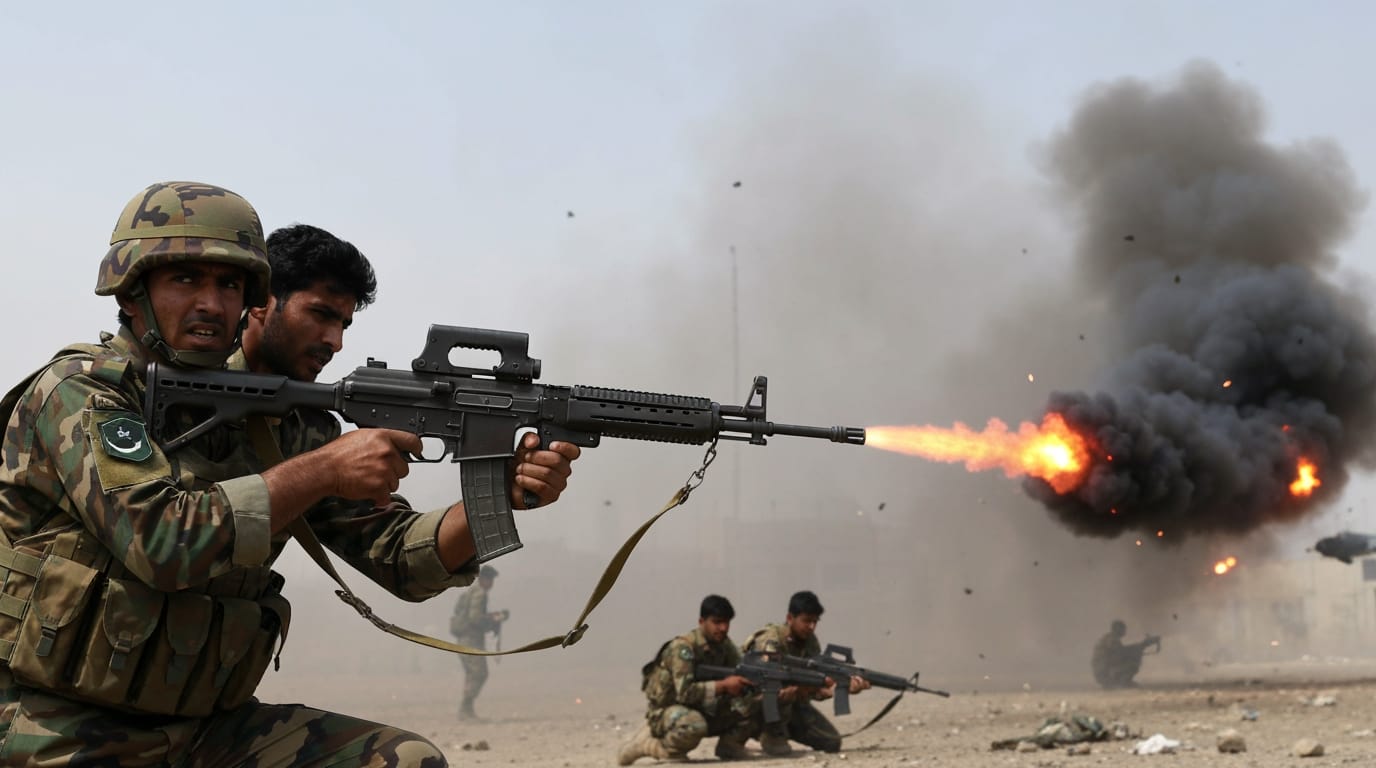
ISLAMABAD, Pakistan – The fragile relationship between Pakistan and Afghanistan has plummeted to a dangerous new low following a series of cross-border skirmishes culminating in Pakistan's interception of multiple "rudimentary drones" launched by the Afghan Taliban. This dramatic escalation on Friday, March 13, 2026, unfolded after Pakistani airstrikes targeted alleged militant hideouts deep within Afghan territory, sparking immediate condemnations and threats of retaliation from Kabul. The exchange marks a significant intensification of hostilities, raising alarm bells across the region about the potential for broader conflict.
The volatile situation peaked when Pakistan's military confirmed it had successfully neutralized several drones that had penetrated its airspace, with debris from the downed devices causing injuries to at least four civilians, including two children, in separate incidents across Pakistani cities. These drone incursions were quickly characterized by Islamabad as a deliberate attempt by the Afghan Taliban to sow fear among the Pakistani populace, coming on the heels of Pakistani "precision strikes" inside Afghanistan that Kabul claims resulted in civilian casualties. The tit-for-tat actions underscore a deepening rift, transforming long-simmering border disputes into an overt and dangerous confrontation.
Escalation Over the Border: Pakistan's Airstrikes and Afghan Retaliation
The latest cycle of aggression began in the predawn hours of Thursday, March 13, when Pakistan launched a series of airstrikes targeting what it identified as terrorist infrastructure within Afghanistan. Pakistani officials asserted these strikes were aimed at installations and training camps directly or indirectly supporting terrorism, emphasizing that no civilian populations or infrastructure were intentionally targeted. According to Pakistani security officials, the targets included a corps headquarters, an ammunition dump in Kabul, a militant training camp, and an oil storage facility in Kandahar, as well as a militant camp in Paktia. This action was framed as a continuation of "Operation Ghazab lil-Haq," an ongoing campaign initiated to counter the surge in cross-border terrorist activities, particularly in Pakistan's Khyber Pakhtunkhwa (KP) and Balochistan provinces, since the Afghan Taliban’s return to power in 2021. The operation has reportedly resulted in the deaths of over 650 Afghan Taliban fighters and the destruction of numerous militant checkposts.
The Afghan Taliban, however, painted a starkly different picture, swiftly condemning the Pakistani strikes as a violation of sovereignty and an attack on civilians. The Afghan Defense Ministry claimed that the Pakistani air raids killed at least four civilians in Kabul and two in border provinces, including casualties in residential areas of the capital. In a swift and defiant response, the Taliban vowed to retaliate and subsequently claimed to have launched drone strikes against Pakistani military facilities.
Drones Over Pakistan: Interception and Casualties
Hours after Pakistan's initial strikes, the battlefield shifted across the border as Afghan Taliban-launched drones attempted to penetrate Pakistani airspace. Pakistan's Inter-Services Public Relations (ISPR), the media wing of its military, reported on Saturday that multiple "rudimentary drones" had been detected and intercepted on Friday, March 13. These drones, described as unsophisticated devices, were successfully brought down before they could reach their intended targets, which reportedly included the military's own headquarters in Rawalpindi, near Islamabad.
The interceptions were carried out using a combination of "soft and hard kills," involving both electronic countermeasures and physical interception, according to the ISPR. While the drones failed to achieve their strategic objectives, their debris caused unforeseen harm. Fragments from the destroyed drones fell in various locations, injuring four individuals. Two children in Quetta, Balochistan, sustained injuries, as did one civilian each in Kohat and Rawalpindi. The incident prompted a temporary closure of airspace around the capital as a precautionary measure.
The Pakistani military characterized these drone attacks as an attempt to "harass the people of Pakistan" and "induce fear," accusing the Afghan Taliban leadership of simultaneously projecting victimhood internationally while actively targeting civilians through proxies and drones. Meanwhile, the Afghan Defense Ministry, contradicting Pakistan's account of successful interception, claimed its retaliatory drones had successfully struck strategic Pakistani military centers and facilities in Kohat, including a military fortress and a command center, even releasing video footage it asserted showed a drone flying toward the targeted locations. Pakistani security officials, however, disputed these claims, maintaining that the Afghan drones were effectively brought down and did not hit their targets.
A Widening Conflict: Regional Instability and Diplomatic Fallout
The recent exchanges have plunged Pakistan-Afghanistan relations into a profound crisis, with Pakistan's President Asif Ali Zardari unequivocally stating that the Afghan Taliban had "crossed a red line" by launching drone attacks against civilian targets. This statement reflects the gravity of the situation, which Pakistan's defense minister has already described as an "open war" between the two nations.
The core of the dispute lies in Pakistan's long-standing grievances regarding the presence and activities of the Tehrik-e-Taliban Pakistan (TTP), also known as the Pakistani Taliban, on Afghan soil. Islamabad alleges that the Afghan Taliban leadership provides sanctuary and support to the TTP, which has intensified its attacks inside Pakistan and along the border since the Afghan Taliban regained power in 2021. The cross-border clashes and accusations have been ongoing for weeks, contributing to trade disruptions and forced displacement of residents along the volatile border.
The ISPR reiterated that "Operation Ghazab lil-Haq" would continue until Pakistan's fundamental concerns about terrorism emanating from Afghan territory are fully addressed. The military affirmed its resolve to defend Pakistan's population against "terrorists and their facilitators" and not to "flinch in the face of such provocations by the Afghan Taliban."
The Evolving Face of Cross-Border Warfare
This recent escalation highlights the changing nature of cross-border conflicts, with rudimentary drone technology becoming an accessible tool for non-state actors and, increasingly, even state-like entities with limited conventional airpower. The use of such drones, while lacking the sophistication of advanced military platforms, still poses significant security challenges, capable of causing localized damage, psychological impact, and creating complex interception scenarios. The ability to deploy these devices from remote locations complicates border security and necessitates advanced countermeasures, as demonstrated by Pakistan's "soft and hard kill" tactics. This development introduces a new dimension to regional instability, requiring both countries to re-evaluate their defense strategies and the broader implications for civilian safety.
The current trajectory of Pakistan-Afghanistan relations is fraught with peril. With both sides trading accusations and engaging in kinetic actions, the prospects for de-escalation appear dim. The international community watches closely as the two neighboring nations, already contending with myriad internal and regional challenges, navigate a deepening security crisis that threatens to destabilize an already volatile part of the world. Without a concerted effort towards dialogue and addressing core grievances, the cycle of violence risks further entrenching animosity and perpetuating an environment of instability across the Durand Line.


