Brazilian Justice Halts Law Aimed at Reducing Bolsonaro's Prison Term
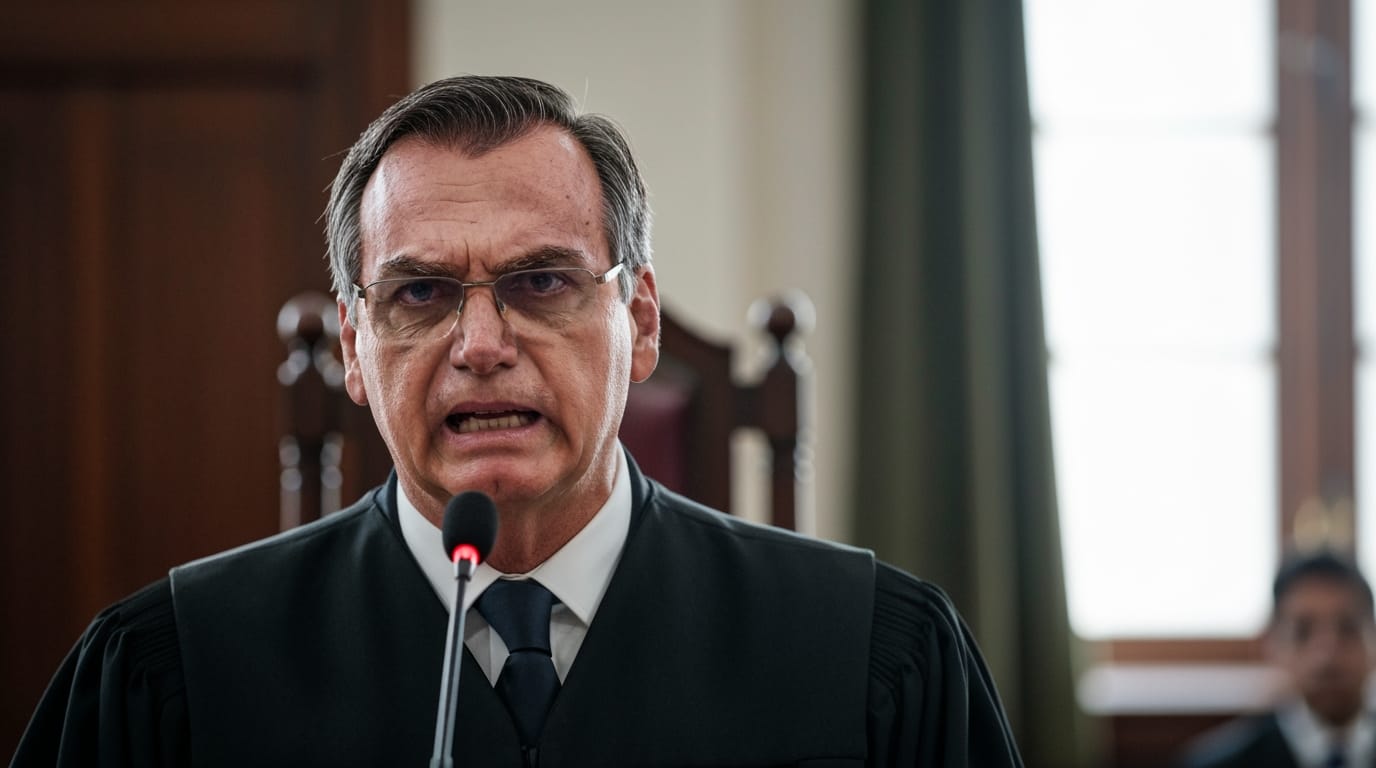
BRASÍLIA — In a pivotal legal development, a Brazilian Supreme Court Justice has suspended a recently enacted law that could have drastically cut the prison sentence of former President Jair Bolsonaro, who was convicted of plotting a coup. The decision by Justice Alexandre de Moraes on Saturday, May 9, 2026, halts a legislative maneuver that many viewed as an attempt to reduce penalties for individuals involved in the January 8, 2023, attacks on federal government buildings, including Bolsonaro himself. The suspension underscores the ongoing clash between Brazil's legislative and judicial branches, with profound implications for the nation's political landscape and the future of its democratic institutions.
Judicial Intervention Amid Constitutional Concerns
Justice Alexandre de Moraes issued the temporary injunction to ensure "legal security" while the Supreme Court prepares for a full plenary review of the controversial legislation. The judge's decision came after two prominent Brazilian political parties and the Brazilian Press Association (ABI) filed separate appeals challenging the constitutionality of the new law. They argued that the measure, which sought to amend sentencing guidelines, was fundamentally flawed and could undermine the rule of law by retroactively easing penalties for serious crimes against the state. Moraes's ruling prohibits the immediate implementation of the law, effectively freezing any potential sentence reductions until Brazil's highest court can deliberate on its legality.
The suspension injects further uncertainty into the legal fate of Bolsonaro, who was sentenced to 27 years in prison last year for his role in plotting a coup following his 2022 election defeat. The former president is currently serving his term under humanitarian house arrest due to medical reasons, a status granted for an initial 90-day period. His legal team had already filed a separate motion for criminal review with the Supreme Court on May 8, seeking to overturn his conviction entirely, independent of the suspended law.
The Controversial Law's Tortuous Path
The law at the heart of this dispute, informally dubbed the "Dosimetry Law," has a contentious history. It was initially approved by Brazil's Congress in December 2025, sparking immediate concern among critics who saw it as a thinly veiled effort to benefit Bolsonaro and his allies. President Luiz Inácio Lula da Silva, Bolsonaro's political rival, vehemently vetoed the bill in January 2026, coinciding with the third anniversary of the January 8 riots. Lula argued at the time that reducing sentences for an attempted coup would send a dangerous message and encourage similar crimes in the future, stating unequivocally that Bolsonaro "must remain in prison."
However, the conservative-leaning Congress, comprising both the lower house and the Senate, mounted a successful challenge to Lula's veto. On April 30, 2026, lawmakers comfortably overturned the presidential rejection, with the lower house securing 318 votes against the required 257, and the Senate approving the override with 49 votes, surpassing the 41 needed. Following this legislative victory, and with President Lula traveling abroad, the Senate President Davi Alcolumbre formally promulgated the law on May 8, 2026, after the 48-hour deadline for presidential notification expired.
The core of the "Dosimetry Law" revolves around changes to sentencing calculations. It specifies that for individuals convicted of multiple crimes, including offenses against the democratic rule of law and leading a coup, the sentence should be determined solely based on the charge carrying the highest penalty. Furthermore, the measure introduced provisions allowing for significant reductions, ranging from one-third to two-thirds, for individuals convicted as part of a crowd, provided they were not identified as organizers or financiers of the illicit acts.
Significant Implications for Bolsonaro and Co-Defendants
Had Justice Moraes not intervened, the recently enacted law could have drastically altered the length of Bolsonaro's incarceration. Analysts suggested the changes could have shaved approximately 20 years off his 27-year sentence, potentially reducing it to as little as just over two years or from 27 years and three months to 22 years and one month. This reduction would have significantly shortened the time he would be required to serve under a closed regime, potentially allowing him to transition to an open regime as early as 2028.
Beyond Bolsonaro, the law also held considerable implications for an estimated 280 other individuals convicted in connection with the January 8, 2023, attacks. These individuals, many of whom were Bolsonaro supporters who stormed and ransacked the presidential palace, Supreme Court, and Congress, stood to benefit from the milder sentencing guidelines, particularly the provisions for those involved as part of a crowd.
The efforts to reduce Bolsonaro's sentence are not new. In an earlier, separate development in January 2026, a Supreme Court judge authorized the former president to participate in a legal scheme allowing inmates to reduce their sentences by four days for each book read. This creative legal strategy, though minor in comparison, highlighted the persistent attempts by Bolsonaro's legal team to mitigate his prison term.
A Deepening Political Chasm
The legislative push to pass the "Dosimetry Law" and the subsequent judicial suspension underscore the deep political divisions currently gripping Brazil. For Bolsonaro's conservative allies in Congress, the law represented a crucial "first and much awaited step," with some openly expressing hopes for a "full amnesty" for those convicted in the January 8 events. Their success in overriding President Lula's veto was perceived as a significant blow to the incumbent's political standing, particularly ahead of Brazil's October 2026 presidential election, where Lula is expected to seek re-election.
The judiciary's firm stance, as exemplified by Justice Moraes's ruling, reinforces its role as a check on legislative power and a guardian of constitutional principles, especially in cases concerning democratic integrity. The ongoing legal battles surrounding Bolsonaro's fate reflect a broader struggle for Brazil's institutional stability and the definition of accountability for actions deemed anti-democratic. The Supreme Court's eventual full review of the "Dosimetry Law" will undoubtedly be a landmark decision, shaping the legal precedent for similar cases in the future and influencing the political climate for years to come.
The Rule of Law in Focus
The suspension of the law aimed at reducing sentences, including that of former President Jair Bolsonaro, reaffirms the Brazilian judiciary's critical role in upholding constitutional norms and ensuring accountability for serious offenses. As the Supreme Court prepares to deliberate on the law's constitutionality, the nation watches closely. The outcome will not only determine the legal future of Bolsonaro and hundreds of other defendants but will also serve as a crucial test of Brazil's commitment to the rule of law and the resilience of its democratic institutions against political pressures. The judicial system's careful scrutiny ensures that legislative actions, particularly those with such profound societal implications, conform to the foundational principles of justice and legality.


