Bulgaria Votes Again: Eighth Election in Five Years Marks Critical Juncture Amid Deepening Political Crisis
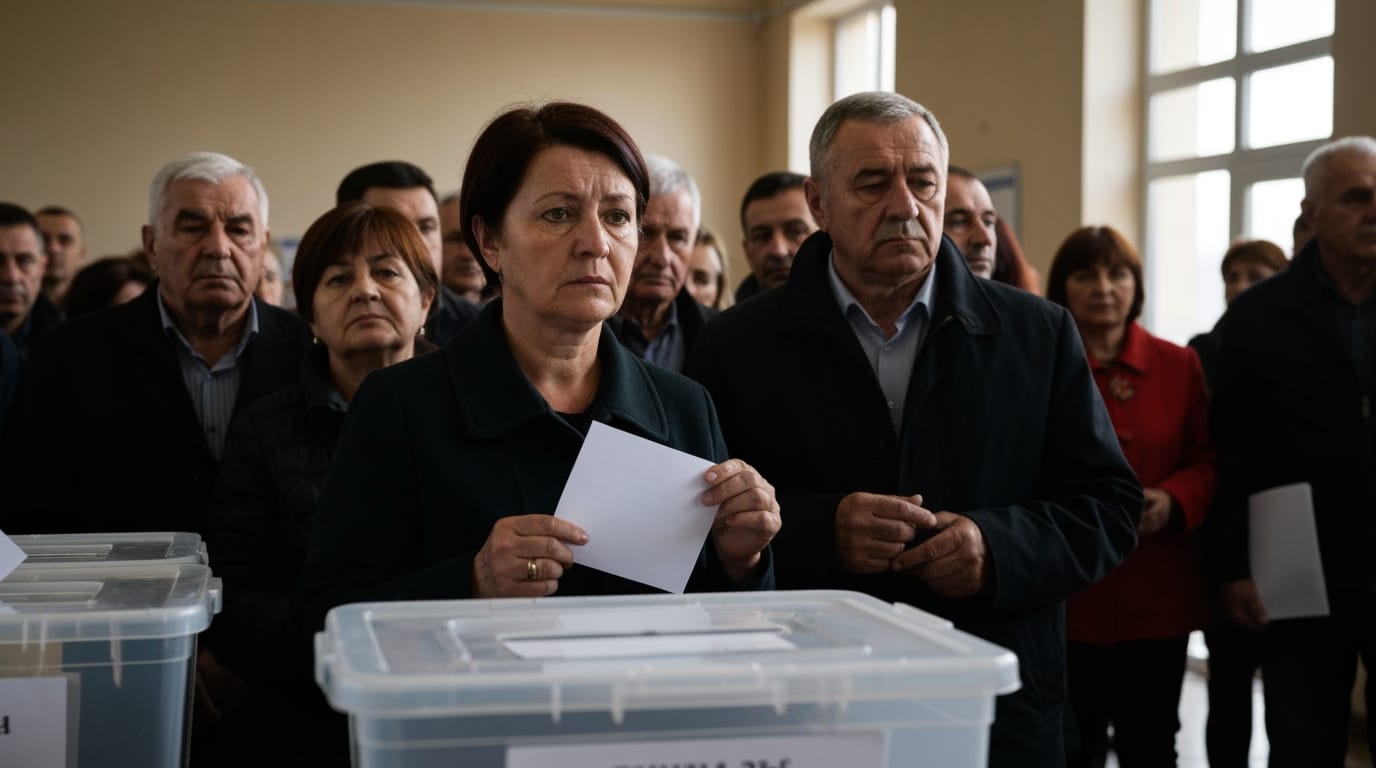
SOFIA – Bulgarians are heading to the polls today, April 19, 2026, for their eighth parliamentary election in just five years, a clear indicator of the profound and persistent political instability gripping the Balkan nation. This snap election, triggered by the December 2025 resignation of the Zhelyazkov government amidst widespread protests over budget proposals and rampant corruption, arrives at a critical juncture for the country's democratic institutions and its path within the European Union. With voter fatigue at an all-time high and a deeply fragmented political landscape, the outcome of today's vote is poised to determine whether Bulgaria can finally chart a course toward stable governance or remain ensnared in a cycle of electoral deadlock.
A Nation Plagued by Instability
Bulgaria's recurrent visits to the ballot box highlight a chronic inability of political forces to forge lasting governing coalitions since 2021. The period has seen short-lived governments and numerous caretaker administrations appointed by the presidency. The political turmoil stems from deeply entrenched divisions over judicial reform, anti-corruption measures, energy policy, and the country's stance on Russia's war in Ukraine. The previous parliamentary election in October 2024, the seventh since 2021, similarly failed to produce a stable majority. That election saw the center-right GERB–SDS coalition emerge with the largest share of the vote at 25.5%, but still far short of the 121 seats needed for a majority in the 240-seat National Assembly. Efforts to form a government following the October 2024 vote initially led to a minority government under Prime Minister Rosen Zhelyazkov, supported by GERB–SDS, BSP–OL, and ITN, with additional backing from APS. However, this administration proved fragile, ultimately collapsing in December 2025 after weeks of protests. Public distrust and disillusionment with this cycle of crises have contributed to historically low voter turnout, with the June 2024 elections witnessing the lowest participation since the end of communist rule in 1989, at around 33-34%.
The Contenders and Their Divergent Paths
The current election features a diverse array of political parties, each vying for influence in a fractured political arena. Recent polls indicate that the newly formed Progressive Bulgaria (PB) party, led by former President Rumen Radev, could emerge as the largest force, potentially securing over 33% of the vote. Radev, who resigned as President in January 2026 to form the party, has positioned himself as an anti-establishment figure dedicated to tackling corruption and curbing oligarchic influence. However, his more cautious stance on military support for Ukraine and skepticism regarding Bulgaria's Eurozone integration have raised concerns among some Western observers, who perceive him as more sympathetic to Russian interests.
Trailing PB in recent polls are the center-right GERB–UDF coalition, led by former Prime Minister Boyko Borissov, projected at 18-20%, and the reformist We Continue the Change-Democratic Bulgaria (PP-DB) coalition, at about 10%. GERB–SDS has historically been a dominant force in Bulgarian politics but has found it increasingly difficult to secure a governing majority. The PP-DB alliance, which briefly formed a government with GERB in 2023 on a rotating premiership agreement, has advocated for a pro-Western agenda, judicial reform, and anti-corruption measures. However, disagreements ultimately led to the collapse of their arrangement in March 2024, contributing to the cycle of snap elections. Other significant parties include the Movement for Rights and Freedoms (DPS), the pro-Russian and nationalist Revival party, and the Bulgarian Socialist Party (BSP). The rise of nationalist and pro-Russian parties, such as Revival, Mech, and Velichie, which gained traction by capitalizing on anti-Western rhetoric and frustrations with traditional elites, has intensified political polarization.
Enduring Challenges: Corruption and Economic Realities
The pervasive issue of corruption remains a central theme in Bulgarian politics and a significant driver of public discontent. Transparency International ranked Bulgaria among the EU countries with the highest perceived public-sector corruption in 2025. Mass protests against corruption have been a recurring feature of the Bulgarian political landscape since 2020. Despite promises of reform, a lack of progress in reforming the judicial system and combating corruption continues to erode public trust.
Economically, Bulgaria, while one of the fastest-growing economies in the EU with GDP growth exceeding 3% in recent years, also grapples with being the poorest EU member in terms of GDP per capita. The country officially adopted the euro on January 1, 2026, a move that followed rigorous fiscal discipline and a currency board system in place since 1997. While the Eurozone membership is seen as a step towards greater stability and integration, it also brings increased responsibility for maintaining financial stability through effective coordination between institutions. Inflation for 2024 was recorded at 2.2% annually, meeting Eurozone standards, although it is forecast to accelerate to 4% by the end of 2026. The government's proposed 2026 budget, which included tax hikes and higher social contributions, sparked the protests that led to the latest government's downfall, illustrating the public's sensitivity to economic policies.
The Shadow of External Influence and Election Integrity
Concerns over election integrity and external influence have shadowed the electoral process. The October 2024 election was partially annulled by the Constitutional Court due to evidence of vote manipulation, leading to a recalculation of results in March 2025. Reports of irregularities, including ballot stuffing and vote-buying, continue to plague the system, further diminishing public confidence. Ahead of today's vote, authorities have implemented new safeguards, including monitoring units and hotlines for reporting violations, and have reported numerous suspected vote-buying cases.
There are also growing concerns about Russian influence in Bulgarian domestic affairs. Bulgaria is considered a traditionally pro-Russian nation by some, and recent disinformation campaigns spreading pro-Russian and anti-Western content have been noted. The potential for leaders perceived as more Russophilic, such as Rumen Radev, to steer Sofia closer to Moscow, could lead to new conflicts within the EU. However, despite rising Euroskeptic sentiment, overall support for EU membership remains strong among Bulgarians.
As Bulgarians cast their ballots, the fundamental question remains whether this election can break the cycle of instability that has defined the country's politics for half a decade. The stakes are high, not only for Bulgaria's domestic governance and anti-corruption efforts but also for its continued integration and standing within the European Union. The outcome will likely shape the country's trajectory for years to come, either towards greater stability or further political fragmentation.


