Bulgarian Government Collapses Amid Widespread Protests, Prime Minister Zhelyazkov Resigns
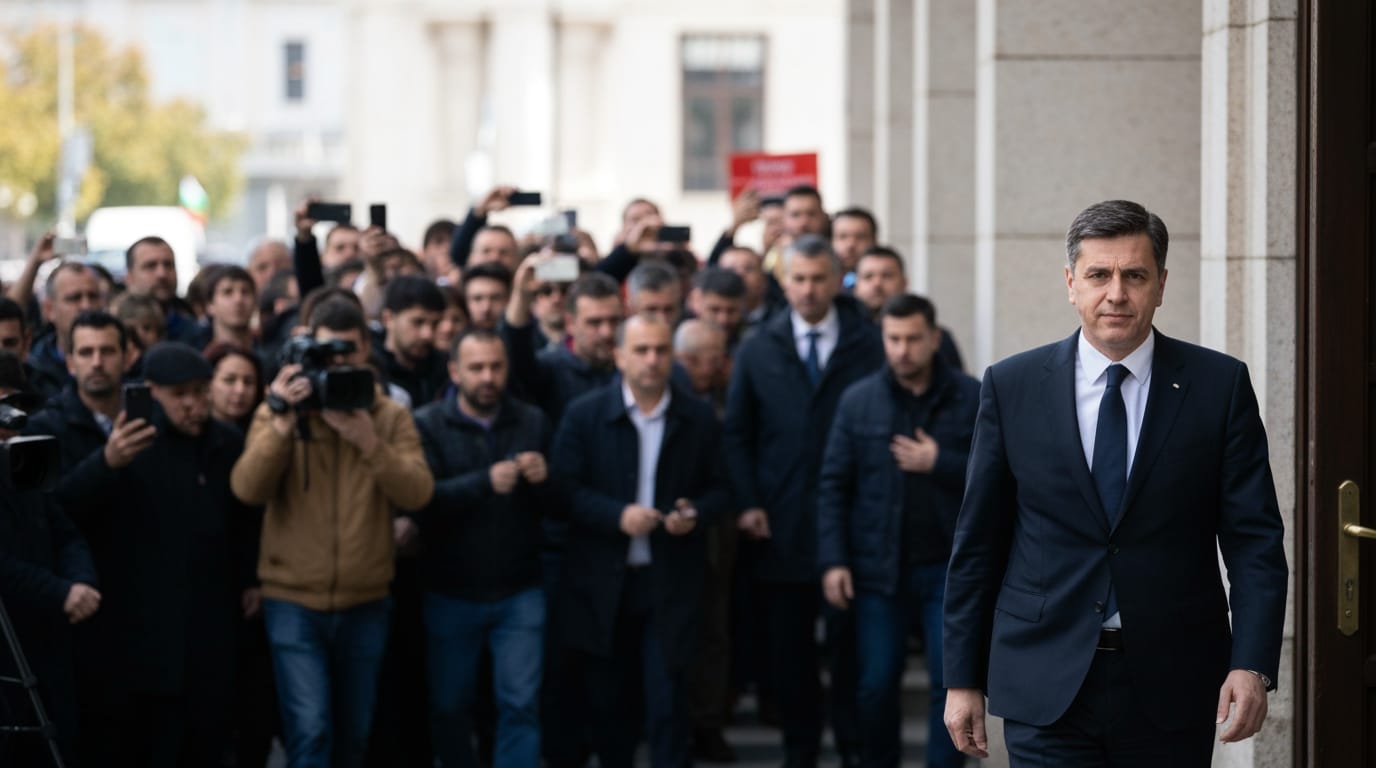
Sofia, Bulgaria – December 11, 2025 – Bulgaria's minority coalition government, led by Prime Minister Rosen Zhelyazkov, dramatically resigned today following weeks of relentless mass protests across the nation. The unexpected move comes just weeks before Bulgaria is slated to adopt the euro, plunging the country into fresh political uncertainty and highlighting deep-seated public fury over economic policies, perceived corruption, and a pervasive lack of transparency. The resignation was announced just minutes before a scheduled parliamentary no-confidence vote, signaling the government's acknowledgment of insurmountable public discontent.
The Spark: Budget Battles and Euro Doubts Ignite Public Outrage
The immediate catalyst for the burgeoning wave of protests was the government's proposed 2026 budget. These plans included contentious provisions for increased individual contributions to pension and social security programs, alongside significant pay hikes for state employees, including law enforcement. While opposition parties initially called the demonstrations on December 1, their calls resonated deeply with a populace already frustrated, drawing tens of thousands to Independence Square in Sofia and other major cities. Protesters vocalized concerns that new taxes and social contributions would not benefit ordinary citizens but instead fuel further corruption and waste within the government. The timing of these economic measures, so close to Bulgaria's planned entry into the Eurozone on January 1, 2026, further fueled public anxiety and skepticism about the government's priorities and the implications of the currency change.
A Deepening Crisis of Trust: Corruption and State Capture
Beneath the surface of the budget dispute lay a decade-long accumulation of grievances regarding endemic corruption and "state capture" within Bulgarian institutions. Protesters widely chanted "resign" and "the government is the mafia," echoing longstanding accusations of political deals, misuse of EU funds, and a lack of media freedom. High-profile political figures, such as former Prime Minister Boyko Borissov and influential oligarch Delyan Peevski, though not directly part of the Zhelyazkov government, were frequently invoked by demonstrators as symbols of a corrupt system. Their continued perceived influence over the country's political landscape, despite past scandals and international sanctions against Peevski for corruption, underscored the public's demand for fundamental systemic change, not just a change in cabinet. Transparency International consistently ranks Bulgaria as one of the most corrupt countries in the European Union, a statistic frequently cited by disillusioned citizens.
Unprecedented Mobilization and Unified Demands
The scale and intensity of the protests were notable, with demonstrations spreading well beyond the capital. Crowds massed in numerous towns and cities across Bulgaria, indicative of a broad spectrum of society unified in their demand for the government's resignation. Unlike some past demonstrations, the recent wave saw a unified and unwavering call for the entire government to step down, rather than accepting minor concessions or cabinet reshuffles. Public trust in national institutions, particularly the judicial system, has significantly eroded, contributing to a pervasive sense that the political system itself is failing its citizens. The sustained nature of the protests, including large gatherings on December 1, demonstrated a public resolve that ultimately proved insurmountable for the Zhelyazkov administration.
The Inevitable Fall: Resignation Ahead of No-Confidence
Prime Minister Zhelyazkov's government, which had taken office in January 2025, had already weathered six no-confidence motions during its short tenure. However, the immense public pressure generated by the latest protests appears to have been the decisive factor. "The decisions of the National Assembly are meaningful when they reflect the will of the people," Zhelyazkov stated during his resignation announcement. "We hear the voice of the citizens. Their demands are the resignation of the government, this is the current moment. This civic energy must be supported and encouraged." The resignation strategically preempted what was widely expected to be a successful seventh no-confidence vote, which had been tabled by the opposition over accusations of economic mismanagement. The government's decision to resign came swiftly after withdrawing the controversial budget proposals for 2026, a move that failed to appease the agitated public.
An Uncertain Future: Political Instability and Eurozone Aspirations
The resignation of Prime Minister Zhelyazkov marks another chapter in Bulgaria's ongoing political instability, a period that has seen the country hold seven parliamentary elections over the past four years since April 2021. This chronic political gridlock and frequent changes in government have significantly hampered effective governance and deepened public cynicism. With the current government's fall, Bulgaria now faces the high probability of yet another snap election.
Despite the political turmoil, the process for Bulgaria to adopt the euro on January 1, 2026, remains on track, though the long-term implications of continued instability on the transition are yet to be seen. The latest crisis underscores the urgent need for comprehensive reforms to restore public trust, combat corruption effectively, and establish a stable, transparent governance framework in Bulgaria. The path forward is fraught with challenges, as the country grapples with both its immediate political vacuum and the enduring calls for a more just and accountable system.


