Iranian Women's Football Team Navigates Complex Asylum Drama, Team Members Transit Through Malaysia Amid International Scrutiny
Kuala Lumpur, Malaysia – The Iranian women's national football team, recently embroiled in an international asylum controversy, has landed in Kuala Lumpur, Malaysia, marking a transit point on their journey back to Iran. This development follows a dramatic period in Australia where several team members sought and were granted humanitarian visas, citing fears of persecution after a silent protest during the Women's Asian Cup. The split within the squad, coupled with conflicting statements from Australian and Iranian authorities, has cast a spotlight on the precarious intersection of sports, human rights, and geopolitics.
The situation escalated rapidly after the team's participation in the Women's Asian Cup in Australia. During their opening match against South Korea, several Iranian players notably refrained from singing their national anthem. This act was widely interpreted as a silent protest against the Iranian regime, drawing significant attention and sparking concerns for the players' safety upon their return home. Iranian state television subsequently labeled the protesting players as "traitors," intensifying fears of severe repercussions.
Asylum Unfolds in Australia
The initial reports from Australia confirmed that five members of the Iranian squad had successfully sought asylum. These players – identified as Fatemeh Pasandideh, Zahra Ghanbari, Zahra Sarbali, Atefeh Ramazanzadeh, and Mona Hamoudi – were granted humanitarian visas by the Australian government. Australian Home Affairs Minister Tony Burke publicly confirmed the provision of humanitarian visas, assuring the women that they were safe and welcome in Australia. The Australian authorities' swift action was reportedly influenced by high-level appeals, including a public call from former US President Donald Trump, who urged Australia to grant asylum to the team and offered the US as an alternative if Australia declined.
The Australian government affirmed its commitment to the players' welfare, with officials reportedly conducting individual interviews with team members without Iranian minders present, offering all players the option to seek protection. This approach aimed to ensure that any decision to seek asylum was made freely and without coercion. Eventually, the number of individuals seeking humanitarian protection in Australia expanded to seven, including an additional player and a support staff member. The Australian government expressed pride in its officials for ensuring freedom of choice for the women.
A Change of Heart and Heightened Concerns
Amidst the asylum proceedings, a significant development occurred when one of the seven individuals who had initially sought asylum in Australia reportedly changed her mind. After communicating with teammates who had already departed for Malaysia, she decided to return to Iran and contacted the Iranian embassy for assistance. This decision sparked immediate concern among Australian officials, as her contact with the embassy inadvertently revealed the location of the other asylum seekers, necessitating their relocation to a new safe house.
Home Affairs Minister Burke acknowledged the player's change of heart, stating that individuals in Australia are free to change their minds and travel, respecting the context of her decision. However, the incident underscored the immense pressure and complex emotional landscape surrounding the players' choices. It also brought into focus the Iranian regime's strong stance, with Iran's foreign affairs ministry accusing Australia of "holding players hostage". The president of Iran's football federation further alleged that Australia had pressured team members into seeking asylum.
Kuala Lumpur as a Crossroads
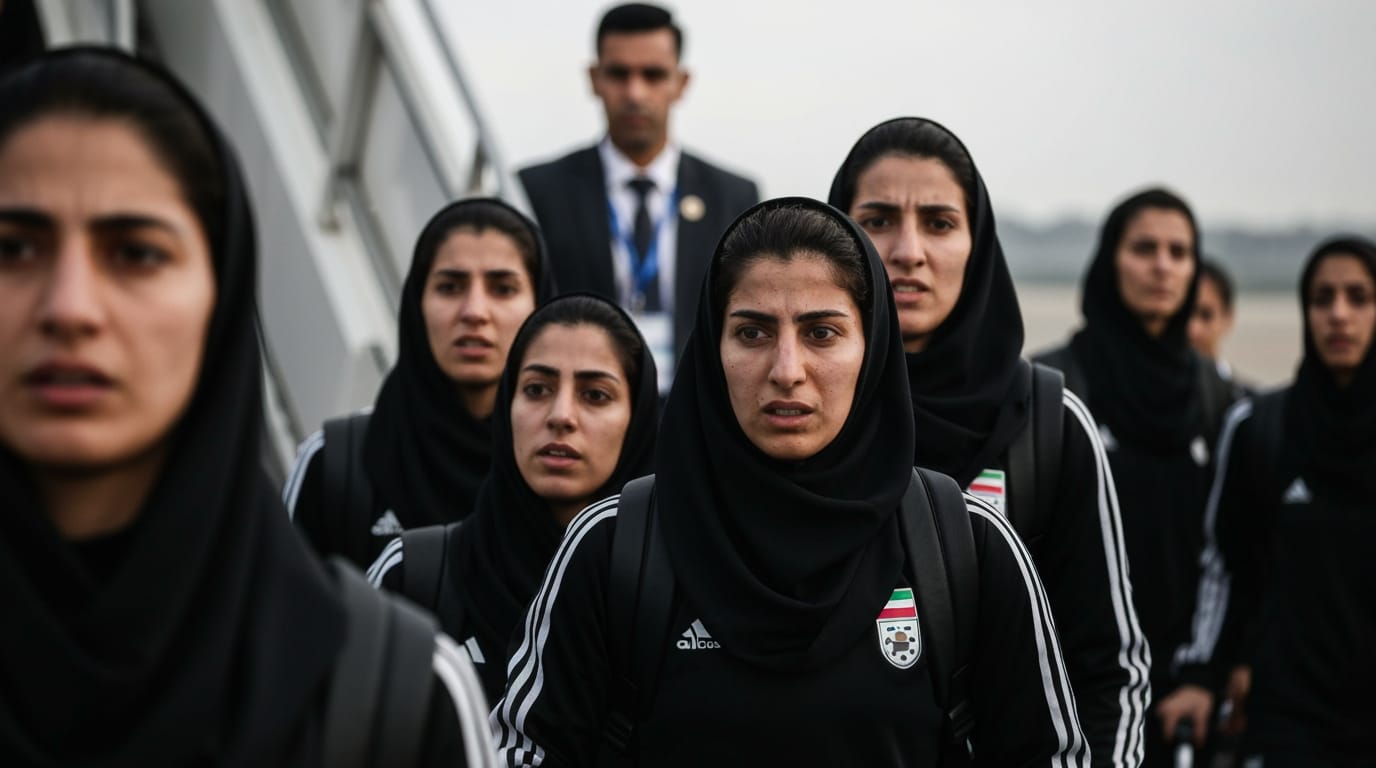
Following the events in Australia, the remaining members of the Iranian women's football team departed Sydney for Kuala Lumpur, Malaysia, arriving early Wednesday morning. Their arrival at Kuala Lumpur International Airport was captured by media, highlighting the ongoing international attention to their journey. The Asian Football Confederation (AFC), headquartered in Kuala Lumpur, confirmed the team's presence and stated its commitment to providing necessary support during their stay, emphasizing the welfare and safety of the players and officials.
The Iranian Embassy in Malaysia issued a statement indicating that the players are expected to return to Iran. The embassy claimed the players wish to return home and that their onward travel arrangements are contingent on flight availability and the reopening of Iranian airspace. This statement contrasts with the motivations cited by the players who sought asylum in Australia, creating a divergence in narratives surrounding the team's intentions and future. It is pertinent to note that Malaysia is not a signatory to the 1951 Refugee Convention and does not possess a national asylum system. Instead, the United Nations High Commissioner for Refugees (UNHCR) conducts Refugee Status Determination under its mandate in Malaysia for those seeking international protection. This means any formal asylum process for the team in Malaysia would fall under UNHCR's purview, rather than direct government intervention.
Broader Implications and Human Rights Concerns
The saga of the Iranian women's football team vividly illustrates the challenges faced by athletes from repressive regimes and the broader implications of sports in political dissent. The players' refusal to sing the national anthem was a potent symbol of protest, risking severe consequences in a country where women's rights are heavily curtailed and defiance can lead to harsh punishment. Concerns for their safety were heightened by public condemnation from Iranian state media, which labeled them "wartime traitors," particularly in the context of ongoing regional geopolitical tensions.
Human rights organizations and advocates have consistently raised alarms about the safety and well-being of athletes who speak out or defy state mandates, fearing retribution against them or their families. The episode underscores the complexities for international sporting bodies and host nations when political dissent merges with athletic competition. The Australian government's offer of humanitarian visas reflects a stance on protecting individuals from potential persecution, while Iran's accusations of "hostage-taking" highlight the state's view on the loyalty of its citizens, especially those representing it on the international stage.
The Iranian women's football team's journey through Australia and now Malaysia serves as a compelling and ongoing narrative of courage, political defiance, and the search for safety. While some members have found refuge in Australia, others are navigating a return to Iran under intense scrutiny. The situation continues to evolve, leaving an uncertain future for many involved and reinforcing the critical role of international protections for those facing persecution for their beliefs or actions.