Bulgarian President Radev Resigns Amid Deepening Political Crisis, Paving Way for Snap Elections
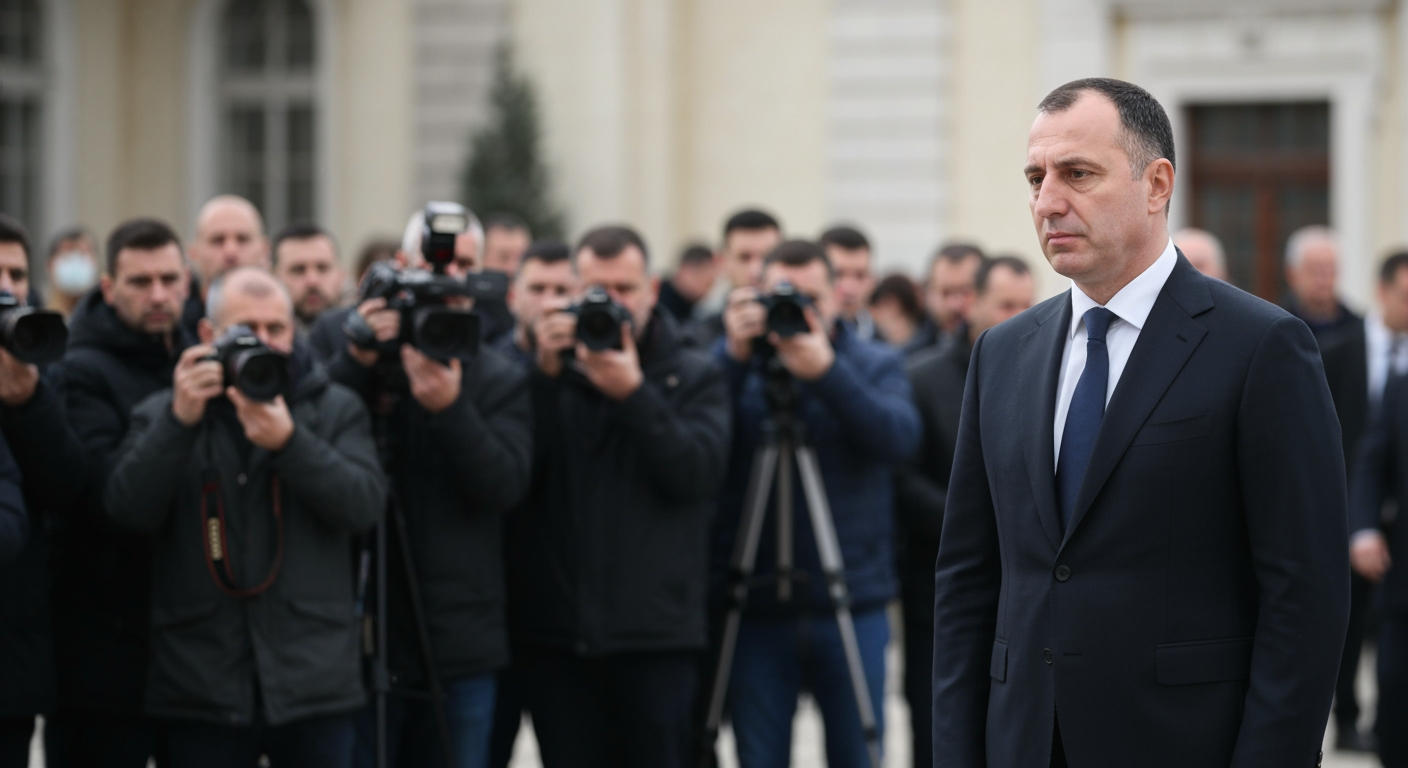
SOFIA, Bulgaria – President Rumen Radev of Bulgaria announced his resignation on Monday, January 19, 2026, marking an unprecedented move by a head of state in the nation's post-communist history. The decision comes amidst a protracted political crisis that has plagued the European Union and NATO member state for years, setting the stage for yet another snap parliamentary election. Radev's departure, formally to be submitted to the Constitutional Court on Tuesday, has fueled widespread speculation that the outgoing president intends to form a new political party and actively participate in the upcoming electoral battle. Vice President Iliana Yotova is constitutionally mandated to assume the role of acting president until new presidential elections can be held.
An Unexpected Departure Ignites Political Field
President Radev, whose second five-year term was scheduled to conclude in early 2027, made his intentions public during a televised address to the nation on Monday. He indicated that his formal submission of resignation would occur on Tuesday, triggering a constitutional process for succession. This resignation is the first of its kind for a Bulgarian head of state since the end of communism, underscoring the severity of the country's current political turmoil. The move immediately places Vice President Iliana Yotova in line to take over presidential duties, highlighting the significant constitutional powers of the vice president in such circumstances. Radev's address alluded to a "battle for the future of our homeland," suggesting a direct engagement in the political arena he is now re-entering. His decision has been widely anticipated to clear his path for potentially leading a new political formation into the forthcoming parliamentary elections.
Bulgaria's Enduring Political Instability and Anti-Corruption Drive
Radev's resignation unfolds against a backdrop of profound political instability in Bulgaria, which has seen eight parliamentary elections since 2021. The nation has struggled to form stable governing coalitions, leading to a cycle of early elections and caretaker governments, often appointed by the president. The immediate catalyst for the current situation was the resignation of the governing coalition in December 2025, following large-scale anti-corruption protests. These demonstrations, partly spurred by a contentious 2026 budget proposal and public discontent over perceived corruption, saw thousands take to the streets, demanding accountability and new elections.
Radev, a 62-year-old former Air Force general, has been a vocal critic of established political figures and alleged "mafia structures" within the system. He has consistently positioned himself as an opponent of figures like Boyko Borissov, leader of the center-right GERB party, and Delyan Peevski, a politician and oligarch who has faced international sanctions. This stance has resonated with a public increasingly disillusioned with political elites and widespread corruption. Opinion polls conducted in late 2025 indicated a significant desire for a "new political force" to govern the country, a sentiment Radev appears poised to capitalize on.
The Evolving Role of the Bulgarian Presidency
The President of Bulgaria primarily serves as a symbolic head of state in a parliamentary republic, with limited executive powers under the 1991 Constitution. However, the office holds significant influence during periods of governmental crisis. The president is responsible for scheduling national and local elections, representing the country internationally, and acting as commander-in-chief of the armed forces. Crucially, in the absence of a prime minister, the president gains considerable sway by appointing interim administrations. Radev himself has appointed caretaker governments multiple times during Bulgaria's recent political upheavals, which has notably raised his public profile and, some argue, his political ambitions.
Recent constitutional amendments, approved in December 2023, have aimed to restrict the president's authority in forming caretaker governments. Under these changes, the interim prime minister must now be selected from a specific pool of candidates, including the speaker of parliament, or officials from the Bulgarian National Bank or National Audit Office, rather than being a direct presidential choice. These amendments were largely supported by pro-Western parties, but Radev argued they did not address fundamental judicial issues and served partisan interests. Despite these new limitations, the president still plays a pivotal role in navigating the country through periods of government formation deadlock.
A Nation at a Crossroads: Economic Integration Meets Public Discontent
Bulgaria's political turbulence coincides with significant national developments. The country recently adopted the euro on January 1, 2026, becoming the 21st member of the eurozone. This integration into the European financial system was a long-pursued goal. However, Radev has questioned why such achievements have not translated into greater national stability or public satisfaction, pointing to declining voter turnout and low public trust in institutions, including the media and the justice system. The nation also joined the Schengen Area, another milestone in its European integration.
Despite these steps toward European integration, Bulgaria continues to grapple with economic challenges, widespread poverty, and persistent concerns about governance. Public trust in national institutions is among the lowest in the world, particularly concerning the judiciary, and trust in domestic elections has reportedly fallen to a mere 10%. This environment of distrust and disillusionment forms the fertile ground upon which Radev's potential new political movement could seek to gain traction.
Looking Ahead: High Stakes for Bulgaria's Future
President Rumen Radev's resignation marks a critical juncture for Bulgaria. His decision, rooted in the country's deep-seated political and anti-corruption struggles, reshapes the landscape ahead of the anticipated snap parliamentary elections. With Vice President Iliana Yotova stepping in as acting president, the immediate constitutional order is maintained. However, the focus quickly shifts to the upcoming polls, which will determine whether a fragmented parliament can finally forge a stable government or if the nation is destined for continued political instability. Radev's potential entry into partisan politics adds another layer of intrigue and uncertainty to a political scene already fraught with challenges, as the country seeks to reconcile its European aspirations with profound internal discontent.
Related Articles

Ratko Mladić, "Butcher of Bosnia" and Convicted War Criminal, Dies at 84
THE HAGUE, Netherlands – Ratko Mladić, the former Bosnian Serb military commander known as the "Butcher of Bosnia" and convicted of genocide, war crimes, and crimes against humanity, has died at the age of 84. Serbian...

Long-Awaited 9/11 Mastermind Trial Set for 2028, Decades After Attacks
GUANTANAMO BAY, Cuba – Nearly a quarter-century after the devastating terror attacks of September 11, 2001, a military judge has finally set a trial date for Khalid Sheikh Mohammed, the alleged mastermind behind the...