Bundestag Poised to Authorize Billions for Advanced Drone Capabilities
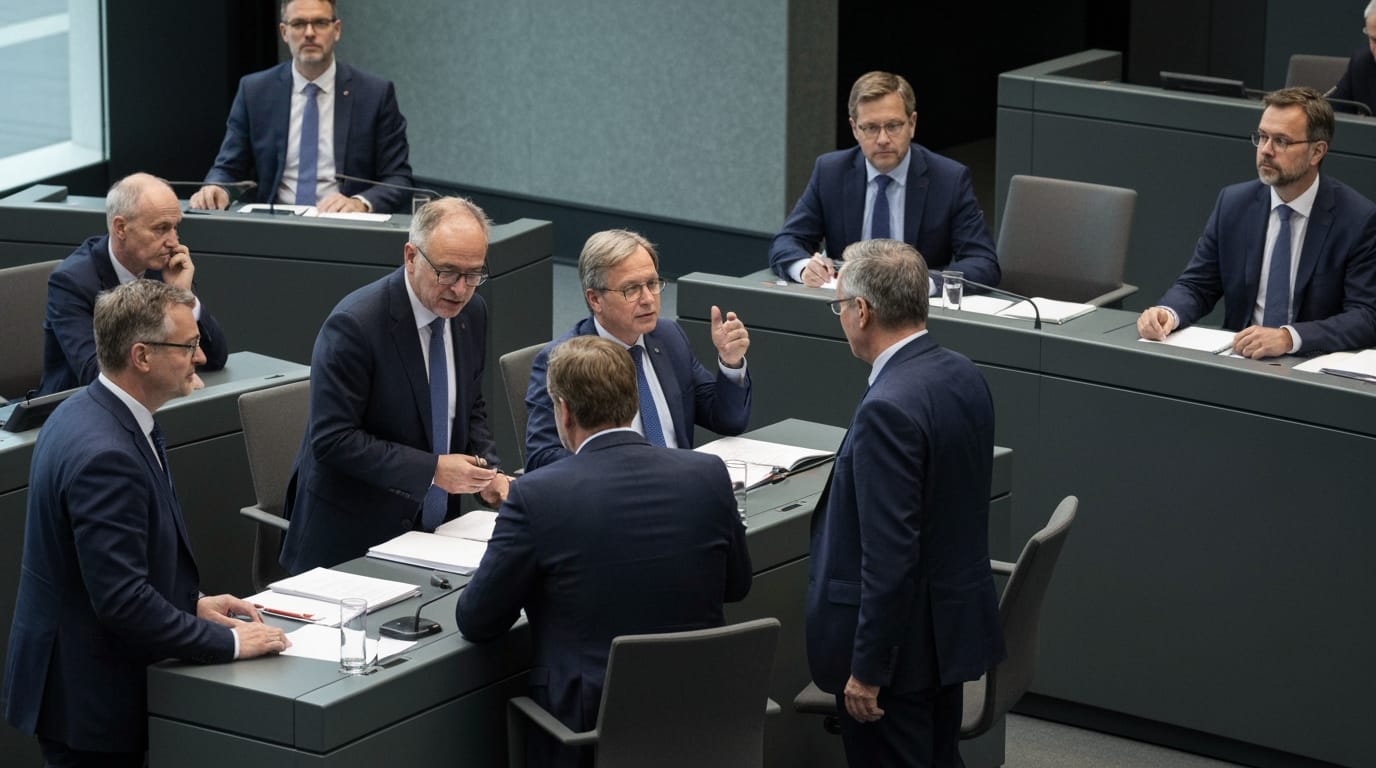
BERLIN – Germany's Bundestag is advancing legislation that would unlock billions of euros for the acquisition of sophisticated drone systems, marking a significant acceleration in the nation's military modernization efforts. This push includes the imminent approval for "loitering munition" or kamikaze drones, a direct response to evolving geopolitical landscapes and insights from contemporary conflicts. The decisions underscore a strategic shift in German defense policy, aiming to enhance the Bundeswehr's operational readiness and expand its unmanned aerial capabilities across multiple domains.
A New Chapter in Unmanned Combat: Loitering Munitions on the Horizon
The Bundestag's Budget Committee is currently considering approval for an initial investment of approximately €540 million in kamikaze drones, with potential expenditures reaching up to €4.4 billion in the coming years. These unmanned, warhead-equipped aerial systems, technically known as "loitering munition," are intended for procurement from German manufacturers Helsing and Stark Defence. The move is designed to equip the Bundeswehr, particularly the "Brigade Lithuania," which is stationed on NATO's eastern flank, with cutting-edge technology. This procurement reflects critical lessons drawn from the ongoing conflict in Ukraine, where such systems have proven pivotal in battlefield tactics.
The decision follows extensive testing, with the Bundeswehr imposing specific requirements on manufacturers, meaning the German forces will receive versions distinct from those supplied to other nations. However, the acquisition process has not been without its challenges. Reports indicate that Stark Defence's Virtus drones faced significant performance issues during recent military trials, failing to hit targets in multiple exercises. In contrast, Helsing's HX-2 drone demonstrated superior performance, with all 17 test flights deemed successful. Furthermore, political turbulence has emerged regarding Stark Defence's ties to U.S. tech billionaire Peter Thiel, raising questions about influence and Europe's strategic autonomy. Defense Minister Boris Pistorius has reportedly sought clarification on Thiel's actual influence within the company. To ensure the longevity and effectiveness of these rapidly advancing technologies, the Ministry of Defense plans to incorporate an "innovation clause" into the contracts, mandating continuous updates from manufacturers over a seven-year term.
Expanding the Arsenal: From Surveillance to Maritime Patrol
The impending vote for loitering munitions is part of a broader, multi-faceted strategy to bolster Germany's drone fleet. Over recent years, Germany has systematically invested in diverse unmanned aerial systems to meet various defense requirements.
One cornerstone of this strategy has been the procurement of Israeli-made Heron TP drones. Following years of debate, including initial opposition from the Social Democratic Party (SPD) regarding their armament, the Bundestag's Defense Committee approved the purchase of 140 armed Heron TP drones in April 2022. This $166 million deal designated 60 drones for training and 80 for operational use, marking a significant shift in German defense posture catalyzed by the 2022 invasion of Ukraine. This commitment was further solidified in September 2025, when the Bundestag Budget Committee authorized the expanded acquisition of Heron TP drones, with deliveries anticipated by 2028. These Heron TPs serve as a crucial "bridging solution" until a domestically developed European alternative becomes operational.
Complementing its aerial surveillance and combat capabilities, Germany has also invested in advanced maritime drones. In December 2025, the Bundestag's Budget Committee approved the purchase of eight U.S.-made MQ-9B SeaGuardian maritime drones. This acquisition, valued at approximately €1.5 billion, was part of a larger €50 billion defense package. Expected for delivery in 2028, these SeaGuardian drones are designed for long-range intelligence, surveillance, and reconnaissance (ISR) over vast ocean areas, intended to detect and track undersea threats and enhance interoperability with NATO partners. This decision highlighted Germany's prioritization of readily available, proven foreign technology to address immediate strategic gaps, even as it pursues indigenous European projects.
The European Ambition: The Eurodrone Project
Alongside its immediate procurement needs, Germany remains a key participant in the multinational Eurodrone project, a collaborative effort with France, Italy, and Spain to develop a Medium Altitude Long Endurance (MALE) Remotely Piloted Aircraft System. The Eurodrone is envisioned as a long-term solution for European strategic autonomy in unmanned aviation, designed for intelligence, surveillance, reconnaissance, and potentially armed missions.
Germany plans to acquire 21 Eurodrones and 16 ground control stations as part of the initial order for 63 systems across the participating nations. However, the project has been characterized by delays and substantial cost increases since its inception. While the German parliamentary budget committee approved €3 billion for its development in April 2021, the overall project cost is now estimated at a minimum of €7.6 billion, with Germany bearing half of this sum. Despite these challenges, the first flight of a Eurodrone prototype is anticipated by mid-2027, with initial deliveries to armed forces expected between 2028 and 2030.
Broadening Defense Posture Amidst Scrutiny
These extensive drone procurements are integral to Germany's significant rearmament program, initiated after the 2022 invasion of Ukraine. This program includes a special €100 billion fund outside the regular budget, aiming to modernize the Bundeswehr after years of underinvestment. For 2024, German defense spending surpassed €52 billion, meeting NATO's guideline of 2% of GDP.
The ethical and legal implications of armed drones have been a recurring point of contention in German political discourse. Historically, segments of the Social Democratic Party (SPD) and opposition parties like The Greens and Die Linke have voiced strong reservations about arming drones, citing concerns over potential civilian casualties and the automation of warfare. However, the evolving security environment has largely shifted the debate, with proponents arguing that armed drones are essential for the protection of German soldiers and for maintaining operational parity with allies.
The impending decisions in the Bundestag reflect Germany's commitment to adapting its military capabilities to contemporary threats and fulfilling its responsibilities within NATO. By investing heavily in a diversified fleet of unmanned aerial systems, from kamikaze drones and armed surveillance platforms to maritime reconnaissance and future European-developed systems, Germany is charting a course towards a more robust and technologically advanced defense posture. This strategic pivot, while facing parliamentary scrutiny and ethical considerations, signals a determination to enhance national security and contribute effectively to collective defense.