Côte d'Ivoire Gripped by Turmoil as Contested Election Fuels Deepening Crisis
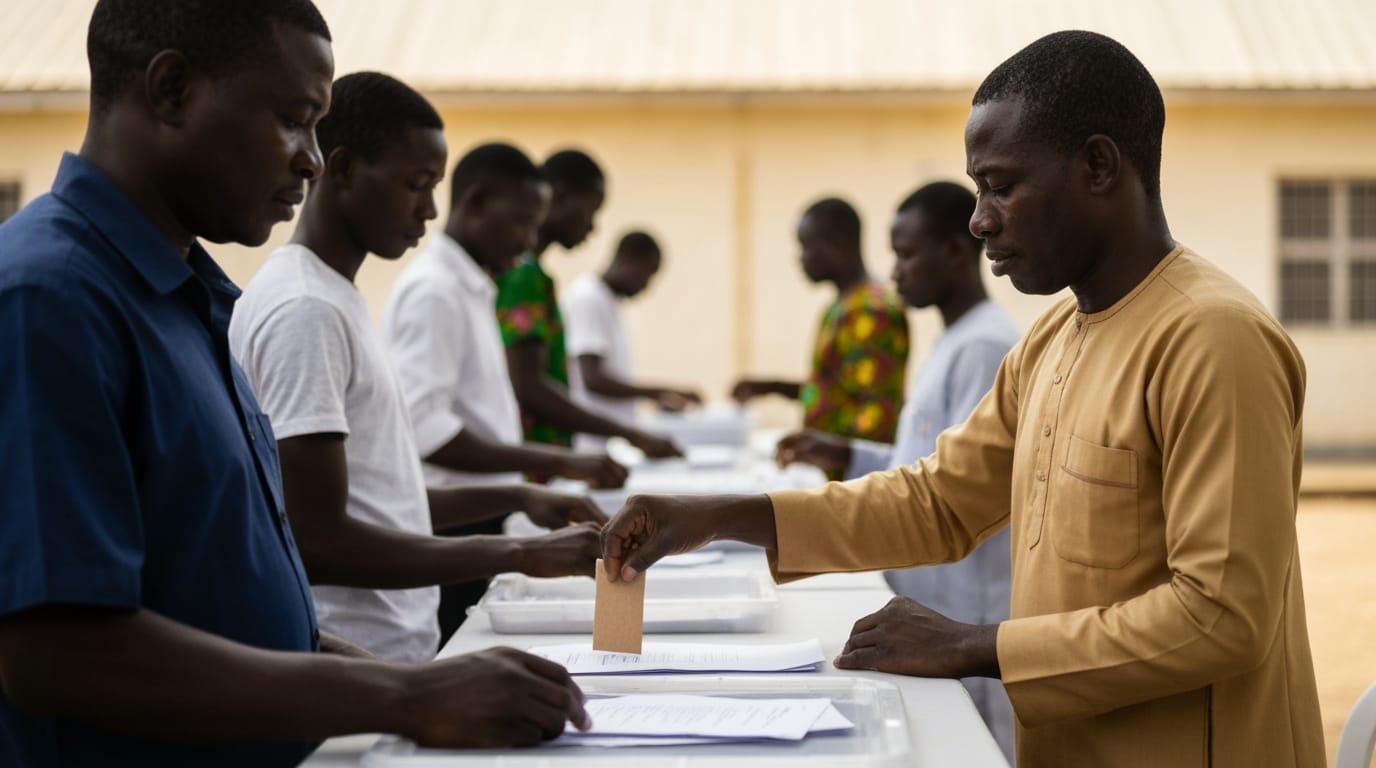
Abidjan, Côte d'Ivoire – Côte d'Ivoire, a nation long grappling with political fractures, plunged deeper into uncertainty following its presidential election on October 31, 2020. The polls, intended to select the country's next leader, were instead overshadowed by a widespread opposition boycott and marked by deadly violence, culminating in incumbent President Alassane Ouattara securing a controversial third term. The outcome has ignited fears of renewed instability in the West African economic powerhouse, a decade after a brutal post-election conflict.
The electoral commission declared President Ouattara the victor with an overwhelming 94.27% of the vote, a result immediately rejected by the main opposition factions who had urged their supporters to abstain. This decisive, yet highly disputed, win came against a backdrop of grave concerns regarding the legitimacy of the process, particularly Ouattara's eligibility for another term and the climate of repression that characterized the campaign period. The deeply polarized atmosphere has left the nation teetering, with calls for civil disobedience and a palpable sense of apprehension permeating society.
The Contested Path to a Third Term
The genesis of the 2020 electoral crisis lies in President Ouattara’s decision to seek a third term, a move that directly challenged the country’s constitutional provision limiting presidents to two mandates. Ouattara, first elected in 2010, had initially indicated he would step down, even designating his then-Prime Minister Amadou Gon Coulibaly as his successor. However, Coulibaly’s sudden death in July 2020 prompted Ouattara to reverse his decision, citing a "force majeure" and arguing that a new constitution adopted in 2016 effectively reset his term count, allowing him to run again.
This interpretation was fiercely contested by the opposition, who maintained that the two-term limit remained sacrosanct and that Ouattara’s candidacy was unconstitutional. The Independent Electoral Commission and the Constitutional Court, largely perceived as aligned with the government, ultimately approved Ouattara's bid, further alienating the opposition. Critics pointed to the disqualification of 40 potential candidates, including prominent figures like former Prime Minister Guillaume Soro and former President Laurent Gbagbo, as evidence of a systemic effort to clear Ouattara’s path to victory. Soro, living in France, was sentenced in absentia to 20 years in prison on charges his lawyers claimed were politically motivated to prevent his participation.
A Boycott and Fragmented Opposition
In response to what they deemed an illegitimate electoral process, the two main opposition candidates who remained on the ballot, former President Henri Konan Bédié of the PDCI and former Prime Minister Pascal Affi N'Guessan of the FPI, called for an "active boycott" of the October 31 vote. Their parties urged supporters to stay home, aiming to delegitimize the election results by showcasing a low voter turnout. This strategy was intended to force a dialogue with the government and potentially pave the way for a more inclusive and transparent election.
The electoral commission, however, reported a turnout of 53.90%, a figure the opposition vehemently disputed, claiming only about 10% of Ivorian voters participated. Regardless of the exact percentage, international observers noted that a "significant portion of the population did not vote," indicating the boycott had a discernible impact on participation. The only candidate who actively campaigned against Ouattara, Kouadio Konan Bertin, an independent, secured a mere 1.99% of the votes. The opposition's fragmented approach, with some leaders calling for a boycott while others hesitated or endorsed alternative strategies, further complicated the political landscape.
Echoes of Past Violence and Human Cost
The lead-up to and immediate aftermath of the election were marred by significant violence, raising painful memories of the 2010-2011 post-election civil war that claimed over 3,000 lives. More than 30 people died in clashes in the weeks preceding the vote, with at least five more fatalities reported on election day itself. Human Rights Watch later reported that over 50 people were killed in the political and intercommunal violence that accompanied the election.
The violence manifested in various forms, from opposition supporters setting up barricades and destroying election materials to clashes between pro-government and opposition factions armed with machetes, clubs, and hunting rifles. The unrest was not confined to the capital, Abidjan, but spread across several towns, highlighting deep-seated ethnic and political divisions. Security forces were criticized for failing to adequately protect civilians and, in some instances, for using excessive force. The heightened tensions underscored the fragility of peace in a nation still recovering from previous conflicts.
International Scrutiny and Domestic Divides
The international community observed the Côte d'Ivoire election with a mixture of concern and caution. The Carter Center, a non-governmental organization dedicated to advancing human rights, noted that the prevailing political and security environment made it challenging to organize a credible election and that the process excluded a large number of Ivorian political forces. While African Union observers characterized the process as "generally satisfactory", this assessment stood in contrast to other observations and the widespread domestic discontent.
The opposition's swift rejection of the results led to the formation of a self-proclaimed "National Transitional Council," headed by Henri Konan Bédié, with the stated aim of organizing new elections. This move was met with a swift crackdown, including the de facto house arrest of Bédié by security forces. The events surrounding the election highlighted the persistent deep divisions within Côte d'Ivoire, often along regional and ethnic lines, exacerbating fears that the country's hard-won stability remains tenuous. The government, for its part, defended the electoral process, dismissing opposition claims as politically motivated.
An Uncertain Future
President Alassane Ouattara’s victory in the 2020 election, achieved amid an opposition boycott and significant unrest, leaves Côte d'Ivoire at a precarious juncture. While the electoral commission certified the results and the Constitutional Council affirmed Ouattara’s win, the deep fissures exposed by the process continue to challenge the nation's democratic institutions and social cohesion. The long-term implications of a presidency perceived as illegitimate by a substantial portion of the population, coupled with lingering grievances and the potential for further violence, pose significant hurdles to lasting peace and development. Moving forward, the path to reconciliation and sustainable stability in Côte d'Ivoire will necessitate genuine dialogue, inclusive governance, and a concerted effort to address the underlying causes of political polarization.


