Canary Islands Resist Docking of Hantavirus-Stricken Cruise Ship Amid Public Health Fears
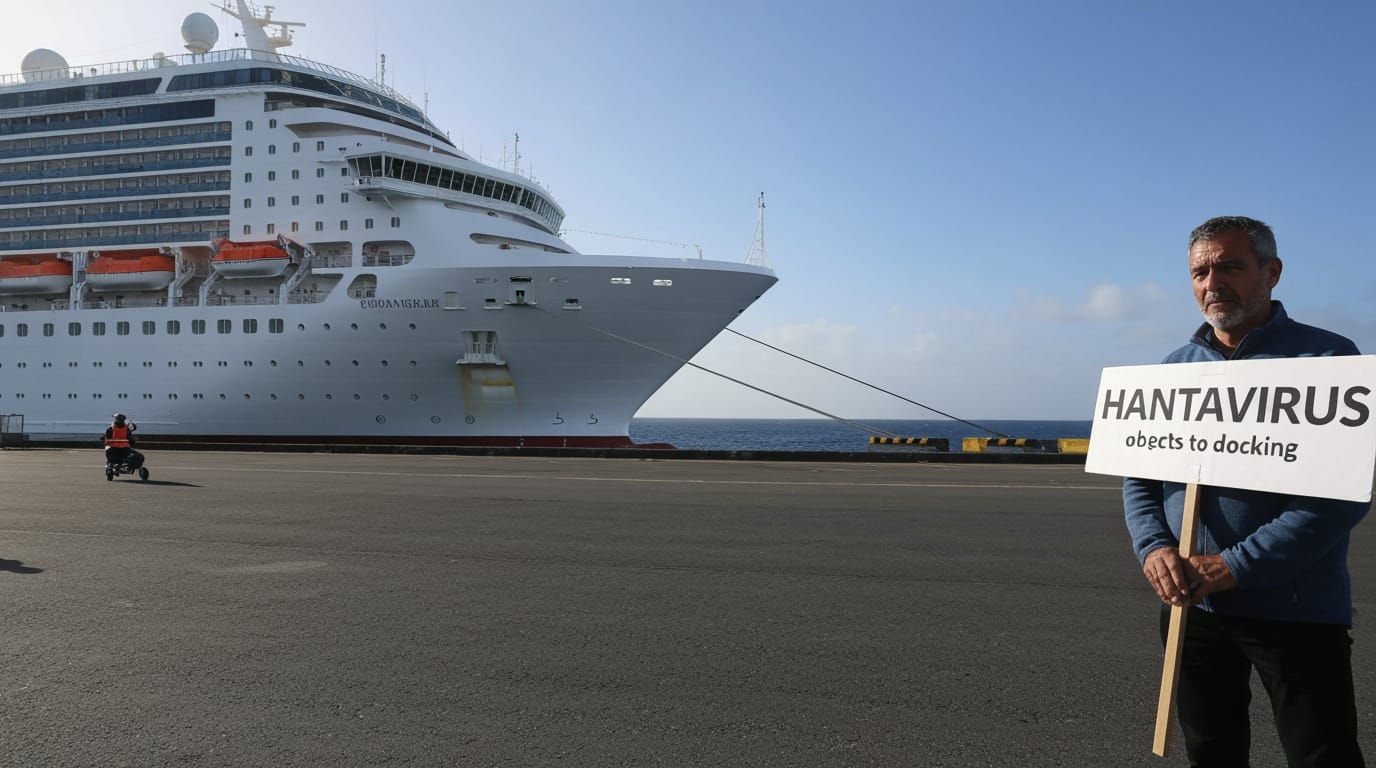
Santa Cruz de Tenerife, Canary Islands – A major public health crisis is unfolding in the Atlantic as the Spanish Canary Islands government vehemently opposes the central government's decision to allow a cruise ship, the MV Hondius, afflicted by a deadly Hantavirus outbreak, to dock in the archipelago. The Dutch-flagged vessel, which has seen three fatalities and multiple suspected cases, has become the center of a contentious political and medical debate, highlighting the delicate balance between humanitarian obligations and regional public health concerns.
The MV Hondius, an expedition cruise ship, was on a voyage from Ushuaia, Argentina, across the Atlantic when a suspected Hantavirus outbreak was identified onboard. The vessel was initially denied permission to dock in Cape Verde, where three individuals, including two crew members requiring urgent medical attention and one individual linked to a deceased passenger, were medically evacuated via air ambulance to the Netherlands. Subsequently, the Spanish government, responding to requests from the World Health Organization (WHO) and the European Union, authorized the ship to proceed to the Canary Islands, deeming it the nearest location with the necessary capabilities to manage the unfolding health emergency. However, Canary Islands President Fernando Clavijo has fiercely rejected this decision, citing insufficient technical information and concerns over public safety, and has called for an urgent meeting with Spanish Prime Minister Pedro Sánchez.
The Crisis at Sea: A Deadly Outbreak Unfolds
The first signs of trouble emerged after the MV Hondius departed Argentina, with a passenger dying onboard on April 11. The cause of death could not be determined at sea, and the body was disembarked on the island of St. Helena on April 24, accompanied by the passenger's wife. Tragically, the wife later fell ill during her return journey and also died, with authorities subsequently confirming she tested positive for a variant of Hantavirus.
The World Health Organization has since reported a total of seven medical cases linked to the cruise ship, comprising two confirmed Hantavirus infections and five suspected cases, leading to three deaths. One patient who had already been evacuated is currently in intensive care in Johannesburg, South Africa. With approximately 150 passengers and crew still aboard the MV Hondius, which was anchored near Cape Verde, strict precautionary measures, including isolation protocols and enhanced hygiene, have been implemented. The WHO is actively investigating the possibility of rare human-to-human transmission, particularly of the Andes virus strain, which is prevalent in South America and is one of the few hantaviruses known to transmit between people.
Understanding Hantavirus: A Rodent-Borne Threat
Hantaviruses are a group of viruses primarily carried by rodents, such as mice and rats, and are shed in their urine, droppings, and saliva. Humans typically contract the virus by inhaling airborne particles from these contaminated excretions, especially when disturbed in enclosed spaces. While rodent bites or scratches can also transmit the virus, this is rare.
Infections can lead to two main severe illnesses: Hantavirus Pulmonary Syndrome (HPS), mainly found in the Americas, and Hemorrhagic Fever with Renal Syndrome (HFRS), common in Europe and Asia. HPS is a severe respiratory illness with a high mortality rate, estimated at around 38%. Symptoms can range from flu-like indications such as fever, fatigue, and muscle aches to more severe respiratory issues. Crucially, most Hantaviruses do not spread from person to person. However, the Andes virus, found in South America, is a notable exception where limited human-to-human transmission has been documented, usually through close and prolonged contact. The strain involved in the current outbreak remains under investigation, but its South American origin raises concerns about this more transmissible variant.
The Canary Islands' Stance: Prioritizing Public Health
Fernando Clavijo, President of the Canary Islands, has taken a firm stance against the MV Hondius docking, stating, "We will do everything possible to prevent the ship from coming to the Canary Islands." He criticized the Spanish central government's decision, asserting it lacked "technical criteria" and sufficient information to guarantee public safety. Clavijo emphasized that without adequate information, he "cannot allow them to enter the Canary Islands, because we don't know what we are dealing with." This robust opposition underscores the regional government's commitment to protecting its population and vital tourism industry from potential health risks.
The Canary Islands, a popular tourist destination, heavily rely on their reputation for safety and well-being. The public health system in the islands, despite having high standards and well-equipped hospitals, has been experiencing significant strain due to rapid population growth and an ever-increasing influx of tourists over the past decades. The number of tourist beds has surged by 65% in the last thirty years, while public hospital beds have only increased by a mere 2%. This imbalance has led to concerns about the healthcare system's capacity to handle major health crises, with some collectives warning that the current model creates saturation, waiting lists, and a progressive deterioration of healthcare. Allowing a ship with a deadly infectious disease outbreak to dock without comprehensive health and safety assurances is therefore viewed as a significant risk.
Navigating International Obligations and Local Autonomy
The Spanish central government, however, authorized the ship's docking in the Canary Islands "in accordance with international law and humanitarian principles," following explicit requests from the WHO and the European Union. Health Ministry officials reportedly justified the decision by identifying the Canary Islands as the "nearest location with the necessary capabilities" to provide care. This highlights a tension between national and international humanitarian duties and regional autonomy in safeguarding local populations.
Cruise ships, by their very nature of bringing together diverse populations in close quarters, are known environments where infectious diseases can spread rapidly. While cruise lines typically implement rigorous cleaning and disinfection protocols, as well as isolation measures for sick passengers, the unique characteristics of Hantavirus, particularly the potentially person-to-person transmissible Andes strain, introduce an elevated level of concern. The incident on the MV Hondius represents a rare occurrence, as Hantavirus outbreaks have not been previously associated with cruise ships. This unprecedented situation complicates standard public health responses and underscores the need for clear communication and coordinated action between international bodies, national governments, and regional authorities.
Conclusion: A Precedent for Future Health Crises
The ongoing situation with the MV Hondius and the Canary Islands underscores the growing complexities of public health management in an interconnected world. The incident serves as a stark reminder of the potential for infectious diseases to travel across borders and the challenges in responding effectively, especially when humanitarian obligations intersect with local public health and economic concerns. As the MV Hondius makes its way toward the Canary Islands, the resolution of this standoff will not only determine the immediate fate of those onboard but could also set a significant precedent for how future cruise ship health emergencies are handled globally, impacting public health policies, international cooperation, and the cruise tourism industry for years to come.


