Caracas Rocked by Overnight Explosions Amid Escalating Regional Tensions
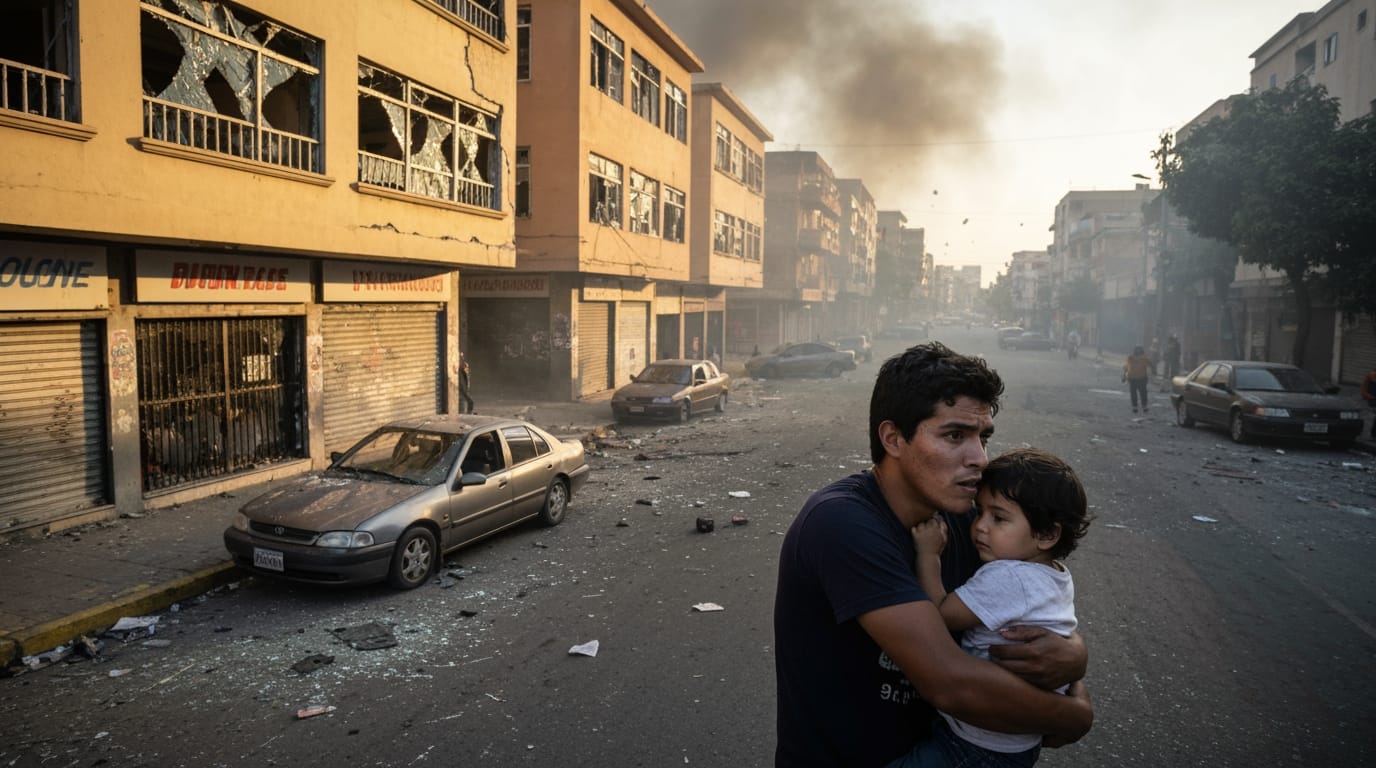
CARACAS, VENEZUELA – The Venezuelan capital of Caracas was shaken by a series of at least seven powerful explosions and reports of low-flying aircraft in the early hours of Saturday, January 3, 2026, plunging an already volatile nation further into uncertainty. The unexplained blasts, which sent residents into the streets and left a southern part of the city without power, immediately ignited fears of a dangerous new escalation in a region fraught with political and economic instability. International reaction was swift, with neighboring Colombia's president calling for an emergency United Nations Security Council meeting, alleging an attack on Venezuela.
Overnight Chaos Grips Caracas
Around 2 a.m. local time, the stillness of Caracas was shattered by multiple loud explosions, an event corroborated by numerous reports and observed by an AFP journalist on the ground. Alongside the concussions, the unnerving sound of low-flying aircraft echoed across the city. The unexpected events prompted many residents to rush from their homes, seeking safety and clarity in the predawn darkness. Smoke was reportedly seen rising from the vicinity of La Carlota airport, a significant military airfield within the capital, while a key southern area near a major military base experienced a complete loss of electricity. The immediate aftermath was marked by a conspicuous silence from Venezuelan authorities, with no official explanation or statement issued regarding the cause or source of the explosions. Similarly, initial inquiries to the Pentagon and the White House went unanswered.
Regional Alarm and International Accusations
The absence of official word from Caracas was quickly filled by alarm from abroad. Colombian President Gustavo Petro took to social media, making the stark claim that someone was "bombing Caracas in this moment" and that Venezuela had been "attacked... with missiles." Petro, whose country had recently joined the United Nations Security Council, urgently called for an immediate emergency session of the body to address what he termed an "aggression against Venezuela" and to establish its international legality. This dramatic statement underscored the already heightened tensions pervading the region, particularly between Venezuela and the United States. While the specific nature of the alleged attack remained unconfirmed, President Petro's strong assertions immediately amplified the gravity of the situation on the international stage.
A Backdrop of Mounting US Pressure and Military Deployments
The overnight events unfold against a backdrop of months of escalating pressure by the U.S. against President Nicolás Maduro's administration. The Trump administration has significantly increased its military presence and operations in the Caribbean, ostensibly targeting alleged drug-smuggling routes. Thousands of U.S. forces and naval vessels have been deployed to the region, with President Trump having publicly hinted at a wider possible military operation against Venezuela. Washington accuses the Maduro regime of complicity in drug trafficking, a charge vehemently denied by the Venezuelan government.
In the weeks leading up to the Caracas explosions, the U.S. had already taken assertive actions. These included the seizure of two sanctioned oil tankers last month and an announcement by President Trump in mid-December of a "total and complete blockade" on all sanctioned tankers entering or exiting Venezuela. More significantly, a recent report indicated that the CIA conducted a drone strike last week on a docking area believed to be used by Venezuelan drug cartels, marking the first known direct U.S. land operation on Venezuelan soil. This action followed Trump's earlier statement about hitting and destroying a docking area for alleged Venezuelan drug boats "along the shore." Venezuelan President Maduro, in a pre-taped interview aired just a day before the Caracas explosions, had reiterated his long-standing accusation that the U.S. campaign aimed at forcing a change in government to gain access to Venezuela's vast oil reserves. Ironically, on Friday, January 2, 2026, Venezuela had expressed openness to negotiating an agreement with the United States to combat drug trafficking, an offer that now appears overshadowed by the night's events.
Venezuela's Deepening Internal Crises and Political Maneuvering
The explosions also resonate within a country already grappling with profound internal challenges. Venezuela has been mired in a severe socioeconomic and political crisis for years, characterized by hyperinflation, widespread shortages of food and medicine, and the systematic decay of its public infrastructure. The crisis has triggered one of the largest refugee movements in modern history, with millions of Venezuelans fleeing the country.
Politically, the nation remains deeply divided following the disputed July 2024 presidential election, where President Maduro claimed a third term despite strong evidence from academics, news outlets, and the opposition suggesting a wide margin of victory for opposition candidate Edmundo González Urrutia. The contested election results sparked mass protests, which were met with a government crackdown resulting in numerous arrests and casualties. In a seemingly conciliatory gesture amidst mounting international pressure, Maduro's government had recently released 187 political prisoners in late December 2025 and early January 2026. However, human rights organizations estimate that hundreds more political prisoners remain detained. This complex internal landscape, coupled with the external pressures, creates a highly combustible environment where any unexplained incident can rapidly ignite broader instability.
Humanitarian Concerns and an Urgent Travel Advisory
For the Venezuelan populace, the explosions represent yet another layer of fear and uncertainty in lives already defined by hardship. The ongoing crisis has led to a collapse of public services, with frequent power outages and water shortages being commonplace, further worsening the quality of life for ordinary citizens. The United States government has taken a grim view of the situation, with the U.S. Embassy in Bogota issuing a severe travel advisory, urging U.S. citizens to "shelter in place" if in Venezuela and to "depart immediately." The advisory, which places Venezuela at the highest Travel Advisory level (Level 4: Do Not Travel), cites extreme risks including wrongful detention, torture, terrorism, kidnapping, and civil unrest, further underscoring the perilous environment within the country.
An Unclear Path Forward
The explosions in Caracas on January 3, 2026, mark a significant and deeply concerning development in Venezuela's protracted crisis. While the precise cause and perpetrator remain unconfirmed, the incident immediately thrusts the nation back into the international spotlight, highlighting the dangerous convergence of internal political strife, economic collapse, and escalating geopolitical tensions. The urgent call for a UN Security Council meeting by Colombia's president underscores the regional and international apprehension that the situation could spiral into broader conflict. As Venezuela navigates this latest incident, the world watches with bated breath, hopeful for de-escalation but bracing for the potential ramifications of an increasingly fragile peace in the heart of South America.


