Iran Seeks World Cup Relocation Amid Escalating Tensions with U.S.
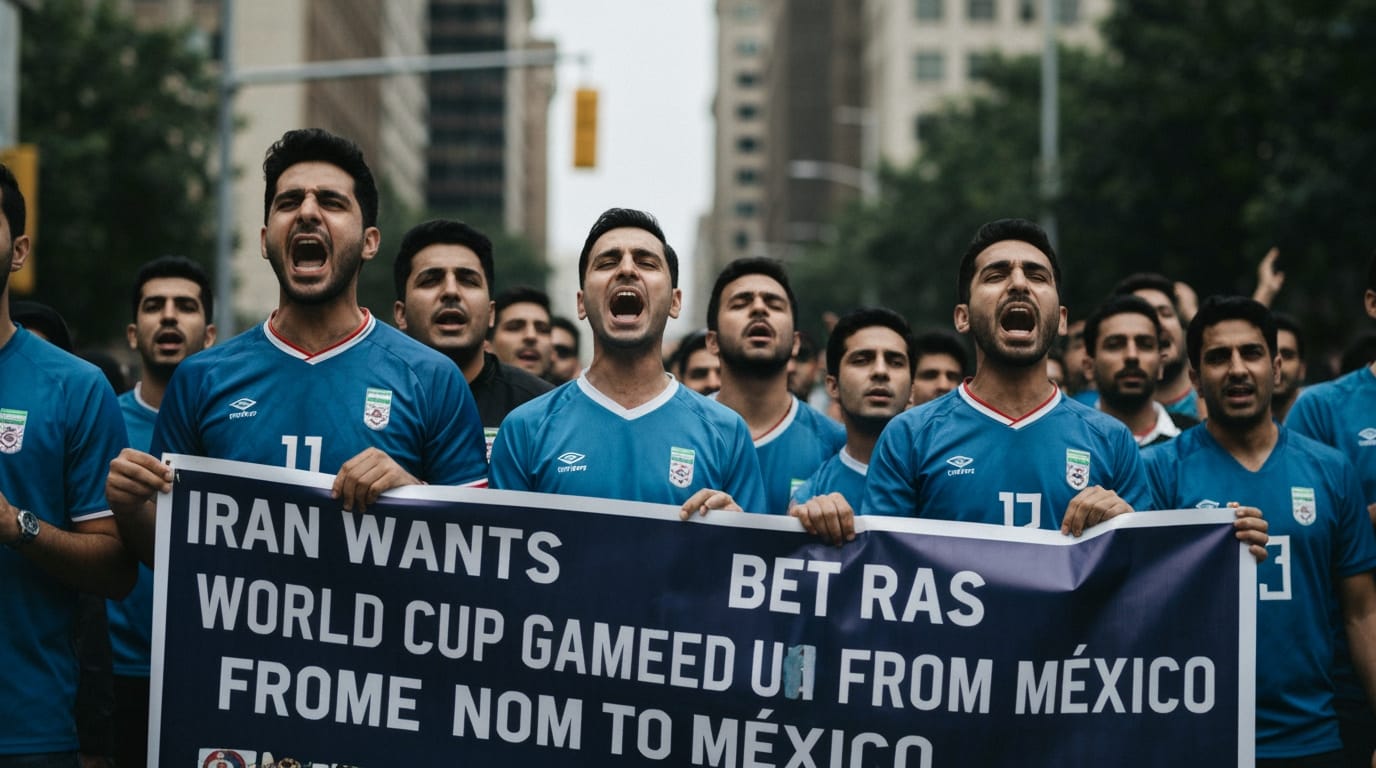
In an unprecedented move just months before the kickoff of the 2026 FIFA World Cup, Iran's football federation has formally requested that its group stage matches be moved from the United States to Mexico, citing profound security concerns. The request comes amid a dramatic escalation of geopolitical tensions between Tehran and Washington, exacerbated by recent military actions and direct statements from U.S. President Donald Trump regarding the safety of the Iranian team. The international football governing body, FIFA, now faces a complex dilemma balancing player welfare, political neutrality, and the immense logistical challenges of altering a global sporting spectacle.
The Formal Request and Stated Motivations
Mehdi Taj, president of the Iranian Football Federation, confirmed ongoing discussions with FIFA to relocate the national team's fixtures. According to statements posted on the Iranian embassy in Mexico's X account, Taj asserted that the team would "certainly not travel to America" if President Trump could not guarantee their security. This stance follows Trump's recent comments, where he welcomed Iran's participation but suggested it might not be "appropriate for their own life and safety" to play in the U.S..
Iran's national team, nicknamed Team Melli, is currently scheduled to play two group matches in Los Angeles against New Zealand and Belgium, and a third in Seattle against Egypt. Their planned base camp for the tournament was in Tucson, Arizona. Adding to the security concerns, Abolfazl Pasandideh, Iran's ambassador to Mexico, has also pointed to a "lack of cooperation regarding visa issuance and the provision of logistical support" from the U.S. government for the Iranian delegation, a factor he says further necessitates the relocation request. The Iranian sports minister had previously stated that the team could not participate in the tournament following the U.S. airstrikes.
Geopolitical Backdrop and U.S. Stance
The request emerges from a deeply volatile geopolitical landscape. Just weeks prior, the United States and Israel launched joint airstrikes against Tehran, actions that reportedly resulted in the death of Iran's Supreme Leader, Ayatollah Ali Khamenei. Iran retaliated with its own series of drone and missile strikes targeting U.S. military bases in other Gulf nations. This direct military confrontation has dramatically heightened tensions between the two countries, making the prospect of Iran's national team competing on U.S. soil fraught with risk.
President Trump's public statements have injected further complexity into the situation. While affirming Iran's welcome to the World Cup, his subsequent remarks about the team's potential safety concerns were perceived by Iranian officials as an explicit inability to assure their security. This contrasts with earlier assurances provided by Trump to FIFA President Gianni Infantino, who had conveyed that the Iranian team would be welcomed. The White House has not yet clarified the precise nature of the safety threats alluded to by President Trump.
Logistical Hurdles and FIFA's Dilemma
Relocating World Cup matches less than three months before the tournament's start is an almost unprecedented challenge, posing a "logistical nightmare" for FIFA and the host committees. The 2026 World Cup is already set to be the largest in history, featuring 48 teams across 16 host cities in three countries – the United States, Canada, and Mexico. Such a late change would have far-reaching implications for broadcasting rights, ticket sales, team accommodations, transportation, and pre-existing contractual obligations with host cities and sponsors.
The sheer scale of the tournament necessitates meticulous planning, with "secret air corridors, mobile customs units, turf science, tech supply chains, and centralized command centers" already in place to manage the movement of teams and equipment. Shifting three group stage matches, plus potential knockout rounds that are also likely to be Stateside, would disrupt this intricate network significantly. Despite the gravity of the request, FIFA has yet to issue an official response.
Historical Precedents and Broader Implications
While moving a men's World Cup fixture this close to the event is unparalleled, there are instances of other major tournaments being relocated due to unforeseen circumstances or political pressures. For example, the 2003 Women's World Cup was moved from China to the U.S. due to the SARS outbreak, and the 2023 Under-20 World Cup was pulled from Indonesia after the host nation opposed Israel's participation. However, these differ in scale and timing from the current situation.
The U.S. and Iran have a history of politically charged encounters on the football pitch, notably at the 1998 World Cup in France and again in 2022 in Qatar. Both previous matches proceeded despite significant underlying political tensions, with players often making gestures of sportsmanship that transcended the diplomatic frost. However, the current level of military conflict and direct security advisories from a head of state represent a new threshold. FIFA is under considerable pressure to uphold its principle of separating sports from politics while ensuring the safety and integrity of the competition and all participating nations.
Conclusion
The Iranian Football Federation's request to relocate its World Cup matches from the U.S. to Mexico presents FIFA with an immediate and critical challenge. The decision will not only impact the 2026 tournament's logistics but also carry significant weight for the future of international sports events operating amidst complex geopolitical realities. As discussions continue between Iran and FIFA, the world watches to see how the global governing body of football will navigate the precarious balance between player security, political interference, and the monumental task of delivering the largest World Cup in history.


