Celestial Spectacle: Unraveling the Vibrant Secrets of Aurora Skies
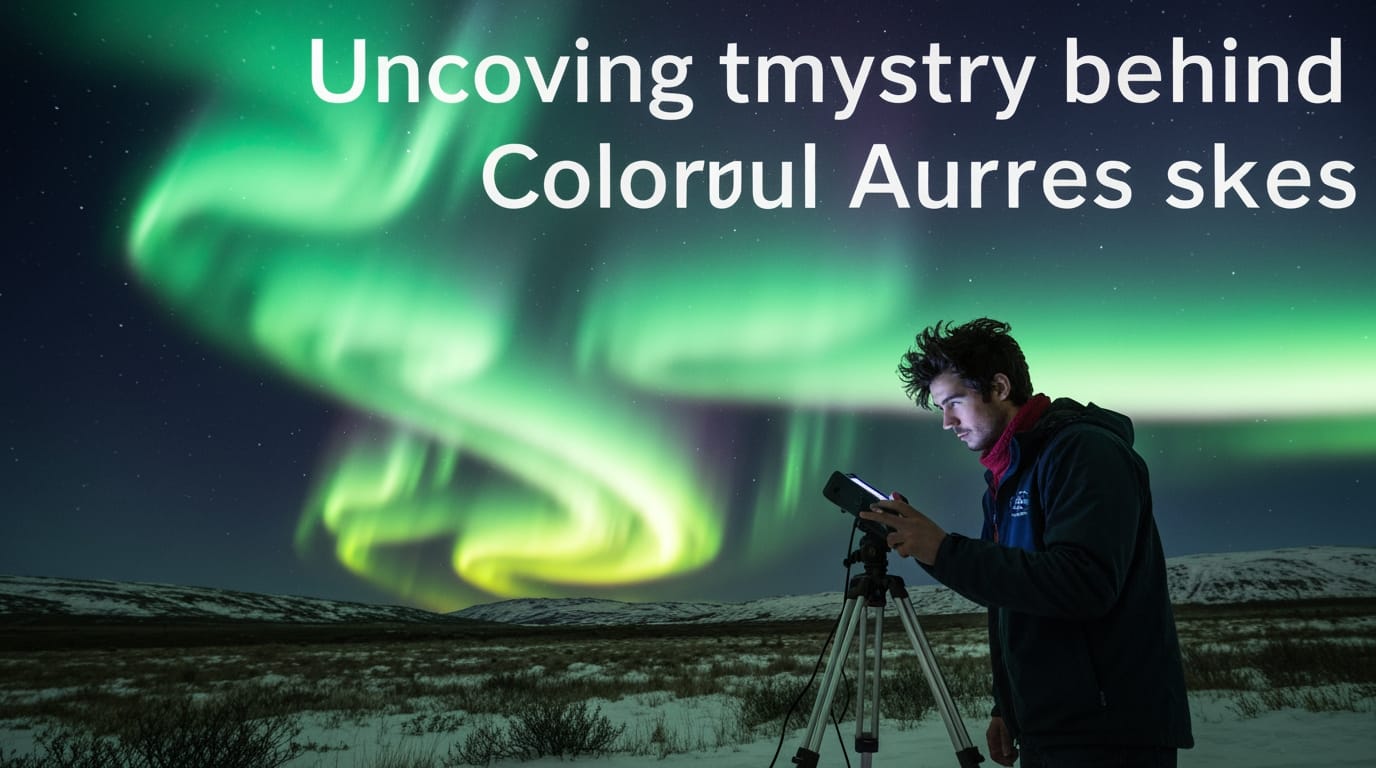
The night sky, particularly near Earth's polar regions, frequently transforms into a breathtaking canvas of shifting, luminous colors known as the aurora. These enigmatic light displays, termed aurora borealis in the Northern Hemisphere and aurora australis in the Southern Hemisphere, have captivated humanity for millennia, sparking wonder, fear, and intricate mythologies. Far from mere atmospheric phenomena, these vibrant curtains of light are a direct consequence of a cosmic interaction between our planet and the sun, a complex dance of particles and magnetism that paints the sky with hues of green, red, blue, and purple.
The Cosmic Dance: Unraveling the Science of Auroras
The science behind the aurora's ethereal beauty lies in the dynamic interplay between the sun and Earth's magnetosphere. The sun continuously emits a stream of electrically charged particles, primarily electrons and protons, known as solar wind. These particles travel millions of miles through space, and when they encounter Earth, most are deflected by our planet's powerful magnetic field. However, some of these energetic particles become trapped within the magnetosphere and are funneled towards the magnetic poles.
As these charged particles accelerate down along Earth's magnetic field lines, they collide with atoms and molecules in the upper atmosphere, typically 50 to 400 miles (80 to 640 kilometers) above the Earth's surface. These collisions excite the atmospheric gases, causing them to gain energy. When these excited atoms and molecules release this excess energy, they emit photons of light, a process similar to how neon lights glow. Billions of these tiny flashes occur in rapid succession, creating the continuous, dynamic light show we perceive as the aurora. This activity is concentrated within an oval-shaped region around both the North and South Poles, known as the auroral oval. Intense aurora displays are often generated following massive explosions on the Sun, such as solar flares or coronal mass ejections (CMEs), which send immense clouds of hot plasma towards Earth, leading to geomagnetic storms. These storms can expand the auroral ovals, making the aurora visible at lower latitudes.
A Palette in the Sky: What Makes the Colors?
The stunning array of colors witnessed in an auroral display is not random; it is determined by the type of gas atoms or molecules being struck, their altitude in the atmosphere, and the energy of the colliding particles. Earth's atmosphere is primarily composed of nitrogen and oxygen, and these elements are responsible for the most common auroral colors.
Green is the most frequently observed auroral color, produced when energetic particles collide with oxygen atoms at altitudes of around 60 miles (100 km) above Earth's surface. At higher altitudes, typically above 150 miles (240 km), oxygen atoms can produce rarer and often fainter red hues. Nitrogen molecules, when excited, contribute to blue and deep red colors. Blue and purple auroras, though less common, are also produced by interactions with nitrogen, primarily at lower altitudes (60 miles or less) and tend to appear during periods of high solar activity. Combinations of these colors can also create shades of pink and yellow. The intensity and specific shades observed can vary greatly depending on the solar activity and the specific atmospheric conditions at the time.
Echoes Through Time: Auroras in Human Culture
Before scientific understanding illuminated their origins, auroras profoundly influenced human cultures across the globe, inspiring a rich tapestry of myths, legends, and spiritual beliefs. To ancient observers, the dancing lights were often interpreted as messages from the gods, spirits of ancestors, or omens of significant events.
In Norse mythology, the Northern Lights were believed to be reflections from the armor of the Valkyries, warrior maidens who guided fallen heroes to Valhalla, or even the Bifrost Bridge, a shimmering path to the realm of the gods. Indigenous communities in North America held diverse interpretations; some Inuit peoples viewed the lights as spirits of animals or ancestors playing games in the sky, while the Cree and Dene saw them as spirits dancing. The Algonquin believed they were reflections of a fire lit by the Creator, Nanabozho, to remind his people he was still with them. In some European folklore, particularly in Scandinavia, auroras were sometimes considered omens of war or other significant occurrences, though other beliefs viewed them as signs of good fortune, like for Swedish fishermen who thought they indicated abundant herring. The sheer awe inspired by these celestial displays has transcended time, cementing their place in humanity's collective consciousness.
Captivating the World: Aurora Tourism and Future Insights
Today, the aurora continues to captivate, drawing increasing numbers of travelers to high-latitude regions in pursuit of this natural wonder. Countries like Norway, Finland, Iceland, Canada, and Alaska have become prime destinations for aurora tourism, experiencing a significant economic boom. In the Nordic countries alone, accommodation stays in Arctic Circle cities increased by 217% between 2009 and 2016, with airport traffic and tourism expenditure also seeing substantial growth. Forecasts suggest the global northern lights tourism market could reach USD 1,647.9 million by 2030, growing at a compound annual growth rate of 9.7% from 2025. This surge is partly fueled by the sun approaching the peak of its 11-year solar cycle, known as solar maximum, which promises more frequent and vibrant displays, particularly in 2024 and 2025.
However, this growth also presents challenges, including increased environmental impact, congestion in popular viewing areas, and potential conflicts with local populations. Efforts are underway to promote responsible tourism practices, including projects focused on minimizing environmental damage and fostering collaboration between tourism stakeholders and local communities. Scientists and space weather forecasters play a crucial role in enhancing the aurora experience, using data from satellites and ground-based instruments to predict auroral activity and visibility, helping enthusiasts plan their viewing opportunities.
Conclusion
The vibrant tapestry of colors that adorns the polar skies is a testament to the profound forces at play between our sun and Earth. From the violent ejections of solar particles to their gentle interaction with atmospheric gases, each auroral display is a fleeting masterpiece of cosmic physics. While modern science has unveiled the mechanics behind these celestial light shows, understanding has not diminished their inherent mystery or their capacity to inspire awe. The aurora remains a powerful link to our planet's place in the solar system, a reminder of the universe's grand designs, and a source of enduring fascination for all who gaze upwards.