Central African Republic Navigates Contentious Election as Touadéra Seeks Third Term Amidst Instability
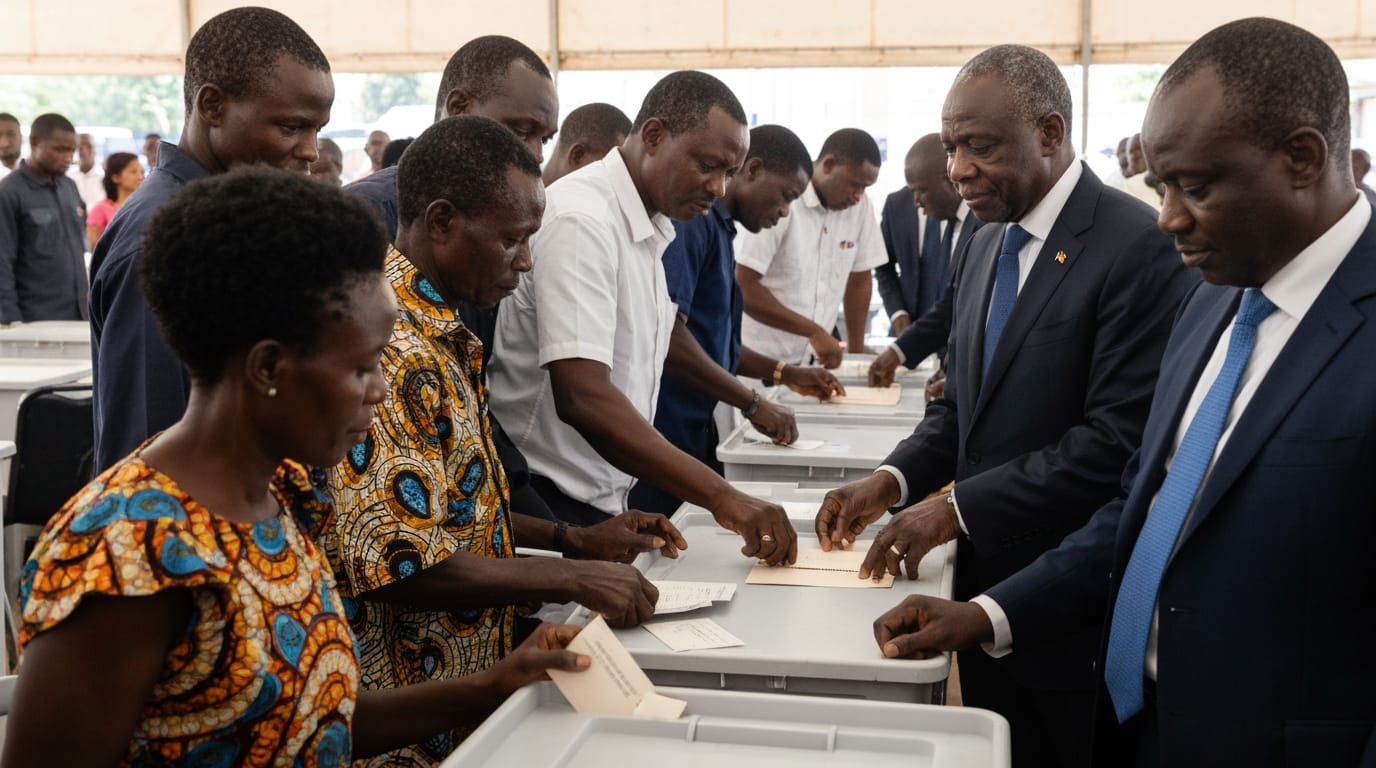
Bangui, Central African Republic – Voters across the Central African Republic (CAR) headed to the polls on December 28, 2025, in a pivotal general election that sees incumbent President Faustin-Archange Touadéra vying for a controversial third term. The vote, encompassing presidential, legislative, regional, and municipal offices—the latter not held since 1988—unfolds against a backdrop of deeply entrenched political contention, persistent insecurity, and significant international scrutiny over the integrity of the electoral process. The outcome is poised to determine the immediate trajectory of a nation long plagued by conflict and humanitarian crises, with observers highlighting both cautious optimism for stability and grave concerns over potential unrest.
The Controversial Path to a Third Term
President Touadéra's bid for another term in office has ignited widespread criticism and constitutional debate. His eligibility stems from a contentious 2023 constitutional referendum that saw the removal of presidential term limits and an extension of the presidential mandate from five to seven years. This move effectively reset the presidential count, allowing Touadéra to seek re-election. Critics, including opposition parties and civil society groups, swiftly condemned the constitutional changes, labeling them a calculated step towards authoritarianism and an attempt to entrench Touadéra in power. The process was not without internal resistance; Danièle Darlan, then head of the Constitutional Court, initially ruled the proposed referendum illegal, only to be subsequently replaced by the president. This action further fueled concerns among those who argue that the revisions undermined democratic principles and the rule of law.
Touadéra, first elected in 2016 and re-elected in 2020 amidst significant unrest, officially declared his intention to run again in July 2025, during a national convention of his ruling United Hearts Movement (MCU) party in the capital, Bangui. His supporters maintain that his continued leadership is essential for maintaining the fragile stability achieved in recent years, particularly through security gains attributed to his administration. However, opposition figures and human rights organizations have consistently decried what they describe as a shrinking political space, characterized by administrative maneuvers designed to impede challengers and a broader repression of dissenting voices.
A Quadruple Election Amidst Lingering Instability
The December 28 elections are unprecedented in their scope, combining presidential, legislative, regional, and municipal ballots across the nation. The inclusion of municipal elections marks a significant moment, as these local polls have been absent for nearly four decades, underscoring efforts to decentralize governance and extend state authority beyond the capital. Approximately 2.3 million registered voters were expected to cast their ballots, reflecting heightened political engagement, though concerns about voter access in conflict-affected regions persist.
The electoral process is deeply intertwined with the CAR's complex and often volatile security landscape. While President Touadéra's campaign emphasizes improved security, particularly in areas under government control, serious threats from various armed groups continue to destabilize parts of the country. The government's security strategy has increasingly relied on external actors, notably Russian mercenaries from the Wagner Group (now transitioning to Africa Corps) and Rwandan forces. These foreign security partners have played a critical role in repelling rebel advances and safeguarding key government interests, with the Wagner Group notably providing security and logistical support for the 2023 constitutional referendum. In exchange, Russia has reportedly gained access to CAR's rich mineral resources, including gold and diamonds.
The United Nations Multidimensional Integrated Stabilization Mission in the Central African Republic (MINUSCA) remains a crucial presence, providing extensive logistical and security support for the elections. MINUSCA personnel have been instrumental in transporting sensitive electoral materials to remote areas, ensuring the deployment of voting centers, and assisting in maintaining a secure environment. Despite these efforts, security conditions remain volatile, particularly in eastern and southeastern prefectures, where attacks by armed groups and spillover effects from the conflict in neighboring Sudan continue to pose significant challenges to a peaceful electoral process.
Contested Credibility: Opposition Challenges and Electoral Hurdles
The fairness and inclusivity of the 2025 elections have been consistently questioned by opposition parties and international human rights organizations. The ruling United Hearts Movement stands accused of actively repressing political opposition and employing state powers to hinder rival candidates. Opposition leaders have reportedly faced imprisonment despite parliamentary immunity, and opposition parties have been prevented from holding rallies.
Among the seven presidential candidates approved by the Constitutional Court, two prominent figures are former Prime Ministers Anicet-Georges Dologuélé and Henri-Marie Dondra. Dologuélé, who was the runner-up in both the 2015 and 2020 elections, and Dondra were initially barred from the race but were ultimately cleared to run by the Constitutional Court on November 14, 2025. However, their late admission, just weeks before campaigning officially began on December 13, has been viewed skeptically by analysts. Many suggest that their inclusion is largely symbolic, aimed at providing an appearance of competition rather than offering a genuine alternative for voters, given the systemic disadvantages they faced.
Concerns about the credibility of the elections extend to logistical and administrative issues. Human Rights Watch and other observers have highlighted problems such as incomplete voter lists, logistical delays, and the closure of registration centers in conflict-affected regions, which could disenfranchise large segments of the population. The National Elections Authority (ANE) has also faced criticism regarding its readiness and impartiality, with potential problems including supply-chain failures and insufficiently trained staff, particularly outside the capital. A major opposition coalition, the Republican Bloc for the Defense of the Constitution, announced an electoral boycott, citing an unequal political environment and concerns over the integrity of the process.
Crossroads for the Central African Republic
As the Central African Republic casts its ballots, the nation stands at a critical juncture. President Touadéra's pursuit of a third term, facilitated by a constitutional overhaul and backed by foreign security forces, highlights a deeply complex political landscape. While his administration points to improvements in security as a cornerstone of its appeal, the pervasive challenges of poverty, a struggling economy, and an ongoing humanitarian crisis—with over half a million internally displaced people—underscore the profound needs of the population.
The elections are a test of the country's commitment to democratic governance and its ability to foster genuine peace and reconciliation after years of strife. The United Nations Secretary-General António Guterres has emphasized the importance of a peaceful, orderly, inclusive, and credible process to consolidate peace. However, with persistent allegations of political repression, administrative hurdles for the opposition, and the lingering threat of armed groups, the risk of post-election unrest remains high. The path forward for the Central African Republic hinges on whether these elections can truly reflect the will of all its communities, or if they will exacerbate existing divisions and further destabilize an already fragile nation.