Central African Republic's Contested Vote: Touadéra Secures Re-election Amidst Widespread Insecurity
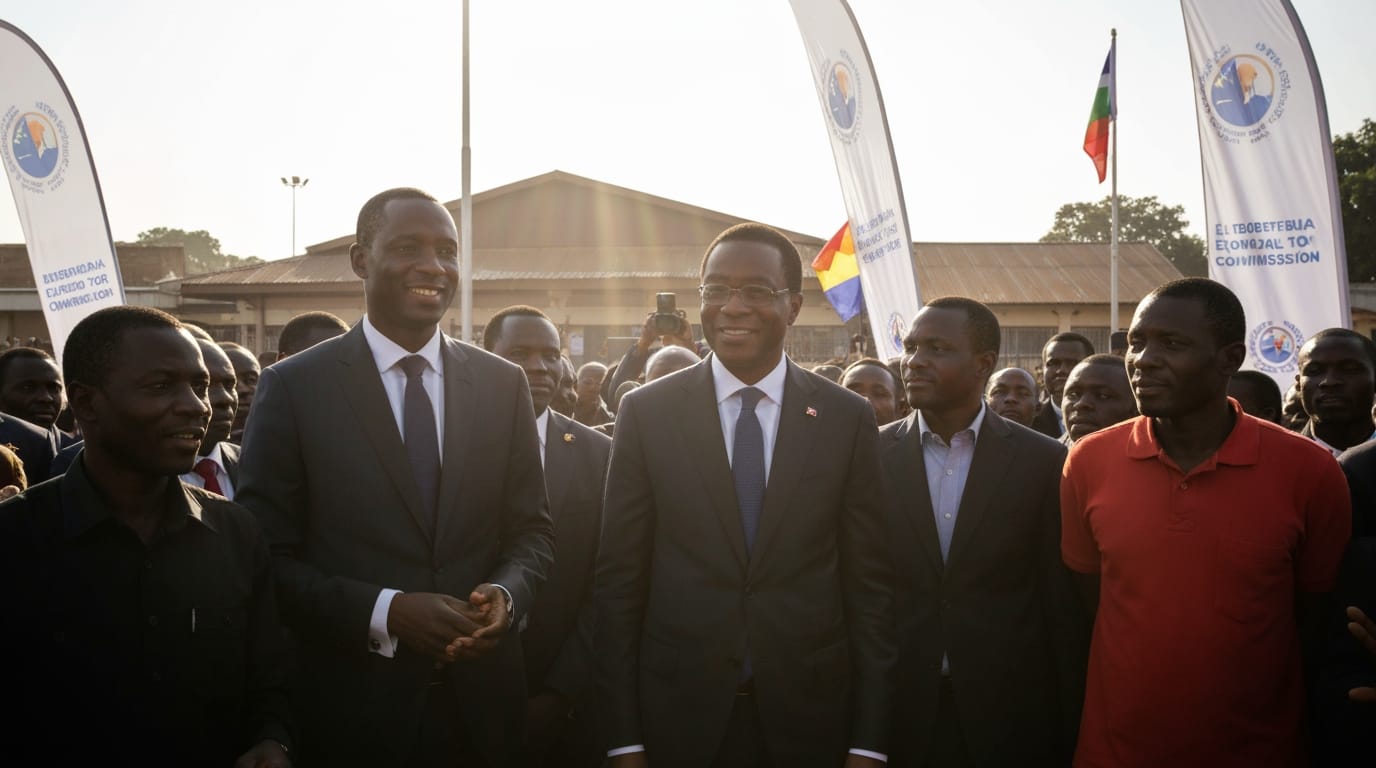
Bangui, Central African Republic – Faustin-Archange Touadéra has secured a second term as president of the Central African Republic (CAR) following the December 27, 2020, general election, an outcome officially confirmed by the nation's Constitutional Court. While some international observers and initial reports characterized parts of the voting process as "peaceful," the election was, in reality, deeply marred by significant violence, widespread disruption by armed groups, and allegations of fraud, casting a long shadow over the legitimacy of the electoral exercise in a nation long plagued by instability. The re-election of Touadéra, a former mathematics professor, signals a continuation of leadership as the country grapples with persistent insecurity and a profound humanitarian crisis.
The Official Mandate Amidst Discord
The provisional results, announced by the National Elections Authority (ANE) on January 4, 2021, declared President Touadéra the winner with 53.92 percent of the votes. This figure was later slightly adjusted by the Constitutional Court, which officially validated his victory on January 18, 2021, with 53.16 percent. His closest challenger, former Prime Minister Anicet-Georges Dologuélé, garnered approximately 21.69 percent. Despite this clear numerical victory, a coalition of opposition parties, known as COD 2020, immediately called for the cancellation and rerun of the elections, citing "massive fraud" and pervasive insecurity across the country. However, the Constitutional Court rejected these appeals, upholding Touadéra's re-election and declaring the process legitimate despite acknowledging challenges.
A Fragile Peace Undermined by Violence
The narrative of a "peaceful" election largely held true only for the capital, Bangui, and a few other urban centers, where international observers noted voting proceeded relatively smoothly. However, beyond these enclaves, the reality was starkly different. The polls took place against a backdrop of escalating violence perpetrated by a coalition of armed groups, notably the Coalition of Patriots for Change (CPC), which included elements allied with former President François Bozizé, whose candidacy had been invalidated by the Constitutional Court on December 3, 2020. This coalition actively sought to disrupt the electoral process, calling for its suspension and engaging in attacks that made voting impossible in large swathes of the country.
Two days before the scheduled election, on December 25, unidentified armed gunmen attacked national security forces and UN peacekeepers in Dékoa and Bakouma, resulting in the deaths of three Burundian peacekeepers and injuries to two others. This incident underscored the severe security challenges. Critically, some 800 polling stations, representing 14 percent of the total, were forced to close due to violence. Voting did not occur at all in 29 of the country's 71 sub-prefectures, and in six others, the process was prematurely halted due to voter intimidation. The UN Multidimensional Integrated Stabilization Mission in the Central African Republic (MINUSCA), supported by reinforcements from Russia and Rwanda, played a crucial role in repelling these attacks and securing some areas, but their presence was not sufficient to ensure nationwide peace for the polls.
Low Turnout and Questions of Legitimacy
The official voter turnout figures reflected the fragmented and violent nature of the election. While initial reports from the National Elections Authority cited a 76.3 percent turnout, the Constitutional Court's final declaration presented a significantly lower figure of 35.25 percent of registered voters participating. This discrepancy highlights the challenges in assessing electoral participation in a conflict-affected environment. The inability of a large portion of the population to cast their ballots due to insecurity and direct threats from armed groups raised profound questions about the election's inclusivity and representativeness.
Opposition figures and some Central African media outlets openly characterized the elections as a "farce and fraud," arguing that the widespread disruptions fundamentally undermined the integrity of the process. The Constitutional Court, while upholding Touadéra's victory, acknowledged the low turnout but maintained that the results remained legitimate. The legislative elections, held concurrently, also faced significant irregularities, with the Constitutional Court later nullifying results in several constituencies due to voter intimidation and ballot tampering, necessitating additional rounds of voting in March, May, and July 2021.
A Difficult Road Ahead
Despite President Touadéra's re-election, the hope for immediate peace following the polls was quickly "dashed" by continued rebel attacks in various localities. The security situation in the CAR remained volatile, underscoring the deep-seated fragility that continues to plague the nation. Touadéra's administration has increasingly relied on external support for security, notably from Russia and Rwanda, a dynamic that has reshaped the country's geopolitical landscape.
The humanitarian crisis persists, with an estimated 2.8 million people – approximately 57 percent of the population – in need of humanitarian assistance and protection. The international community, including the United Nations and regional organizations, has urged all political actors to respect the final election results and engage in an "inclusive, open, constructive and credible political dialogue" to foster national stability. As Touadéra embarks on his second term, the challenge of uniting a deeply fractured nation, securing its vast territories, and addressing the dire needs of its populace remains paramount. The 2020-2021 election, while technically concluding a constitutional process, has undeniably exposed the enduring vulnerabilities and complex path toward lasting peace in the Central African Republic.


