China Blocks Meta's $2 Billion AI Acquisition, Signaling Escalating Tech Tensions
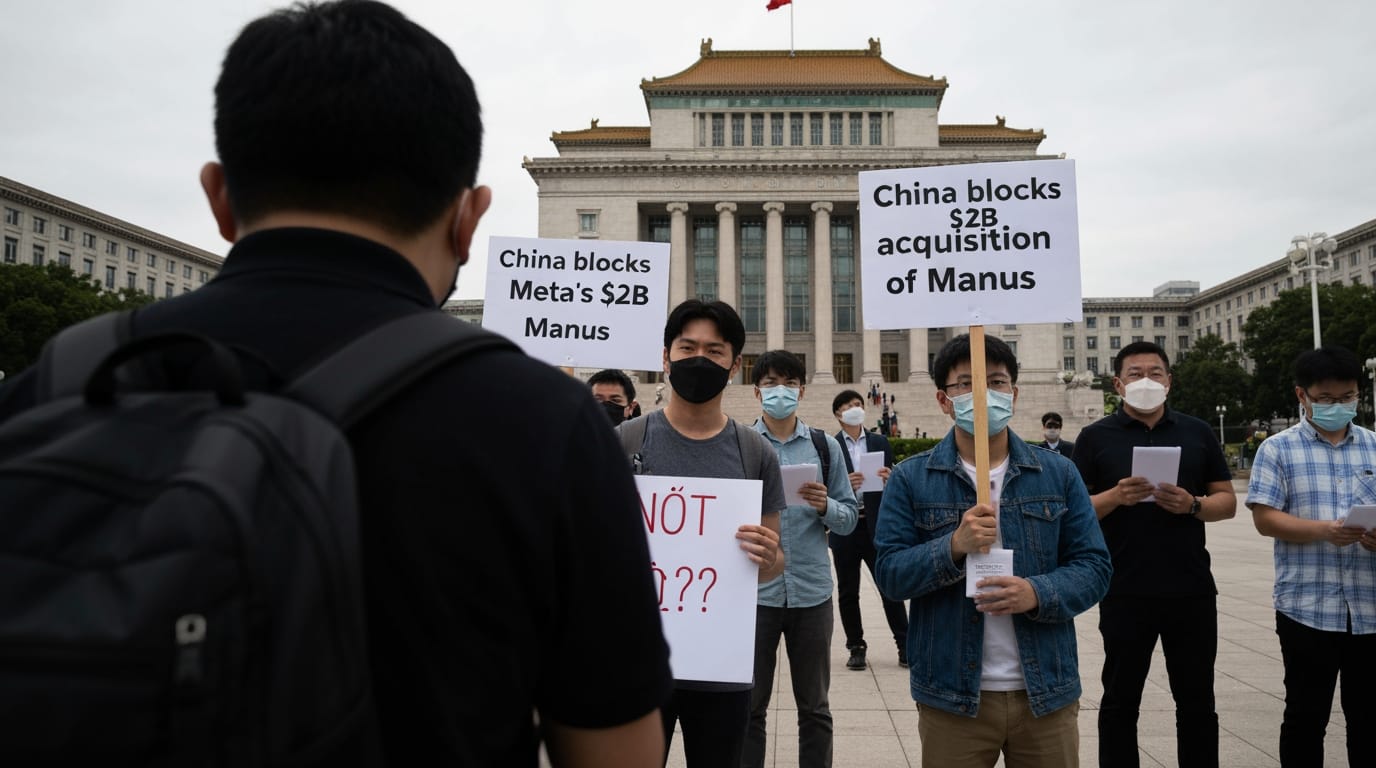
Beijing, China – In a significant and unprecedented move, China's top economic planning body has blocked Meta Platforms' proposed $2 billion acquisition of AI startup Manus, ordering the deal to be unwound. The decision by the National Development and Reform Commission (NDRC) on Monday marks a stark escalation in the ongoing technological and geopolitical rivalry between the United States and China, sending ripples through the global artificial intelligence sector. This intervention, which calls for the cancellation of a transaction already close to completion, highlights Beijing's hardening stance on safeguarding its technological sovereignty and preventing the transfer of advanced AI capabilities to foreign entities.
Beijing's Unprecedented Intervention
The NDRC issued a clear directive, stating it would "prohibit the foreign investment in the acquisition of the Manus project" and "requires the parties involved to withdraw the acquisition transaction." While Chinese regulators have previously scrutinized foreign acquisitions, ordering a completed deal to be unwound is an "extremely rare" occurrence, underscoring the gravity with which Beijing views the transaction. The regulatory body cited concerns over national security, emphasizing the need to prevent the transfer of crucial artificial intelligence assets to a U.S. firm. This action comes amidst a backdrop of intensifying competition between Washington and Beijing for dominance in advanced AI technologies, which both nations increasingly consider critical for economic growth and national defense.
Manus, a developer of autonomous AI agents, was founded in Wuhan, China, by Xiao Hong and Yichao “Peak” Ji in 2022. Although its parent company later relocated its registered headquarters to Singapore, its core technology development largely took place in China, with affiliated entities still active in Beijing. This deep-seated Chinese origin appears to have been a pivotal factor in the NDRC's decision, as authorities concluded that the technical origin and domestic entities of Manus had not been legally separated from their Chinese roots. Chinese officials had reportedly begun investigating the acquisition in January, just weeks after Meta's announcement, scrutinizing it for potential national security issues and export control violations. During this review period, Manus's co-founders were reportedly prevented from leaving China, a clear signal of the tightening control over AI talent and cross-border deals.
The Allure of Manus: Meta's AI Ambitions
Meta, the parent company of Facebook, Instagram, and WhatsApp, announced its intent to acquire Manus in December, reportedly for more than $2 billion, marking one of its largest acquisitions to date. The acquisition was part of Meta's aggressive strategy to bolster its artificial intelligence offerings and accelerate its push into agentic AI, a field focused on AI systems that can autonomously perform complex tasks with minimal human input. Manus had gained significant recognition for its "general-purpose" AI agent, launched in March 2025, which demonstrated the ability to execute sophisticated tasks like writing research reports, preparing presentations, building websites, and analyzing financial markets. The startup's technology was lauded for its ability to operate on top of existing large-language models and reportedly outperformed OpenAI's Deep Research agent on the GAIA benchmark for multi-step tasks.
Manus's rapid ascent in the AI landscape was evident in its financial performance, raising $75 million at a $500 million valuation and achieving over $100 million in annual revenue by December 2025, just eight months after its agent's launch. Meta saw Manus as a way to integrate advanced AI capabilities into its vast ecosystem of products, enhancing user experience and driving new business opportunities. Recognizing potential regulatory hurdles due to Manus's Chinese origins, Meta had stated there would be "no continuing Chinese ownership interests" post-acquisition and that Manus would discontinue its services and operations within China, with its operations remaining in Singapore. These assurances, however, ultimately failed to appease Chinese regulators.
The Broader Geopolitical and Regulatory Chessboard
The blocking of the Meta-Manus deal is a powerful illustration of the deepening technological divide between the U.S. and China. Beijing views advanced AI as a strategic asset crucial for its national security and economic future, mirroring Washington's own efforts to restrict China's access to cutting-edge technologies like advanced semiconductor chips. Analysts suggest that China's move reflects its determination to prevent a "loss of valuable AI technology to a geopolitical rival." The NDRC's decision, based on China's Measures for the Security Review of Foreign Investment, the Catalogue of Technologies Prohibited and Restricted from Export, and the Measures for Security Assessment of Data Export, underscores that core AI algorithms are now firmly categorized as restricted export technologies.
This regulatory action is also consistent with China's broader trend of heightened scrutiny over its technology sector, particularly concerning cross-border investments and the outflow of sensitive data and talent. While China supports its enterprises in international operations, it mandates strict compliance with its laws and regulations, particularly for deals involving key technologies. The incident is likely to intensify Beijing's oversight of strategic technology transactions, especially those involving artificial intelligence, and suggests that national security considerations will increasingly form an "all-encompassing lens" for Chinese regulators.
Implications for the Future of Tech Acquisitions
The unwinding of Meta's acquisition of Manus is expected to have far-reaching implications for future mergers and acquisitions, especially in the sensitive AI sector. This decision sends a chilling message to global technology companies seeking to acquire startups with Chinese origins or substantial development efforts within China, regardless of their current registration location. The precedent set by the NDRC suggests that relocating headquarters to circumvent regulatory scrutiny may not be sufficient to shield companies from Beijing's intervention.
The move will likely force foreign tech giants to reassess their strategies for international growth and innovation, potentially leading to a greater focus on domestic development or alternative partnerships outside of China's direct regulatory reach. It also highlights the growing complexity and risks associated with cross-border technology deals in an era of heightened geopolitical tensions. For companies operating in China's technology ecosystem, increased regulatory hurdles and the potential for similar interventions are now a clear and present concern. The global AI industry may experience a shift, with a potential reduction in cross-border collaboration but an accelerated investment in domestic AI capabilities within various national boundaries.
In conclusion, China's forceful blocking of Meta's $2 billion acquisition of Manus is more than just a regulatory decision; it is a powerful geopolitical statement. It underscores the intensifying battle for technological supremacy and the readiness of nations to exert stringent control over what they deem critical assets in the AI landscape. This move will undoubtedly reshape strategies for mergers and acquisitions in the tech world, making it increasingly challenging for global companies to navigate the complex interplay of commercial interests, national security, and evolving regulatory frameworks.


