China Defies Tariff Pressure, Logs Record-Breaking $1.2 Trillion Trade Surplus in 2025
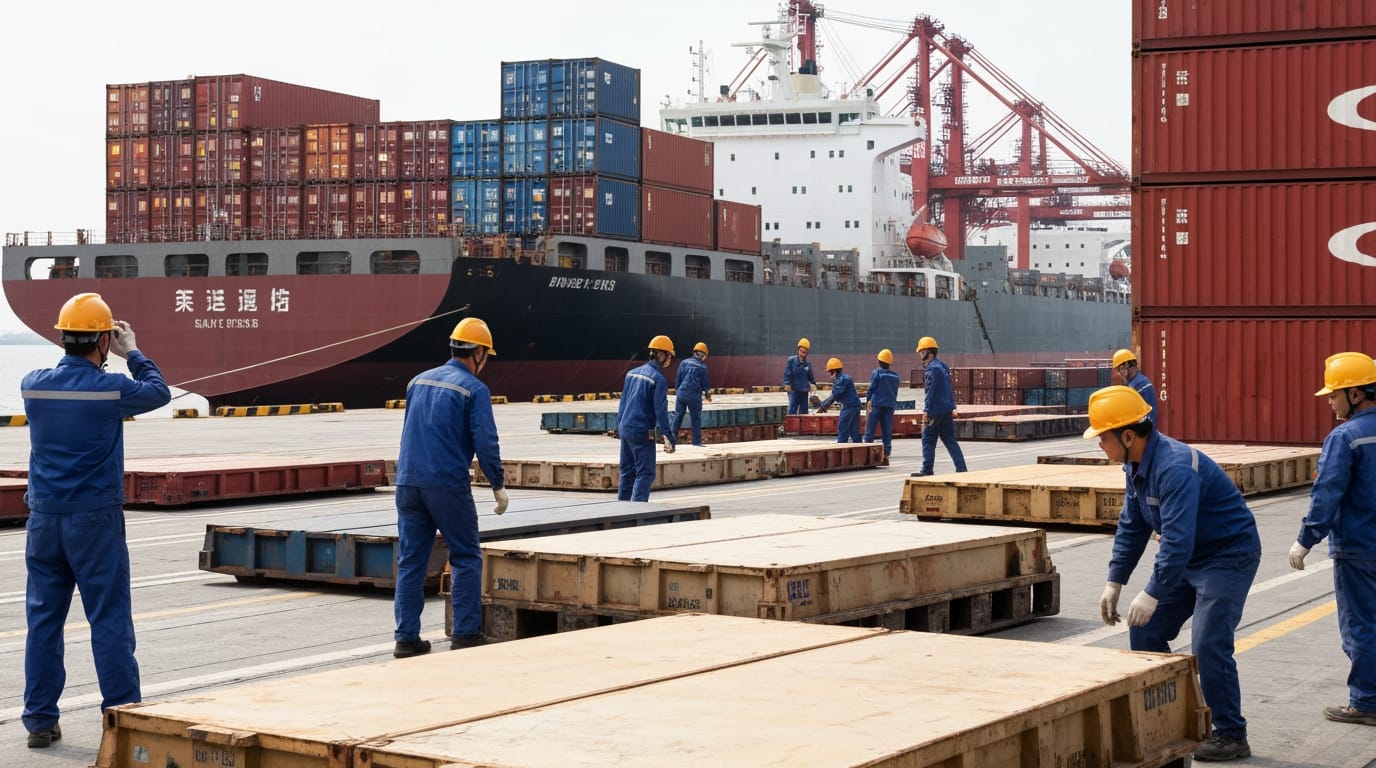
Beijing, China – In a stark illustration of global trade's evolving landscape, China reported an unprecedented trade surplus of nearly $1.2 trillion in 2025, marking a new historical high despite the aggressive reintroduction and escalation of tariffs under a returning Trump administration. This remarkable economic performance underscores China's persistent export strength and its strategic pivot towards diversifying trade partners amidst a turbulent geopolitical environment. The record surplus, which for the first time surpassed the trillion-dollar mark in November, signals China's enduring role as a manufacturing powerhouse and its capacity to navigate protectionist headwinds.
The Unprecedented Surge: A Deeper Look at China's 2025 Trade Figures
China's full-year trade surplus for 2025 reached an astounding $1.189 trillion, a figure comparable to the gross domestic product of a top-20 global economy like Saudi Arabia. This significant achievement was propelled by a robust export run throughout the year, with outbound shipments from the world's second-largest economy growing by 6.6 percent in value terms year-on-year in December, exceeding earlier forecasts. Imports also saw an increase of 5.7 percent, surpassing expectations. Overall, China's foreign trade expanded by 3.8 percent year-on-year in yuan terms, reaching 45.47 trillion yuan (about $6.48 trillion) in 2025, maintaining growth for the ninth consecutive year since 2017. Exports alone grew 6.1 percent year-on-year to 26.99 trillion yuan, while imports edged up 0.5 percent to 18.48 trillion yuan. This sustained performance highlights the resilience and vitality of China's foreign trade sector even under complex international conditions.
Trump Tariffs Reignited: A Landscape of Protectionism
The record surplus emerges against a backdrop of intensified trade tensions with the United States. Following Donald Trump's return to the White House, his administration aggressively amplified its protectionist agenda. Tariffs on Chinese imports surged to an unprecedented 125 percent, framed as a necessary response to perceived "economic aggression" from Beijing. In response, China retaliated, raising tariffs on U.S. goods to 84 percent, leading to a tit-for-tat escalation.
The direct impact on U.S.-China bilateral trade was severe. U.S. imports from China plummeted by 28 percent year-on-year, while U.S. exports to China dropped by 38 percent in 2025, marking one of the sharpest contractions in recent memory. Shipments to the U.S. from China fell 20 percent, and imports from the U.S. declined by 14.6 percent. This dramatic decline indicates a fundamental restructuring of global supply chains rather than a temporary disruption, with Southeast Asian countries capturing a significant share of the market. For American households, these tariffs contributed to a highly inflationary environment, projected to increase annual disposable income costs by over $4,000 due to elevated prices on consumer goods.
Diversification and Resilience: China's Strategic Response
Despite the significant downturn in trade with the United States, China's overall export strength remained robust, largely due to a successful strategy of market diversification. Chinese firms actively sought new customers in other global regions, with notable shifts towards Southeast Asia, Africa, and Latin America. Trade with countries participating in the Belt and Road Initiative, for instance, increased by 6.3 percent year-on-year, accounting for over half of China's total trade. This strategic pivot has significantly enhanced China's ability to withstand external risks.
Several factors underpinned this export resilience. China's manufacturing sector demonstrated remarkable adaptability, maintaining its global market share at approximately 14 percent, a figure four times greater than that of India and Vietnam combined. A weakened yuan also partially supported the monthly export surpluses. Furthermore, China's exports of high-tech products saw a substantial increase of 13.2 percent year-on-year. The "new trio" of electric vehicles, lithium-ion batteries, and photovoltaic products experienced a soaring 27.1 percent increase in exports, while green products like wind turbines rose by 48.7 percent. This shift towards more knowledge-intensive and green goods, coupled with Chinese firms establishing overseas production hubs for lower-tariff access to key markets, played a crucial role in sustaining export growth.
Global Implications and a "Reglobalized" Future
The record trade surplus in 2025 has significant implications for the global economy and geopolitical dynamics. On one hand, it highlights China's economic strength and its ability to weather external pressures, even as it grapples with a prolonged property slump and sluggish domestic demand. On the other hand, this massive surplus raises concerns among other economies about China's trade practices and potential overcapacity, particularly in sectors where Chinese goods are highly competitive. The International Monetary Fund has urged China to address these economic imbalances and foster stronger domestic demand to reduce its reliance on exports.
The trade war of 2025 has not led to "deglobalization" in its entirety, but rather a "reglobalization" or "fragmented globalization." This new phase is characterized by a strategic realignment of trade, production, and financial networks, where geopolitical alignments increasingly influence trade patterns. While direct trade between the U.S. and China has contracted, "connector economies" like Mexico and Vietnam are seeing increased activity, importing intermediate goods from China for processing and then exporting finished products to the U.S. and Europe. This suggests a more complex, multinodal global trade system is emerging, prioritizing resilience and security alongside traditional cost efficiencies.
Conclusion: A New Chapter in Global Trade Dynamics
China's record $1.2 trillion trade surplus in 2025 serves as a powerful testament to its adaptability and the evolving nature of global commerce. Despite the significant tariff barriers imposed by the United States, China's strategic diversification of trade partners and its robust export capabilities, particularly in high-tech and green industries, allowed it to achieve unprecedented economic figures. This development signals a new chapter in global trade, characterized by fragmented supply chains, intensified competition, and a re-evaluation of economic partnerships. As nations navigate this complex and "reglobalized" landscape, China's sustained export prowess will undoubtedly remain a central factor in shaping international economic relations for years to come.


