China's Ascendant Influence Reshapes Southeast Asian Dynamics as US Grip Loosens
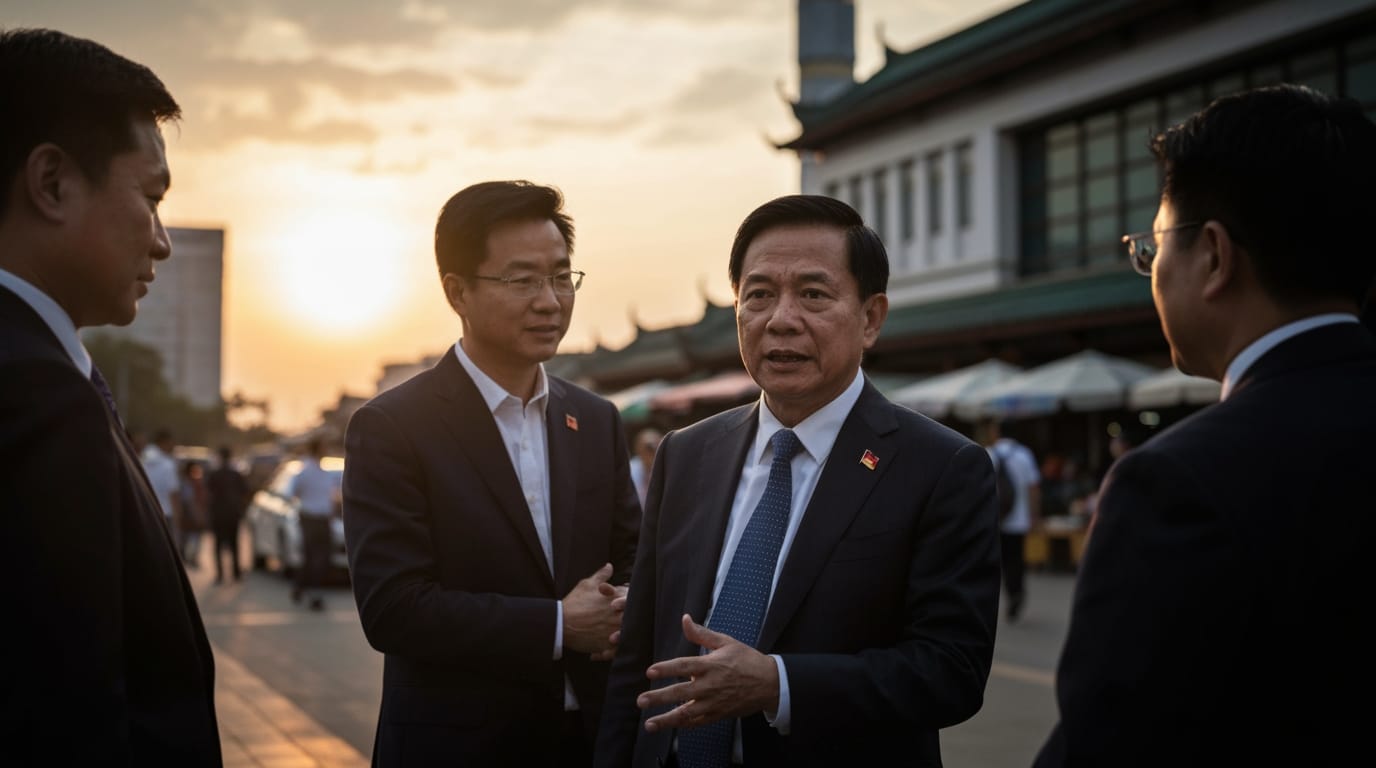
Southeast Asia is witnessing a profound geopolitical transformation as China steadily consolidates its influence across the region, filling a vacuum perceived by many to be left by a wavering United States. Beijing's strategic overtures, heavily underpinned by economic power and robust diplomatic engagement, have positioned it as the primary partner for many nations within the Association of Southeast Asian Nations (ASEAN). This shift compels regional states to navigate an increasingly complex landscape, balancing significant economic opportunities with deep-seated security concerns. The evolving dynamic challenges the long-held regional order and underscores a pivotal moment in the competition between global superpowers.
The Shifting Sands of Geopolitics in a Vital Region
Southeast Asia, a crossroads of global trade and maritime routes, has long been a focal point of major power competition. Its strategic location, burgeoning economies, and diverse political landscapes make it a crucial arena for influence. Historically, the United States has maintained a strong presence, providing security assurances and fostering economic ties. However, recent years have seen a noticeable rebalancing. A Lowy Institute report indicates that China's overall influence in Southeast Asia has surpassed that of the United States, particularly in the economic and diplomatic spheres. While Washington retains strengths in defense networks and cultural soft power, its economic and diplomatic footprint has reportedly weakened, especially following policies enacted during the Trump administration. This perceived retreat has opened avenues for Beijing to deepen its engagement and reshape regional alignments, prompting Southeast Asian nations to reassess their traditional foreign policy stances.
China's Economic Gravitas: Trade and the Belt and Road Initiative
At the heart of China's expanding influence lies its formidable economic power. Beijing has firmly established itself as ASEAN's largest trading partner and the biggest individual trading partner for almost every ASEAN member state. China accounts for approximately 20% of Southeast Asia's exports and supplies 26% of its imports, figures that significantly outpace those of the United States, which stands at 16% for both categories. This economic interdependence is further amplified by China's ambitious Belt and Road Initiative (BRI), a global infrastructure development strategy that has become a cornerstone of its engagement in Southeast Asia.
Through the BRI, China has poured billions into large-scale infrastructure projects across the region, including railways, ports, highways, energy facilities, and 5G networks. By the end of 2022, Chinese enterprises had invested $57.13 billion in economic and trade cooperation zones within BRI partner countries, reportedly generating 421,000 new jobs for local populations. Countries like Indonesia, Cambodia, Vietnam, and the Philippines have been major recipients of these projects. This influx of investment is not merely economic; it is a powerful tool for building goodwill, fostering partnerships, and enhancing China's political and diplomatic clout in the region. The appeal of Chinese capital for nations with significant infrastructure deficits is undeniable, allowing them to pursue development goals that might otherwise remain out of reach.
America's Perceived Retreat and Policy Challenges
The perceived faltering of US influence in Southeast Asia is multifaceted. The US withdrawal from the Trans-Pacific Partnership (TPP) trade agreement, for instance, generated significant uncertainty regarding America's long-term economic commitment to the region. This move was seen by some as creating a void that China was quick to fill. Subsequent "America First" policies, marked by tariffs and a more transactional approach to international relations, further contributed to a sense of disengagement. Reports indicate that US economic relationships in Southeast Asia are now weaker than China's in every country.
Furthermore, a perceived shift in Washington's strategic focus and resource allocation towards the Middle East has left many Southeast Asian nations feeling a sense of "strategic neglect". The current US policy towards Southeast Asia has been described as generating negative effects, exacerbating regional economic pressures, eroding cooperative trust due to policy uncertainty, and deepening regional divisions amidst major-power competition. A 2026 survey revealed a growing preference among Southeast Asian respondents to align with China over the United States when compelled to choose, with 52% favoring Beijing. Another survey indicated that 50.5% of respondents would choose to align with China, a notable increase from previous figures.
ASEAN's Delicate Balancing Act: Between Economic Opportunity and Security Concerns
Caught between the two giants, ASEAN nations are attempting to execute a delicate balancing act, prioritizing their strategic autonomy and resisting pressures to definitively choose sides. Historically, their strategy has involved seeking security guarantees from the United States while harnessing China's economic might. This "hedging" strategy allows them to benefit from both relationships.
However, this balancing act is fraught with challenges. While embracing Chinese investment, many Southeast Asian countries harbor concerns about Beijing's growing assertiveness, particularly in the South China Sea. China's expansive claims over vast swathes of the South China Sea clash with those of five ASEAN member states, creating persistent security tensions. The US, in response, has increased its Freedom of Navigation Operations (FONOPS) and bolstered support for regional partners, emphasizing its commitment to freedom of navigation and international law. The South China Sea disputes remain a critical point of contention, with China's island-building activities and harassment of fishing vessels creating ongoing friction.
Concerns also extend to the terms of Chinese loans for BRI projects, debt sustainability, potential environmental degradation, and societal impacts. Some nations, like Vietnam and the Philippines, express more negative views of China due to these maritime disputes. To mitigate dependence on either power, ASEAN members are actively seeking to strengthen ties with "middle powers" such as Japan, South Korea, India, and Australia, aiming to diversify their partnerships and enhance their collective resilience. The desire for a free and open Indo-Pacific and a rules-based order resonates with many in the region.
A Contested Future for Regional Stability
The evolving geopolitical landscape in Southeast Asia points to an intensifying and complex rivalry between China and the United States. The region has become a "contested zone," where economic, diplomatic, and security interests of global powers converge. China's strategy of deep economic integration, coupled with robust diplomatic engagement, presents a compelling alternative to what some perceive as an inconsistent US presence. While Southeast Asian nations value their economic ties with China, they also seek to maintain a degree of strategic independence and are wary of any single power dominating the region.
The future of Southeast Asia will likely be characterized by continued efforts by regional states to maintain neutrality, diversify their partnerships, and collectively assert their agency through ASEAN. The success of this strategy will depend on their ability to manage the inherent tensions between economic expediency and geopolitical autonomy. As the US recalibrates its engagement and China continues its assertive outreach, the delicate balance in Southeast Asia will remain a critical barometer of the broader global power shift.


