Mali's Junta Under Siege as Insurgency Intensifies, Capital Faces Blockade
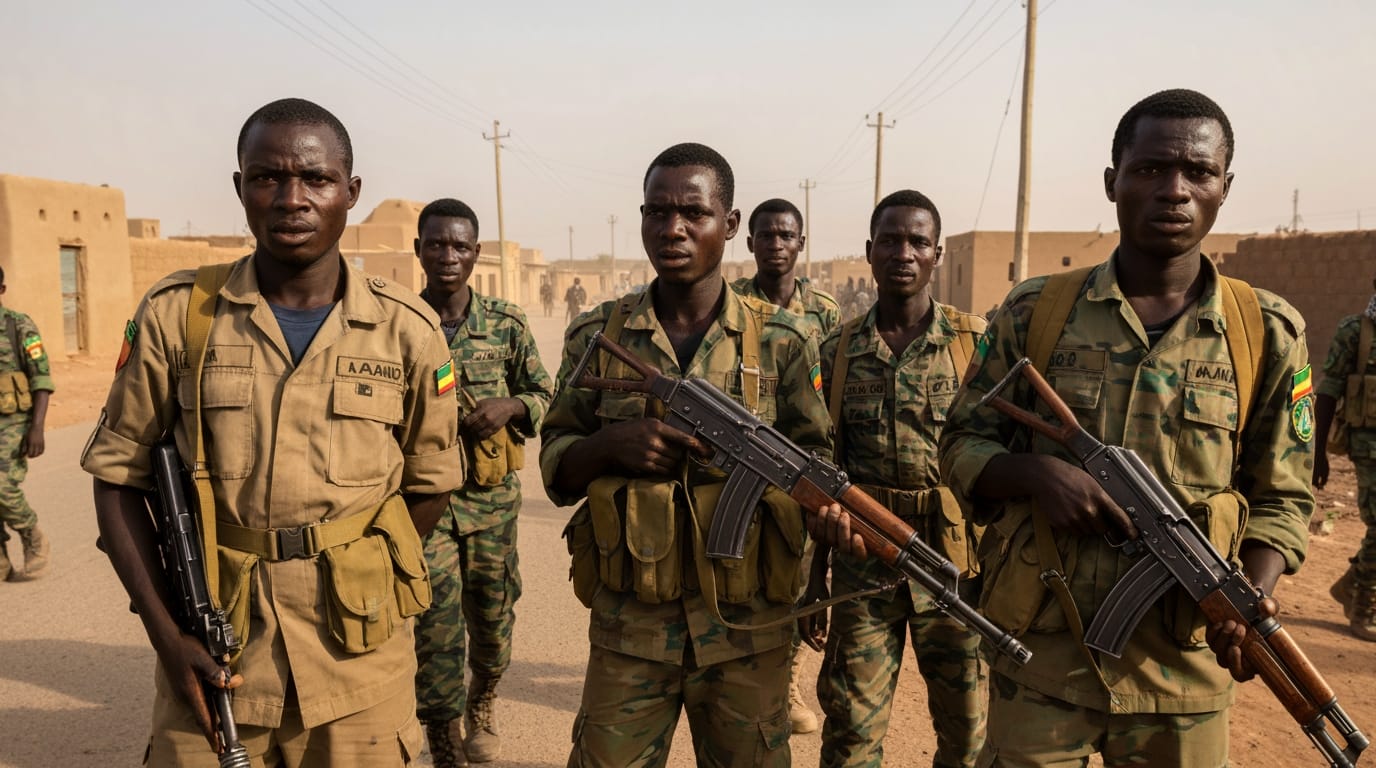
BAMAKO, MALI – Mali's military junta, which seized power with promises of restoring security, faces an escalating insurgency that has brought the nation to a critical juncture. The capital, Bamako, has experienced significant disruption due to blockades by an Al-Qaeda-linked militant group, highlighting the precarious state of a country grappling with widespread violence, humanitarian challenges, and a shifting geopolitical landscape. The situation underscores the limits of military solutions divorced from effective governance and local dynamics, as the authority of the state continues to erode across vast swathes of the nation.
Escalation of Insurgency and a Capital Under Pressure
The primary threat emanates from Jama'at Nusrat al-Islam wal-Muslimin (JNIM), an Al-Qaeda-linked militant group that has intensified its campaign against the Malian military government. JNIM's tactics have evolved beyond direct military engagements to include strategic blockades, most notably targeting fuel supplies into Bamako. This has led to severe shortages, with vehicles queuing for hours at petrol stations, schools closing, and hospitals rationing essential resources. Reports indicate that these militants have been blowing up fuel trucks and kidnapping drivers, effectively strangling vital supply routes into the capital.
The militants' operational reach expanded significantly in April 2026, when Mali experienced its largest coordinated attacks in years. Cities including Bamako, Gao, and Kidal were struck, demonstrating a level of coordination and capability that directly contradicts the junta's claims of improved security. This resurgence has exposed the fragility of the regime and the perceived ineffectiveness of its security partners, pushing Mali deeper into crisis.
The Junta's Resolve Tested Amid Worsening Violence
The military junta, which took control through coups in 2020 and 2021, justified its power grab by pledging to end the extremist insurgency. However, the period under military rule has seen a substantial worsening of the security situation. Last year alone, Mali recorded a 38% increase in violence targeting civilians, according to Armed Conflict Location and Event Data (ACLED). Deadly clashes involving security forces, terror groups, and Tuareg rebels have continued unabated throughout the current year.
In August, JNIM launched a widespread offensive across central, western, and northern Mali, overrunning numerous Malian military positions in critical regions such as Bandiagara, Kayes, Mopti, and Timbuktu. This offensive contributed to a 5% increase in overall violence in August compared to the previous month. The killing of Defense Minister Sadio Camara and the temporary loss of key northern positions further illustrated the vulnerability of the military government and its allies.
Researchers from institutions including the Institute for Security Studies and the Universities of Nigeria and Pretoria have identified several factors contributing to Mali's ongoing instability. These include the government's difficulty in adapting to the evolving nature of counterinsurgency operations, limited military assistance, external influences on security efforts, and a failure to adequately leverage terrain and air capabilities.
Shifting Alliances and International Disengagement
A significant shift under the junta has been the alienation of traditional international security partners. Following the coups, the Malian military government requested the withdrawal of French forces, which had been deployed since 2013, and the United Nations Multidimensional Integrated Stabilization Mission in Mali (MINUSMA). The last French troops departed in 2022, and MINUSMA concluded its mission in December 2023. France attributed its withdrawal to the junta's obstruction of military operations.
In their place, the junta invited Russian contractors, including the Wagner Group, which later became part of Africa Corps. These forces promised a more decisive campaign against militants. However, rights groups have accused Russian paramilitaries of abuses, and their presence has not demonstrably improved security outcomes. A fierce battle in July near the Algerian border reportedly resulted in the deaths of up to 80 Russian mercenaries, marking their most significant loss in Mali since their deployment in December 2021. This event, coupled with the April 2026 attacks, has led experts to question the effectiveness of the Russian model, suggesting that replacing one external security provider with another does not resolve structural instability.
The international community, particularly Western actors, is now reassessing its disengagement from the region, while regional organizations struggle to formulate effective responses. The situation in Mali, alongside neighboring Burkina Faso and Niger, where similar juntas and Russian forces operate, has seen political violence collectively rise by 5% last year, representing a 46% increase over 2021.
Humanitarian Crisis and Regional Spillover
The escalating conflict has profound humanitarian consequences. Thousands of Malians have been displaced, seeking refuge in neighboring countries like Mauritania and Côte d'Ivoire. The civilian population remains caught between the military regime and the jihadist forces, struggling with daily life amid insecurity and a significant lack of state presence, particularly in rural areas. In some regions, communities have resorted to making their own arrangements or "local survival pacts" with JNIM to navigate the pervasive insecurity.
The blockade of Bamako has crippled the economy, affecting industries, including gold mining, a major export. The consistent threat of disruption, fuel shortages, and ongoing tensions exacerbate the hardships faced by ordinary citizens. The enduring presence of militant forces throughout the country, even in southern Mali near the borders with Côte d'Ivoire, Mauritania, and Senegal, suggests an expanding and more deeply entrenched threat that will be increasingly difficult for Malian forces to counter.
A Nation at a Crossroads
Mali finds itself at a critical juncture, with its military government facing immense pressure from a resilient and adaptable insurgency. The promise of enhanced security, which underpinned the junta's rise to power, remains largely unfulfilled, and in many respects, the situation has deteriorated. The withdrawal of international peacekeeping forces and French troops, coupled with the introduction of Russian-backed forces, has not yielded the desired stability.
The current crisis highlights the complex interplay of internal governance failures, the evolving nature of extremist threats, and the impact of shifting geopolitical alignments. The weakening of Mali's junta could create opportunities for political transition, but it also carries the significant risk of further fragmentation or even state collapse. Without a comprehensive strategy that addresses the root causes of instability, strengthens legitimate governance, and prioritizes the protection of its civilian population, Mali's journey toward peace and security appears increasingly arduous.