China's Dual Energy Path: A Global Leader in Renewables Grapples with Persistent Coal Reliance
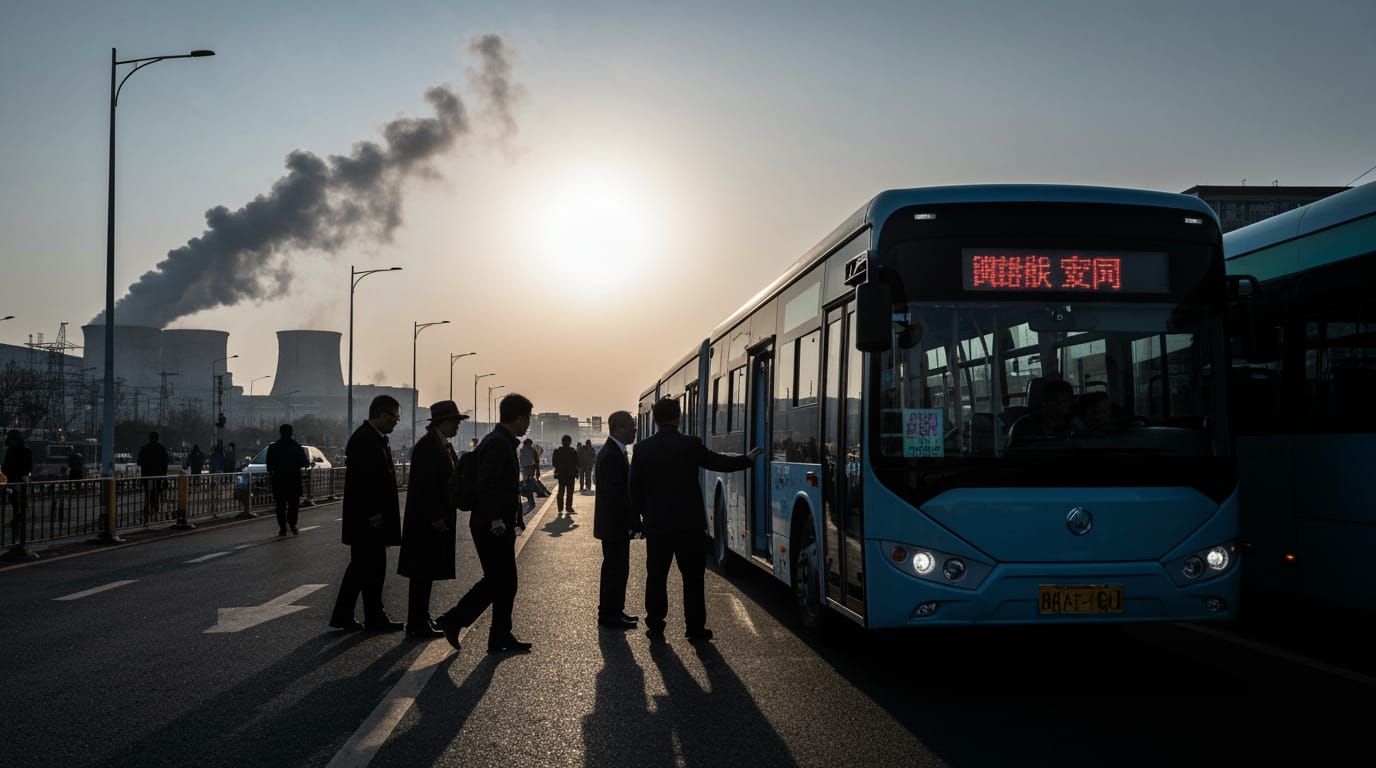
China stands at a pivotal juncture in its energy evolution, showcasing a striking paradox: it is simultaneously a global powerhouse in electric vehicle adoption and renewable energy deployment, while remaining heavily dependent on coal for its vast energy needs. This complex dynamic presents a formidable challenge as the nation navigates rapid economic growth, energy security concerns, and ambitious climate commitments, ultimately shaping the trajectory of global decarbonization efforts.
The Electric Surge: Unprecedented Growth in Clean Energy
In recent years, China has emerged as an undisputed leader in the clean energy transition, particularly in the electric vehicle (EV) sector and renewable power generation. The Chinese EV market generated a substantial $641.3 billion in revenue in 2025, with projections indicating a surge to $4,793.3 billion by 2033, demonstrating a remarkable compound annual growth rate (CAGR) of 25.3% from 2026 to 2033. By 2024, China's EV market had already reached a record of over 11 million vehicles, marking a 40% increase from the preceding year. Electric cars accounted for nearly half of all car sales in China in 2024, leading to one in ten cars on Chinese roads now being electric. This momentum continued into April 2026, when new energy vehicles (NEVs), encompassing battery-electric vehicles and plug-in hybrids, comprised an impressive 53.2% of the market. A significant driver of this growth is exports, with 430,000 NEVs exported in April 2026 alone, setting a new record and representing a 110% year-on-year increase.
Parallel to its EV revolution, China has made monumental strides in renewable energy. The nation is currently the world's leading producer of electricity from renewable sources. In 2025, China installed over 430 gigawatts (GW) of renewables, pushing its total installed capacity to more than 2.34 terawatts (TW). A staggering 356 GW of wind and solar capacity was added in China in 2024, a figure 4.5 times greater than the additions in the entire European Union. By 2025, wind and solar combined contributed 22% of China's electricity generation, surpassing the global average of 17%. Solar power generation alone saw a 40% increase in 2025 compared to 2024. As of February 2026, clean electricity capacity, which includes hydropower, nuclear, wind, and solar, constituted 52% of China's total installed electricity generation capacity, marking the first time it has outpaced fossil fuel-based generation. This rapid expansion suggests that, if current trends persist, solar energy could independently become the primary source of electricity by 2026.
The Enduring Grip of Coal
Despite its remarkable advancements in clean energy, China continues to rely heavily on coal, presenting a significant impediment to its decarbonization goals. In 2023, coal accounted for 62% of China's total energy consumption, a slight increase from 58% in 2019. Coal-fired power plants were responsible for 57% of the nation's electricity generation in 2020, and China alone accounts for over half of the world's coal-fired power generation. While fossil fuels' share in China's electricity generation saw a marginal decrease from 62% in 2024 to 58% in 2025, the overall reliance remains substantial.
A primary driver for this persistent dependence is China's overarching focus on energy security. Coal, being an abundant domestic resource, is considered crucial for guaranteeing a stable and sufficient energy supply, especially amid geopolitical uncertainties. This emphasis on self-sufficiency has translated into continued investment in coal infrastructure. In 2024, China permitted 66.7 GW of new coal power capacity, and an additional 94.5 GW began construction, marking the highest level since 2015. The following year, 2025, saw the commissioning of 78 GW of new coal power capacity, with a substantial 291 GW still in the development pipeline. A concerning trend observed in 2024 was that over 75% of newly approved coal power capacity was financed by coal mining companies, further entrenching the industry's role.
Coal power is also seen as essential for maintaining grid stability and meeting burgeoning electricity demand, particularly during peak periods and when renewable sources face intermittency challenges. Some analyses suggest that China may still require over 800 GW of coal power capacity even by 2060 to ensure energy reliability.
Policy and Pathways: A Complex Balancing Act
China's government has articulated clear climate goals, pledging to peak carbon dioxide emissions before 2030 and achieve carbon neutrality before 2060. Specific targets include reducing carbon dioxide emissions per unit of GDP by over 65% from 2005 levels by 2030, and increasing the share of non-fossil fuels in primary energy consumption to approximately 25% by the same year.
However, achieving these targets has proven challenging. China only managed an 8% reduction in carbon intensity from 2020 to 2024, falling short of its 18% target for the 2021-2025 period. To meet the 2030 carbon intensity commitments, significant emission reductions from peak levels will be necessary. Experts note that even with record clean energy additions, power sector emissions have only just begun to stabilize, indicating that a substantial acceleration in clean energy deployment is required to manage rapidly growing energy demand and meet long-term goals.
The guiding principle behind China's energy strategy is "establish before breaking" (xianli houpo), which advocates for building up new energy systems before actively phasing out existing fossil fuel infrastructure. This approach means that clean energy is often integrated into the existing energy mix rather than directly replacing coal, leading to what some describe as "energy addition" rather than a fundamental transition.
Simultaneously, China is exploring innovative technological solutions. Researchers are developing electrochemical fuel cells that can generate electricity directly from coal without combustion, capturing CO2 emissions at the source. Furthermore, coal-to-liquids (CTL) technology, which converts coal into synthetic fuel, is being advanced as a strategic measure to enhance energy security and reduce reliance on imported oil.
Environmental Stakes and Global Impact
China's energy choices carry immense environmental and global implications, given its status as the world's largest emitter of greenhouse gases, accounting for nearly 30% of global GHG emissions in 2024. Between 2000 and 2020, China's CO2 emissions soared from approximately 3,385 million tonnes to around 10,065 million tonnes.
Despite this, there are signs of progress. In the fourth quarter of 2025, China's CO2 emissions saw a 1% decrease, resulting in a 0.3% decline for the full year, continuing a "flat or falling" trend since March 2024. This reduction was partly attributed to a 7% decline in CO2 from cement production and a 1.9% decrease in coal-fired generation, buoyed by increased output from solar (43%), wind (14%), and nuclear (8%) power. Notably, 2025 marked the first year since 2015 that coal-fired power generation in China experienced an absolute decline.
These shifts are critical for global climate efforts. China's energy policies and the speed of its transition away from fossil fuels will profoundly influence worldwide endeavors to mitigate climate change and achieve collective carbon reduction targets.
Conclusion: A Delicate Balance on a Global Stage
China's energy landscape is characterized by a dynamic tension between its aggressive pursuit of electrification and renewable energy on one hand, and the deeply entrenched role of coal in ensuring energy security and economic stability on the other. The nation's unparalleled growth in EVs and clean power generation showcases its potential to lead the world into a sustainable future. However, the continued investment in new coal capacity and the challenges in rapidly reducing coal consumption underscore the complexity of balancing economic development, energy resilience, and environmental stewardship.
The principle of "establish before breaking" highlights a pragmatic approach, yet it risks prolonging the reliance on fossil fuels. While recent data suggests a potential turning point with falling coal generation and declining emissions in some sectors, the pace and scale of future decarbonization efforts in China will be critical. Its success or struggle in navigating this intricate energy transition will not only define its own future but will also significantly impact the global fight against climate change.