Cities Reimagined: The Transformative Impact of Car-Free Urban Spaces
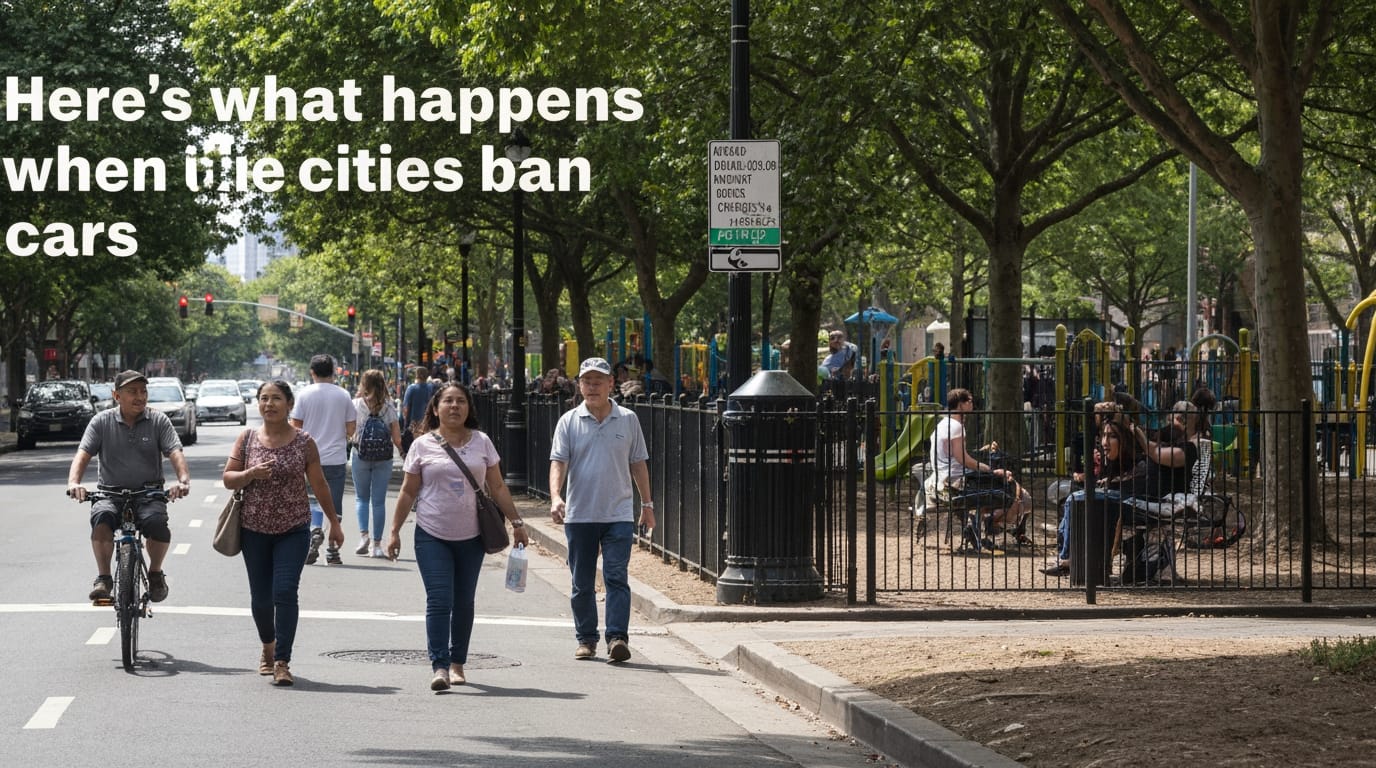
A global movement is reshaping the urban landscape as a growing number of cities and municipalities increasingly restrict or ban private vehicles from their centers. This profound shift, driven by a desire for improved air quality, enhanced public health, and revitalized community spaces, is challenging traditional notions of urban mobility and demonstrating how metropolitan areas can thrive with fewer cars. What once seemed an ambitious ideal is now becoming a tangible reality, with profound implications for how millions live, work, and interact within their cities.
The Imperative for Change: Health, Environment, and Livability
The motivations behind this urban transformation are multifaceted, stemming from mounting concerns over environmental degradation, public health crises, and the declining quality of urban life. Air pollution, largely attributed to vehicle emissions, contributes to millions of premature deaths globally each year, with 99% of the world's population breathing polluted air that exceeds WHO guidelines. Road vehicles, particularly passenger cars, are significant contributors to greenhouse gas emissions, exacerbating climate change. Beyond environmental impacts, the dominance of cars leads to chronic traffic congestion, noise pollution, and a substantial number of road accidents and fatalities.
Furthermore, urban planners and residents are increasingly recognizing the vast amount of public space consumed by vehicle infrastructure—roads, parking lots, and garages—which could otherwise be repurposed for housing, green spaces, parks, or pedestrian zones. The goal is to "rewild" cities, transforming them from spaces optimized for traffic into complex social ecosystems that prioritize people over automobiles. This fundamental rethinking aims to foster greater social interaction and community cohesion, elements often diminished in car-centric environments.
Pioneering Pavements: Global Case Studies in Car-Free Urbanism
Across the globe, cities are adopting various strategies to reduce car dependency, ranging from outright bans to the creation of extensive low-emission zones and pedestrian-priority areas. These pioneering efforts offer valuable insights into the practicalities and benefits of reimagining urban spaces.
Oslo, Norway, stands out as a leading example, having implemented a near-total ban on cars in its city center. Since its "Car-Free Livability Program" began in 2015, the city has converted hundreds of parking spaces into bike lanes, public seating, and playgrounds. This initiative contributed to a noticeable reduction in citywide greenhouse gas emissions and significantly cleaner air. Remarkably, in 2019, Oslo achieved zero pedestrian or cyclist deaths, and some shops reported a 10% increase in visitors.
In Belgium, Ghent's comprehensive circulation plan, initiated in 2017, established the country's largest historic car-free zone, spanning about 70 hectares. This strategic move has significantly reduced traffic congestion and boosted the use of cycling and public transit. Residents have embraced the transformation, describing streets as "more alive" and spaces where children can play and adults socialize.
Madrid, Spain, introduced an "ultra low emission zone" in its city center in 2018, effectively restricting most car access. This measure resulted in a notable increase in consumer spending, with a 9.5% rise on its main shopping street and a 3.3% increase across the city. Despite initial political challenges, public demand sustained the car-free policy. Similarly, Paris, France, has been progressively reclaiming urban space, banning cars along sections of the River Seine and aiming to remove 72% of on-street parking by 2024 to create more green spaces and playgrounds.
Barcelona, Spain, has garnered international attention for its "superblock" strategy, where nine-block sections are transformed into pedestrian-only spaces. Former intersections become playgrounds, and parking areas are replaced with benches and plants, prioritizing pedestrians and cyclists over vehicles. Even older, historically car-free locales like Venice, Italy, Mackinac Island, USA, and Giethoorn, Netherlands, continue to demonstrate that vibrant communities can thrive without the ubiquitous automobile, relying instead on canals, footpaths, bicycles, and horse-drawn carriages.
A Breath of Fresh Air: Tangible Benefits Emerge
The implementation of car-free policies yields a spectrum of quantifiable benefits that extend far beyond environmental improvements. Cities adopting these measures experience a palpable increase in quality of life for their residents.
Environmentally, the impact is substantial. Studies consistently show significant reductions in air pollution, including particulate matter (PM2.5) and carbon dioxide emissions, in car-free zones. This directly translates to improved public health, with a decrease in respiratory diseases, heart attacks, and strokes. Noise pollution also dramatically diminishes, creating quieter, more serene urban environments.
From a health and safety perspective, removing cars makes streets safer, particularly for vulnerable populations like children and the elderly. The shift encourages active transportation like walking and cycling, promoting physical activity and contributing to better mental well-being among residents.
Economically, car-free areas often defy initial business concerns. Research indicates that pedestrian-only streets can increase retail sales by around 49%. Pedestrians and cyclists tend to visit local businesses more frequently, even if their individual spending per visit might be less than car drivers. Cities also benefit from lower infrastructure costs associated with maintaining extensive road networks and parking facilities.
Perhaps most importantly, car-free initiatives foster a profound social transformation. Reclaiming space from cars allows for the expansion of public parks, wider sidewalks, and dedicated cycling infrastructure, creating more opportunities for community gatherings and social interaction. This re-prioritization of public space enhances the liveability and attractiveness of urban centers, restoring a sense of community that can be lost amidst traffic and parking lots.
Navigating the Roadblocks: Challenges and Equitable Solutions
Despite the compelling benefits, the transition to car-free cities is not without its challenges. Concerns about accessibility, particularly for individuals with mobility challenges, essential deliveries, and emergency services, are frequently raised. Cities address these by implementing designated access hours, permit systems for residents and businesses, and utilizing smaller, specialized electric vehicles for logistics within car-free zones. Furthermore, efforts are made to enhance public transport accessibility for those with disabilities.
A critical prerequisite for successful car reduction is the provision of robust and reliable public transportation alternatives. Without efficient bus, tram, and subway networks, residents may face significant inconvenience. Initial resistance from businesses, fearing a loss of customers, is also common, although many case studies demonstrate that increased foot traffic often leads to boosted sales. Public acceptance typically grows once the tangible benefits of cleaner, quieter, and safer streets become evident.
Equity considerations are also paramount. Implementing car bans without careful planning can inadvertently exacerbate inequalities, potentially gentrifying areas and making them less accessible or affordable for lower-income residents who may rely on cars for work or lack access to comprehensive public transport from their neighborhoods. Successful transitions require inclusive community engagement and investments in equitable transportation solutions across all parts of a city.
The Future of Urban Mobility: A People-Centric Vision
The global trend towards car-free urban spaces signifies a fundamental re-evaluation of how cities are designed and experienced. While the journey involves overcoming logistical hurdles and addressing diverse community needs, the evidence overwhelmingly points to a future where cities prioritize people over vehicles. From cleaner air and healthier populations to thriving local economies and vibrant public spaces, the transformation of car-dominated streets into communal havens is redefining urban liveability. This ongoing evolution suggests a powerful and positive shift in urban planning, paving the way for more sustainable, equitable, and enjoyable cities for generations to come.