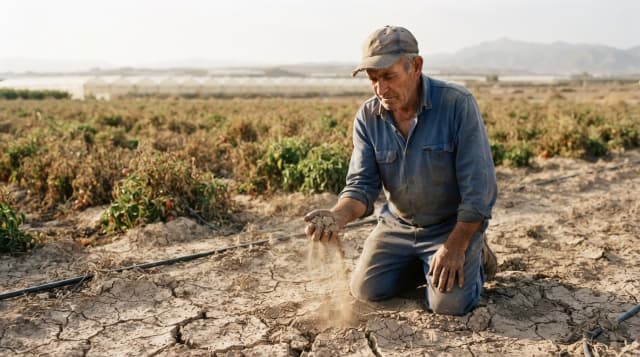
The Aral Sea: A Vanished Giant and a Lingering Ecological Scar

Once the world's fourth-largest inland body of water, the Aral Sea, situated between Kazakhstan and Uzbekistan in Central Asia, has largely disappeared, leaving behind a stark desert landscape and a sobering testament to human-induced environmental catastrophe. What was once a thriving ecosystem and the lifeblood of regional communities has, over just a few decades, transformed into a symbol of ecological devastation, with profound and enduring impacts on its environment and inhabitants.
A History Etched in Water and Dust
In the 1960s, the Aral Sea boasted an impressive surface area of approximately 68,000 square kilometers, teeming with fish and supporting a vibrant fishing industry. The name "Aral," meaning "Sea of Islands," reflected the numerous landmasses that once dotted its expanse. However, this prosperity was tragically short-lived. By 2007, the sea had shrunk to just 10% of its original size, ultimately splitting into several smaller, highly saline bodies of water. Satellite imagery from NASA vividly documents this dramatic decline, showing the brilliant blue waters recede to a dry beige over the past 50 years.
The Engineered Demise: Soviet Irrigation Projects
The primary driver behind the Aral Sea's catastrophic shrinkage was a massive Soviet-era water diversion project initiated in the 1960s. To boost cotton production, then a strategic crop, the two main rivers feeding the Aral Sea—the Amu Darya and Syr Darya—were extensively rerouted to irrigate vast cotton and rice fields across the arid plains of Kazakhstan, Uzbekistan, and Turkmenistan. This ambitious agricultural scheme, while initially making the desert "bloom," inadvertently sealed the fate of the Aral Sea. Soviet scientists were reportedly aware that such massive water withdrawals would cause the sea level to plummet, but underestimated the environmental and health consequences. The irrigation systems were inefficient, crop rotation was often neglected, and heavy quantities of pesticides and fertilizers were applied, further polluting the dwindling water sources.
Ecological Fallout: The Aralkum Desert Emerges
The drastic reduction in freshwater inflow led to a rapid increase in the Aral Sea's salinity, rendering it inhospitable for most native aquatic life. Over 20 fish species, including flounder, that once thrived in its waters were decimated, effectively destroying the region's prosperous fishing industry. As the water receded, it exposed a vast, salt-encrusted seabed, which has since transformed into the Aralkum Desert. This new desert generates immense salt and toxic dust storms, carrying fine particles mixed with agricultural chemicals and industrial waste across thousands of kilometers. These storms have deposited salt and pollutants onto surrounding agricultural lands, degrading soil quality and requiring even more water for flushing, creating a vicious cycle. The loss of the large body of water has also altered the regional climate, leading to colder winters and hotter, drier summers. The delicate ecosystems of the river deltas were nearly destroyed, and critical wetland habitats for migratory birds and other wildlife vanished, leading to significant biodiversity loss.
A Crisis of Health and Livelihood
The human cost of the Aral Sea's disappearance is profound and widespread. Former bustling fishing ports like Moynaq in Uzbekistan, once employing tens of thousands, now lie 30 to 90 kilometers from the water's edge, leaving behind graveyards of abandoned ships in the sand. This collapse of the fishing industry led to widespread unemployment and economic hardship, particularly in communities like the Karakalpaks in Uzbekistan, who were heavily reliant on the sea.
Beyond economic devastation, the toxic dust storms have created a severe public health crisis. Residents in the region exhibit unusually high rates of respiratory illnesses, cancers, anemia, and kidney diseases, with infant and maternal mortality rates among the highest in the world. The contaminated dust has polluted the food supply and drinking water, further exacerbating health issues. The environmental degradation has also triggered significant population displacement and migration from the hardest-hit areas.
Glimmers of Hope: Restoration Efforts and Lingering Challenges
Despite the immense destruction, there have been concerted efforts to mitigate the disaster, particularly in the northern part of the Aral Sea. In 2005, Kazakhstan, with support from the World Bank, completed the Dike Kokaral dam, separating the North Aral Sea (Small Aral Sea) from the more severely desiccated South Aral Sea. This project has yielded remarkable results for the northern section, with water levels rising significantly, salinity decreasing, and fish populations beginning to recover. Kazakhstan continues to direct substantial amounts of water into the Northern Aral Sea, with plans to further increase water inflow in the coming years.
Furthermore, extensive reforestation efforts are underway to plant saxaul shrubs and other hardy vegetation on the exposed seabed of the Aralkum Desert. These plants, with their deep root systems, help stabilize the sandy, saline soil and reduce the frequency and intensity of toxic dust storms. Kazakhstan aims to afforest over a million hectares by 2025. International cooperation, facilitated by organizations like the International Fund for Saving the Aral Sea (IFAS), is crucial for coordinating sustainable water resource management across the basin.
However, the challenges remain formidable. The South Aral Sea continues to struggle, with its eastern basin completely drying up in 2014, forming the Aralkum Desert. Full restoration of the Aral Sea to its pre-1960 state is widely considered impossible. Moreover, the impacts of climate change, including intensifying heatwaves and accelerated evaporation rates, continue to exacerbate the region's water scarcity issues.
A Cautionary Tale for a Thirsty World
The tragedy of the Aral Sea serves as a potent cautionary tale regarding the far-reaching consequences of unsustainable human actions on natural environments. It underscores the critical importance of integrated water resource management, cross-border cooperation, and environmental foresight. While localized successes offer a measure of hope, the lingering scars on the landscape and the ongoing suffering of its people are a stark reminder of the delicate balance between human development and ecological integrity, echoing a broader global concern for disappearing water bodies and the imperative for sustainable practices in an increasingly water-stressed world.