China's Military Undergoes Sweeping Purge: Xi Jinping's Quest for Absolute Loyalty Sparks Uncertainty
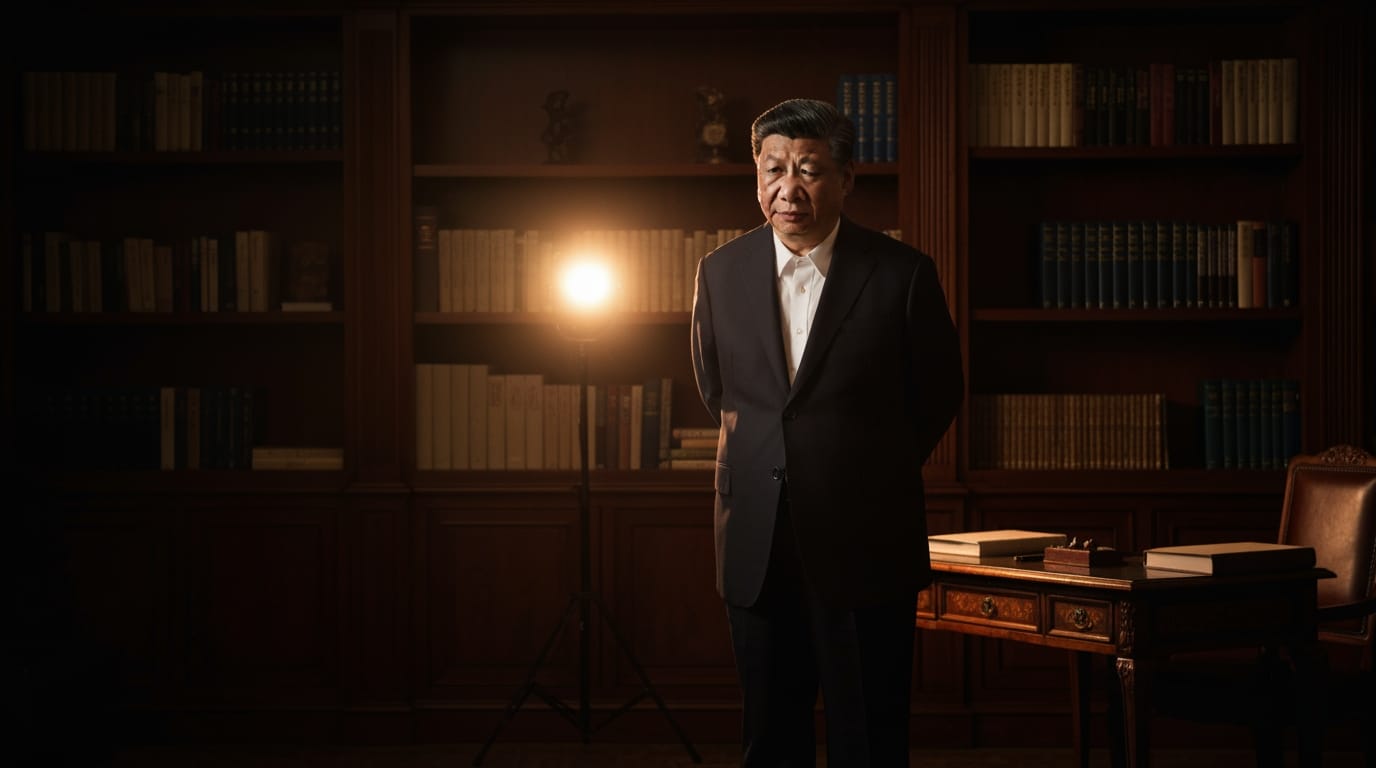
Beijing, China – A relentless campaign targeting high-ranking military officials within the People's Liberation Army (PLA) has escalated dramatically, raising profound questions about trust, loyalty, and the future operational effectiveness of China's armed forces. The recent investigations into General Zhang Youxia, Vice Chairman of the Central Military Commission (CMC), and General Liu Zhenli, head of the CMC's Joint Staff Department, represent the apex of President Xi Jinping's extensive anti-corruption drive, signaling an unprecedented effort to consolidate his personal control over the military apparatus. These moves, following a series of high-profile removals including former Defense Minister Li Shangfu and key Rocket Force commanders, suggest a deeper struggle for power and unwavering allegiance within Beijing's halls of power.
The Unfolding Purge: From Rocket Force to the Highest Ranks
The latest wave of disciplinary action reverberated through China's military leadership in late January 2026, with the announcement of investigations into Generals Zhang Youxia and Liu Zhenli for "serious violations of discipline and law." This official phrasing is routinely used for corruption or political disloyalty cases within China's opaque system. The targeting of Zhang Youxia is particularly significant; widely regarded as one of Xi's closest military allies and the second-highest-ranking officer in the PLA, his downfall underscores that no one is immune from the ongoing scrutiny. Liu Zhenli, holding a critical position tied directly to operational command and coordination, also represents a substantial loss at the military's strategic core. Analysts have described these recent developments as unprecedented in the history of the Chinese military.
These investigations are not isolated incidents but rather the most recent chapter in a broader campaign that began gaining momentum in 2023. That year saw a highly visible wave of investigations and removals within the PLA Rocket Force, the branch responsible for China's strategic missile capabilities, including its commander Li Yuchao and several deputies. These initial purges were interpreted by observers as indicating concerns that extended beyond mere financial misconduct, touching upon confidence in the management of a critical pillar of national defense.
The disappearance and subsequent removal of Defense Minister Li Shangfu in 2023 further underscored the reach of this campaign. Li, who was last seen in public in August 2023, was formally removed from office in October of the same year and later expelled from the Communist Party in June 2024 on corruption charges, making him the shortest-serving Defense Minister in recent history. Beyond these prominent figures, the Xi era has witnessed the removal of more than 110 senior officers, including two former defense ministers. The Central Military Commission (CMC), the PLA's supreme governing body, has been particularly affected. Of the seven members appointed to the CMC in October 2022, only Chairman Xi Jinping and Zhang Shengmin, the anti-graft officer within the CMC, now remain untouched by investigations. Zhang Shengmin's promotion to a de facto "number two" in the military hierarchy highlights the increasing importance of the disciplinary apparatus as a political instrument of control.
Loyalty as the Ultimate Currency: Why Xi is Purging His Generals
At its core, the sweeping purge within the PLA is inextricably linked to President Xi Jinping's decade-long anti-corruption campaign, initiated shortly after he came to power in 2012. This extensive effort, the most systematic in the CCP's history, initially targeted both "tigers and flies"—high-ranking officials and grassroots civil servants alike—under the guise of combating graft. However, the scale and nature of the current military purges suggest motives that extend far beyond financial impropriety. The official newspaper of the PLA, for instance, explicitly accused recently removed generals of undermining Xi's authority and damaging the party's "absolute leadership over the military." This indicates that the campaign is fundamentally about ensuring unquestioning loyalty to Xi Jinping personally.
Analysts widely interpret these actions as a structural campaign designed to achieve absolute vertical control over the military, strengthening the center's grip on all strategic levers. Xi's approach prioritizes political allegiance above all else, even over perceived competence, which could have significant implications for military cohesion. The purges serve to reinforce the personalization of power, simultaneously weakening any notion of "collective leadership" within the military sphere.
Historically, Xi's military purges have unfolded in two distinct waves. The first, from 2014 to 2018, primarily targeted officers associated with the Jiang Zemin era. The second, ongoing since 2023, is remarkable for targeting senior military officers from Xi's own patronage network. The investigation of Zhang Youxia, a "princeling" whose father fought alongside Xi's father and who was considered a long-time ally, clearly demonstrates that even deeply personal connections are secondary to absolute political loyalty in Xi's China. The message emanating from Beijing is stark: no one, regardless of past achievements or relationships, is an "iron-cap king" or untouchable.
Impact on the PLA: A Paradox of Modernization
The extensive overhaul of China's military leadership carries significant implications for the PLA's modernization goals, operational readiness, and overall stability. While China continues to steadily increase its defense spending, with official outlays growing by 7.2 percent for three consecutive years (2023, 2024, and 2025), the personnel upheaval presents a paradox. Effective military modernization demands a stable managerial hierarchy, transparent procurement processes, long-term planning, and clear accountability. Large-scale purges, however, tend to foster an "initiative freeze," where officials become risk-averse, avoid decision-making, and push responsibility upwards to minimize personal exposure.
This culture of caution could lead to a gradual erosion of military capability, with commanders hesitant to report adverse outcomes or engage in innovative thinking. Some experts warn that if the current trend persists, the PLA might appear formidable in terms of hardware but could become a force of "paper tigers," disciplined yet lacking in initiative, independent insight, and critical command innovation. Furthermore, the purges have already been linked to disruptions in procurement and negatively impacting defense companies.
A critical concern arising from these rapid leadership changes is the potential for a "bottleneck" in the PLA's combat development due to the loss of experienced generals. The Central Military Commission's leadership core, now significantly smaller, is perceived by some as lacking direct operational experience, as the remaining influential figure, Zhang Shengmin, comes from the political and disciplinary system rather than having commanded field units. This creates a leadership gap that, combined with an intensifying culture of fear where officers may hesitate to convey "uncomfortable truths," could significantly heighten the risk of strategic miscalculations, particularly concerning Taiwan. Historically, older PLA leaders are believed to have exercised a moderating influence on military decision-making, a factor that may now be diminishing as Xi seeks to install younger, more loyal individuals. The widespread fear of being the next target is also taking a considerable toll on morale throughout the PLA.
Xi's Unchallenged Authority and the Road Ahead
The profound transformation within the PLA underscores President Xi Jinping's relentless pursuit of absolute control, ensuring that the military serves primarily as an extension of the party apparatus, subservient to his personal will. The removal of key generals leaves Xi in an almost unchallenged operational command of the armed forces through the Central Military Commission. This structural campaign is fundamentally reprogramming the military towards absolute vertical control, effectively consolidating power at the center and diminishing the likelihood of any alternative political actor emerging from within the officer corps.
However, this heightened control comes with an inherent cost: a reduction in institutional resilience and an increase in caution. The system becomes less robust in the face of unexpected crises, as mechanisms for collective deliberation and distributed responsibility are weakened. While Xi's long-term vision aims to transform the PLA into a "world-class armed force" capable of "fighting and winning wars" by 2049, with a significant milestone of modernization by 2035, the current purges highlight a delicate tension between achieving professional excellence and demanding absolute political loyalty. Balancing these two imperatives will be crucial for China's strategic ambitions and its standing on the global stage.
The ongoing upheaval in China's military leadership is a stark reminder of Xi Jinping's unwavering determination to enforce political purity and consolidate his power. While the immediate effect may be a reinforcement of his authority, the long-term consequences for the PLA's effectiveness, morale, and ability to navigate complex geopolitical challenges remain a subject of intense observation and analysis. The delicate interplay between loyalty and competence will ultimately define the trajectory of China's military in the years to come.


