China's "Space Aircraft Carrier": A Dual Narrative of Ambition and Secrecy
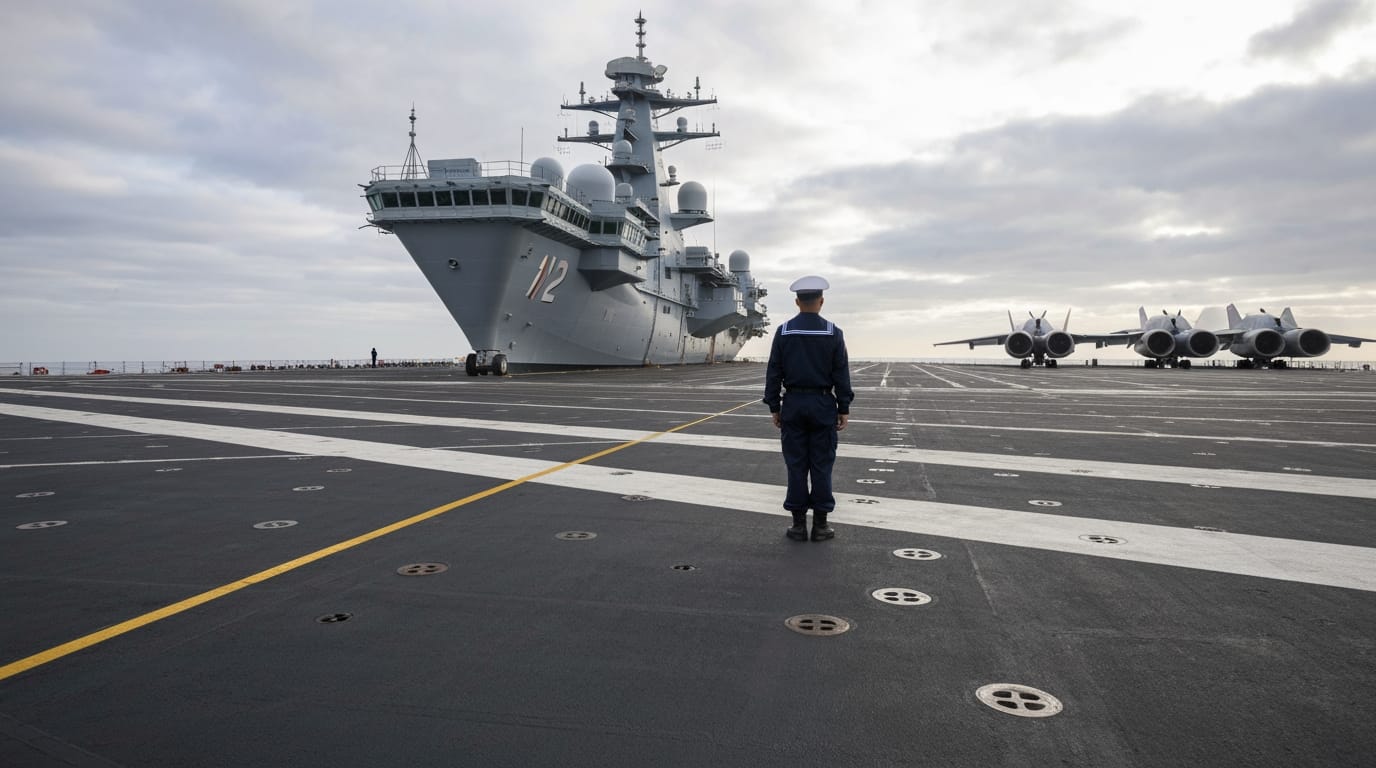
A narrative of burgeoning space power emanates from China, one that presents a stark dichotomy between aspirational visions of futuristic orbital fortresses and the tangible, yet largely clandestine, advancements in reusable space technology. The concept of a "space aircraft carrier" has ignited debate among global observers, with many questioning whether such ambitious pronouncements represent genuine superweapon development or a potent form of geopolitical propaganda. The truth appears to be a complex blend of both, characterized by overt declarations of distant goals and covert progress in critical dual-use space capabilities.
At the heart of this discussion lies China's publicly presented "Luanniao" (or "Luaniao"), a purported "flying aircraft carrier" or "space superweapon" that forms part of a broader "Nantianmen" (Heaven's Gate) integrated air and space defense system. Envisioned as a colossal platform, reports suggest the Luanniao would measure 242 meters in length and 684 meters in width, boasting a takeoff weight of up to 120,000 tons. From its deck, unmanned space fighters, dubbed "Xuannu," would reportedly launch to deploy hypersonic missiles and engage targets within Earth's atmosphere and orbit. A photorealistic 3D animation showcasing this concept has even been broadcast by Chinese state media, including CCTV. However, a consensus among defense and space experts frames the Luanniao largely as "science fiction" and "psychological warfare," or as "high-tech theater with a political message," rather than a realistic project for the coming decades. Publications such as The National Interest suggest that China aims for the world to believe in this superweapon, irrespective of its immediate feasibility, thereby blurring the lines between science fiction and military reality to foster unease in the West, particularly concerning geopolitical flashpoints like Taiwan.
The Tangible Ascent of Shenlong
While the "Luanniao" remains largely within the realm of conceptual design and strategic messaging, China has been actively developing and testing a more concrete, albeit shrouded in secrecy, reusable unmanned spaceplane known as Shenlong, or "Divine Dragon." This spaceplane program is believed to have been underway since the early 2000s, marking a significant, yet opaque, component of China's space strategy.
Shenlong has undertaken multiple orbital missions, with launches recorded in 2020, 2022, and 2023. During these missions, the craft has been observed deploying unknown objects, potentially small satellites or monitoring devices, and performing complex proximity maneuvers in orbit before executing autonomous runway landings upon its return to Earth. Analysts widely speculate that Shenlong is analogous in both design and operational function to the United States' X-37B spaceplane, a highly secretive orbital test vehicle. Due to the extreme secrecy surrounding these projects, details regarding Shenlong's precise capabilities remain largely unknown. However, it is understood to be a platform for testing advanced guidance, navigation, and control systems, as well as thermal protection, reentry mechanisms, avionics, and propulsion technologies.
Strategic Capabilities and Dual-Use Concerns
The capabilities demonstrated by Shenlong, particularly its ability to operate for extended periods in orbit, deploy objects, and perform rendezvous and proximity operations, carry significant strategic implications. Experts suggest these functions could be crucial for intelligence gathering, satellite maintenance, or even for interfering with other nations' space assets, positioning it as a potential tool for "orbital warfare." The official Chinese narrative, when offered, describes Shenlong's purpose as "reusable technology verification and space science experiments" for the "peaceful use of space." However, the inherent dual-use nature of such advanced space technologies means they can serve both civilian and military objectives, fostering international apprehension and contributing to an ongoing "dangerous space rivalry" between major powers.
Beyond specific platforms like Shenlong, China's broader space program is inextricably linked to its military objectives. Since 2015, China has explicitly integrated space capabilities into its military doctrine, designating space as a critical warfighting domain. This strategic shift is underscored by the rapid development of a comprehensive suite of counter-space weapons, designed to disrupt, degrade, or damage adversary satellites. These capabilities are aimed at denying potential adversaries, particularly the United States, the advantages derived from space-based intelligence, communication, and navigation during conflicts.
China's rapid advancements extend to cutting-edge technologies like artificial intelligence (AI), which is being integrated into satellite systems for enhanced surveillance, reconnaissance, and command and control. Such integration significantly reduces latency and bandwidth demands while boosting resilience against jamming or cyber disruption, thereby minimizing reliance on ground infrastructure. Furthermore, the development of reusable rocket technology is seen as a strategic imperative for China, enabling the more rapid and cost-effective deployment of vast satellite constellations, which possess both commercial and military utility. China's increasing satellite presence in orbit, which has grown by approximately 667% since late 2015, further underscores its ambition to secure dominance in the space domain.
The Power of Perception: Propaganda as a Force Multiplier
The grand pronouncements surrounding the "Luanniao" space aircraft carrier serve a critical propaganda function, even if the technology itself is decades away or purely theoretical. By unveiling such an audacious vision, China projects an image of technological prowess and military foresight, both domestically and internationally. This strategic messaging reinforces national pride and signals to potential rivals that China is a formidable and innovative player in the race for space supremacy. It contributes to the perception that China is rapidly closing, and in some areas surpassing, the technological capabilities of established space powers. This type of "high-tech theater" is designed to unsettle adversaries and influence geopolitical calculations, leveraging the psychological impact of perceived future capabilities.
The constant veil of secrecy surrounding the real Shenlong spaceplane further amplifies this effect. The unknown nature of its missions and capabilities fuels speculation and ensures that global intelligence agencies remain vigilant, investing resources into monitoring and understanding China's every move in orbit. This combination of overt, aspirational visions and covert, tangible progress creates a potent narrative that simultaneously inspires and intimidates.
Conclusion
The question of whether China's "space aircraft carrier" is a superweapon or propaganda yields an answer that embraces both facets. The "Luanniao" concept, while seemingly rooted in science fiction, functions as a powerful tool for strategic communication and psychological projection, aligning with China's broader ambition to become a leading space power. Concurrently, the tangible and recurring missions of the Shenlong reusable spaceplane represent concrete steps toward developing advanced, dual-use space capabilities that could significantly alter the dynamics of orbital warfare and geopolitical influence.
China's unwavering commitment to space exploration, intertwined with its national security objectives, ensures that space will remain a critical domain of competition in the 21st century. The deliberate ambiguity surrounding projects like Shenlong, coupled with the futuristic visions of "space aircraft carriers," underscores a sophisticated strategy that leverages both technological advancement and strategic messaging to project power and reshape the global order.