The Widening Chasm: Germany Grapples with Rising Social Inequality
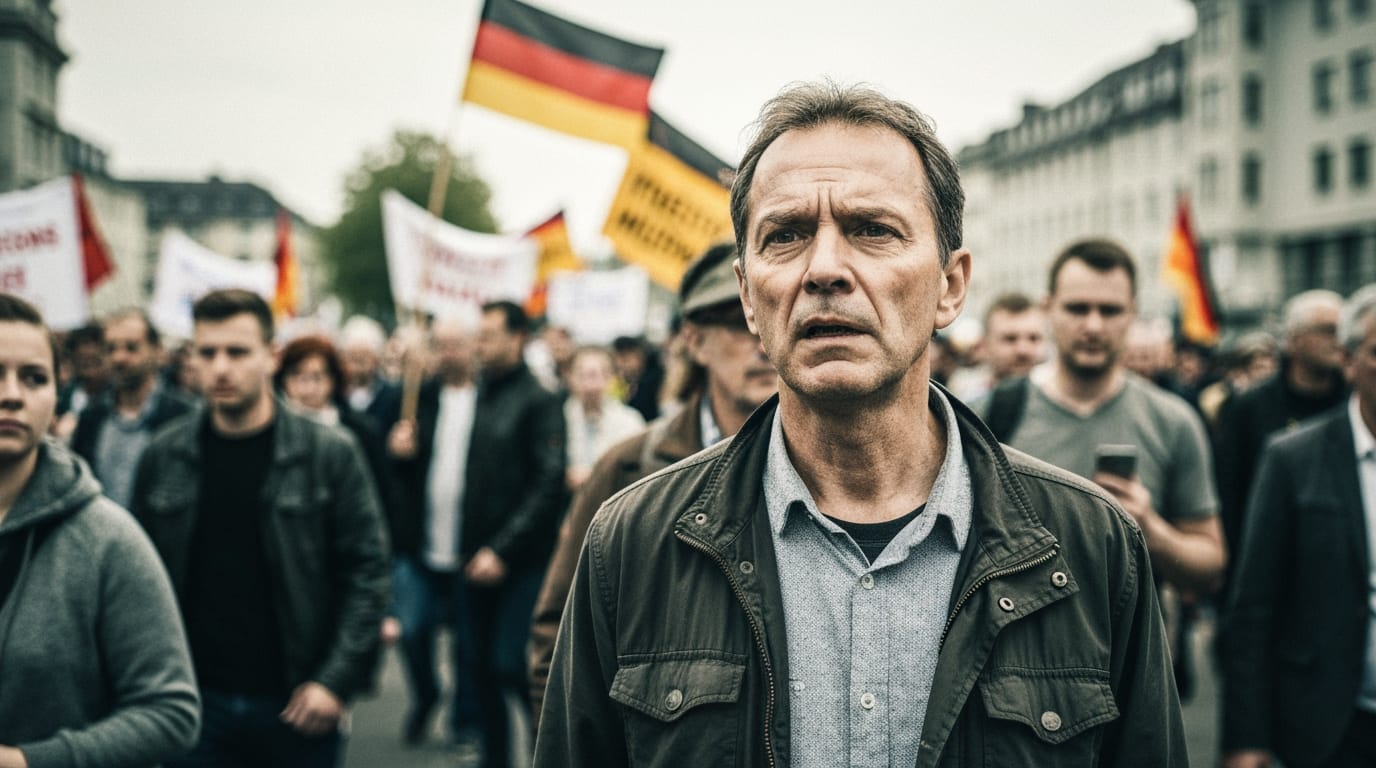
Despite its robust economy and established welfare state, Germany finds itself at a critical juncture, facing increasing concern over widening social inequality and persistent poverty. A nation long lauded for its social market economy, Germany is confronting a growing divide in wealth and income distribution, challenging its fundamental principles of social cohesion and equal opportunity. This escalating disparity is not merely an abstract economic phenomenon; it manifests in tangible hardships for millions, impacting access to essential services, housing, and upward mobility, thus posing a significant long-term challenge to the country's societal fabric.
The Concentrated Wealth and Stagnant Incomes
The statistical landscape paints a clear picture of an increasingly unequal distribution of wealth in Germany. The wealthiest 10% of German households possess approximately 65% of the nation's assets, representing one of the highest concentrations of wealth among OECD countries. Meanwhile, one half of the population collectively holds merely 1% of the country's total assets. This stark contrast is further underscored by findings that the top 1% of earners acquire nearly as much as the bottom 50%. Compounding this, more than 25% of all adults in Germany report having no wealth or even negative wealth due to debt.
The Gini coefficient for wealth in Germany stood at 0.76 in 2014, a figure that indicates substantial inequality, with only Lithuania exhibiting a higher degree of wealth disparity within the Eurozone. This measure highlights how wealth is concentrated among a small segment of the population. Furthermore, the average net wealth of households in the bottom 50% has stagnated, and their share in total wealth nearly halved from almost 5% in 1993 to 3% in 2021. The gap between the richest 10% and the bottom half has dramatically widened, increasing from 62 times in 1993 to 116 times by 2018. While income inequality has been on the rise since the 1980s, particularly evident in the increasing share of total income claimed by the richest 10% (from 33.8% in 1998 to 37.2% in 2016), public perception often underestimates the true extent of these disparities.
Poverty's Grip: Vulnerable Populations and Regional Divides
The rising tide of inequality translates directly into entrenched poverty for significant portions of the German populace. Official data indicates that approximately 14.4% of the population, equating to about 12.1 million people, live in monetary poverty, struggling to afford basic goods and services. Another report suggests 15.8% of the population, approximately 13 million people, live at or below the poverty line.
Certain demographic groups are disproportionately affected. Women, for instance, face compounded financial hardship. They earn approximately 20% less than men, and nearly 50% of employed women work part-time, often due to a lack of adequate support systems. This disparity extends into old age, with women over 65 receiving significantly lower pensions; official data shows that 38.2% of women in this age bracket receive pensions below €1,000 per month, compared to 14.7% of men. Single-parent households are particularly vulnerable, with over 40% at risk of poverty, and 90% of these households headed by single mothers. The youngest members of society are also not spared, as federal statistics indicate that one in five children in Germany is at risk of poverty or social exclusion. The elderly, especially after accounting for housing costs, also face a high risk of old-age income poverty, with Germany ranking among EU countries with the highest such risk.
Geographical disparities further complicate the picture. A notable wealth gap persists between the areas of former East and West Germany, with typical adults in former West Germany possessing assets worth €94,000, significantly more than the just over €40,000 held by those in the former communist East. Poverty is not evenly distributed, concentrating heavily in large cities, former industrial centers, and other structurally weak regions. Large cities are becoming increasingly overburdened and face a growing risk of social polarization, contributing to a trend of people migrating to more socioeconomically stable suburban areas.
Systemic Roots: Labor Markets, Education, and Housing
The drivers of Germany's growing inequality are multifaceted, stemming from transformations in its labor market, educational system, and housing sector. Reforms enacted in the early 2000s, such as the Hartz IV reforms in 2005, aimed to foster a more dynamic labor market but also contributed to the expansion of a low-wage sector. Consequently, nearly half of all employed individuals are in "atypical" employment — part-time, subcontracted, freelance, or fixed-term roles — and employment no longer guarantees an escape from poverty, with one-third of all poor people in Germany actually employed, 40% of whom work full-time. This increased labor market flexibility may have contributed to wage inequality.
The German education system, characterized by early tracking, significantly contributes to social inequality. This system often steers students from privileged families towards academic pathways and those from less privileged backgrounds, or with non-native German languages, towards vocational training. This early separation reinforces existing social disparities and limits upward social mobility; on average, it takes six generations for a family in the bottom 10% in Germany to reach the median income.
The housing market represents another critical area of concern. Germany is predominantly a nation of tenants, with over 50% renting their homes. From 2010 to 2022, asking rents surged by 50% nationally and up to 70% in major cities. This sharp increase means a growing number of households are spending 40% or more of their income on housing, the threshold at which they are considered overburdened. The shortage of affordable housing, particularly social housing, exacerbates the crisis, pushing lower and middle-income groups into precarious living situations.
Public Discontent and the Call for Action
The rising social inequality has not gone unnoticed by the German public, with widespread concern about the growing disparities. Surveys indicate that 71% of respondents believe inequality has increased since the year 2000, and a significant majority (around 70%) agree that the government should actively reduce income differences. This public sentiment underscores a broad desire for more equitable distribution.
The issue has also attracted international scrutiny. The Council of Europe Commissioner for Human Rights criticized Germany in late 2023 for its handling of social inequality, highlighting concerns about the insufficiency of social protection benefits and barriers to effective access to social rights.
The German government has acknowledged the challenges and has introduced measures aimed at mitigating economic disparities. The Bürgergeld scheme, which replaced Hartz IV, represents an attempt to improve social security, while proposals for a universal child basic income and enhanced pension support are also on the table. However, critics argue that these steps, while incremental, have yet to resolve the fundamental issues of economic inequality. Structural challenges persist, demanding a more comprehensive and robust approach to strengthen social security, ensure gender equality in wages and pensions, and expand access to affordable childcare and education.
The Path Forward
Germany's journey toward a more equitable society is fraught with complex challenges. The persistence of high wealth concentration, the increasing number of individuals living in poverty, and the systemic factors contributing to these disparities threaten the nation's social cohesion and long-term stability. Addressing these deep-seated issues requires sustained political will and a concerted effort across all levels of governance. The commitment to fostering a more inclusive economy, where the benefits of prosperity are shared more broadly, will be crucial in determining Germany's future as a socially just and stable nation.


