Clearing the Air: Pushing Past Persistent Myths Hindering EV Adoption
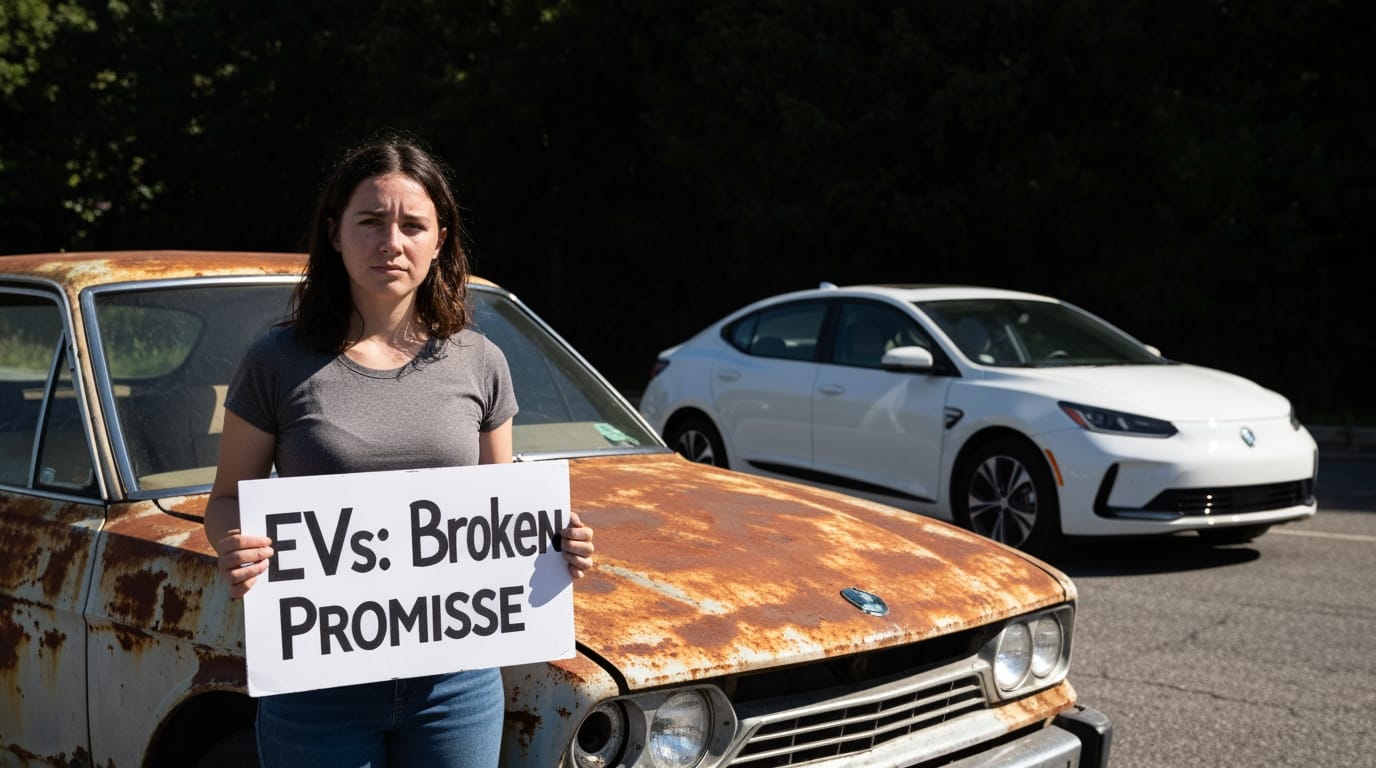
The rapid acceleration towards electric vehicles (EVs) is a cornerstone of global sustainability efforts, yet many consumers harbor doubts, with concerns ranging from limited driving range to environmental impact and cost. These widespread misconceptions often muddy the waters, hindering the broader adoption of electric transport despite significant advancements in technology and infrastructure. Separating fact from fiction is crucial as the world moves towards a more sustainable automotive future.
Confronting Range and Charging Anxieties
The fear of running out of battery charge before reaching a destination, widely known as "range anxiety," remains a significant psychological barrier for many prospective electric vehicle buyers. This apprehension often stems from outdated information regarding EV capabilities and an intuitive, though often inaccurate, comparison to gasoline vehicles, where running out of fuel means being stranded. However, modern electric vehicles now offer ranges that far exceed the average daily driving needs of most individuals. For instance, the average American drives approximately 39 miles a day, while most contemporary battery electric vehicles (BEVs) can travel over 200 miles on a full charge, with many new models exceeding 300 miles. Some advanced EVs even boast ranges of 500 miles or more on a single charge, making long-distance travel increasingly feasible.
The perception of a sparse and unreliable charging infrastructure also contributes to public apprehension. While it is true that early EV charging networks presented challenges, the global landscape is rapidly evolving. The United States currently hosts over 64,000 public EV charging stations, encompassing approximately 230,000 public charging ports, with an additional 1,000 being installed each week. Europe surpassed 900,000 charging ports in 2024, and China leads the world with over 3.2 million charging ports, more than half of which are fast DC chargers. These figures represent substantial growth, with public charging points worldwide increasing by 55% in 2022 alone. Investment in EV infrastructure has grown exponentially, further enhancing accessibility.
Despite this expansion, challenges persist, notably in the reliability of public charging equipment. A pioneering Harvard Business School study, which analyzed over a million EV charging station consumer reviews, found widespread dissatisfaction, estimating that drivers can successfully recharge their cars using non-residential equipment only 78% of the time. This issue, sometimes termed "charge anxiety," can be more prevalent among current EV owners than traditional range anxiety, focusing on the inconvenience or unreliability of charging stations rather than simply running out of power. Additionally, "charging deserts" exist, particularly in rural areas, where access to public chargers is limited or non-existent, posing a barrier to equitable EV adoption. However, ongoing technological advancements such as smart charging systems, incentives for off-peak charging, and increased integration with renewable energy sources are continuously enhancing the grid's capacity and reliability, aiming to meet the needs of a growing EV market. The goal is to make "on the go" and destination charging as simple and convenient as refueling an internal combustion engine (ICE) vehicle.
Debunking Cost and Maintenance Misconceptions
Another common deterrent to EV adoption is the perception of high purchase prices and subsequently expensive maintenance over the vehicle's lifespan. While the initial upfront cost of an EV can still be higher than a comparable gasoline-powered vehicle, comparing only the sticker price overlooks the broader financial picture. The total cost of ownership (TCO) often proves to be lower for EVs over the vehicle's lifespan. This is largely driven by significantly lower "fuel" costs, with EV journeys potentially costing as little as 8p per mile for off-peak electricity. Additionally, new EVs may be eligible for federal tax credits of up to $7,500 in the United States, along with various state or local utility incentives, which can substantially reduce the effective purchase price. Production costs are also consistently reducing, with projections suggesting that EVs may cost the same to buy as petrol or diesel cars by the mid to late 2020s.
Maintenance expenses for EVs are considerably lower than for internal combustion engine (ICE) vehicles. Electric vehicles possess fewer moving parts, which translates to fewer opportunities for mechanical failure and eliminates the need for routine services like oil changes. Furthermore, the implementation of regenerative braking systems in EVs reduces wear and tear on traditional brake pads and rotors, extending their lifespan. A 2020 study found that EV drivers pay about half of what gasoline car owners spend on maintenance and repairs. While one area where EVs might incur higher maintenance is tire replacement due to the battery's weight, requiring more frequent rotations, the overall savings remain substantial.
Concerns about the longevity and replacement cost of EV batteries are frequently cited by potential buyers. Many mistakenly believe that EV batteries need frequent replacement, sometimes suggesting as often as every five years. However, this is largely an outdated misconception. Most EV batteries are designed to last between 8 to 15 years, with manufacturers typically offering warranties covering 8 to 10 years or up to 100,000 miles, guaranteeing at least 70% of the original capacity. Some research indicates that modern EV batteries can even exceed the average lifespan of ICE vehicles, lasting 15 to 20 years. While a full battery replacement can be expensive, ranging from $5,000 to $20,000 or more depending on the make, model, and size, most owners will not need to replace the main battery during the vehicle's lifespan due to these extensive warranties and continuous advancements in battery technology. Projections from Goldman Sachs indicate that battery pack prices could fall to $70 per kilowatt-hour in 2025, a significant reduction from $111 in 2022, primarily due to improvements in automated manufacturing and economies of scale.
The True Environmental Footprint of EVs
A persistent and often misleading myth suggests that electric vehicles are not truly "green," arguing that emissions generated during battery manufacturing and electricity production for charging negate their environmental benefits. However, extensive research consistently demonstrates that EVs possess a smaller carbon footprint over their entire lifecycle compared to gasoline-powered cars. While the manufacturing process of an EV battery is indeed energy-intensive and can initially result in higher carbon emissions compared to producing a conventional car, these emissions are more than offset over the vehicle's operational life. A medium-sized EV from traditional mining, for instance, reaches its emissions breakeven point after approximately 11,335 miles of driving.
A crucial advantage of EVs is their zero direct tailpipe emissions, which eliminates a major source of urban air pollution and greenhouse gases that contribute to climate change. Burning gasoline and diesel fuels releases particulate matter, smog-forming nitrogen oxides, volatile organic compounds, and carbon dioxide, all of which have detrimental health and environmental effects. Even when considering the carbon intensity of electricity generation, which varies by region, EVs still result in lower greenhouse gas emissions compared to gasoline vehicles. As power grids globally transition towards more renewable energy sources like wind, solar, and hydroelectric power, the environmental benefits of EVs will continue to increase, further reducing their lifecycle emissions. In some regions, more than half of the electricity already comes from zero-carbon sources. Lifecycle analyses consistently conclude that EVs offer the "least overall impact" on the environment and have "by far the lowest lifecycle GHG emissions" compared to other powertrains, including plug-in hybrids and hydrogen vehicles.
Furthermore, the entire ecosystem around EV batteries is becoming more sustainable. The market for reusing and recycling EV batteries is growing rapidly, extending their utility and reducing demand for new raw materials. After their useful life in a vehicle, which can be around 15 years, EV batteries can find a "second life" powering homes, commercial buildings, or even supporting the electrical grid for another decade. Following this extended period, their materials can then be recycled to create brand-new batteries, moving closer to a circular economy model. This comprehensive approach underscores the long-term environmental advantages of electric vehicles.
Performance and Safety Beyond the Hype
Beyond environmental and economic considerations, some misconceptions persist regarding the practical aspects of EV ownership, particularly concerning performance and safety. A common misbelief is that electric cars are slower or less capable than their gasoline counterparts. However, EVs often surprise new drivers with their impressive acceleration, attributed to the instant torque delivery from electric motors. This characteristic allows many EVs to outperform gasoline-powered vehicles in terms of immediate responsiveness and overall handling. For example, EVs are highly energy-efficient, converting approximately 87% to 91% of the energy from the battery into power at the wheels, a stark contrast to gasoline engines which typically convert only 16% to 25% of energy into movement.
Regarding safety, concerns about EV batteries catching fire are frequently raised. While any vehicle can be involved in a fire, EV batteries are engineered with advanced safety features, including sophisticated thermal management systems and fire-resistant materials, making them no more prone to catching fire than petrol or diesel cars. Rigorous testing by manufacturers ensures that EV batteries meet strict safety standards. Moreover, EVs in the United States must meet the same stringent federal motor vehicle safety standards as conventional vehicles, ensuring a high level of occupant protection. Most EVs are also equipped with systems that can detect a collision or short circuit and shut down the vehicle's electric system to prevent further issues.
The Road Ahead: Clarity for Electrification
The ongoing transition to electric vehicles represents a pivotal shift towards sustainable mobility, yet its progress is frequently impeded by a landscape of persistent myths and misinformation. While initial concerns regarding limited range, evolving charging infrastructure, purchase costs, and environmental impacts were understandable in the nascent stages of EV technology, continuous and rapid advancements have largely addressed these challenges. Modern electric vehicles now offer ranges more than adequate for daily driving and increasingly support longer journeys. The global charging infrastructure is expanding exponentially, even as its reliability continues to improve. Financially, the long-term total cost of ownership for an EV often proves more advantageous than for a gasoline car, factoring in lower operational and maintenance expenses. Critically, extensive lifecycle assessments confirm that electric vehicles consistently deliver a smaller environmental footprint than their fossil-fueled predecessors. As the automotive industry continues its transformative pivot, dispelling these lingering misconceptions with accurate, data-driven information will be essential to accelerate the widespread adoption of electric transport and realize its full environmental and economic potential.