Cologne Faces Renewed Disruption as WWII Bomb Unearthed in Klettenberg Park
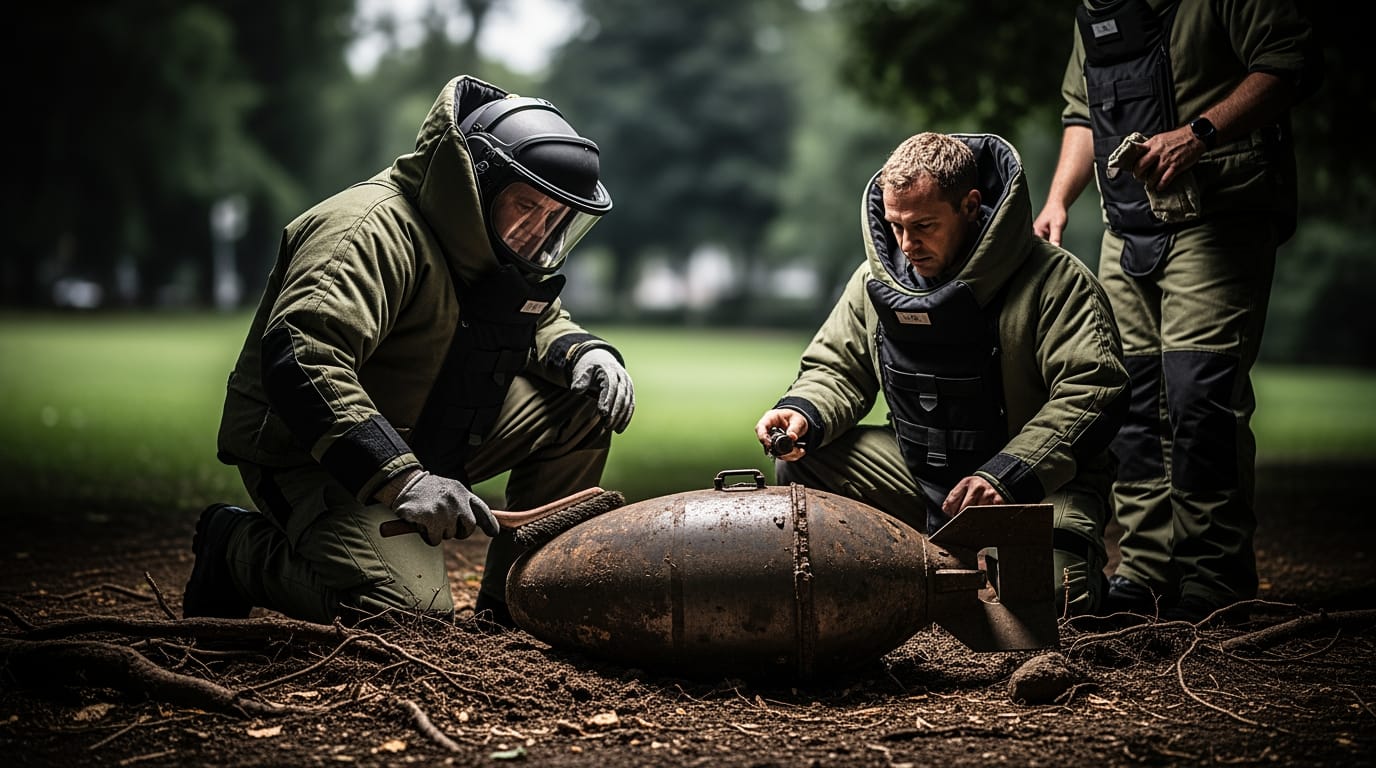
COLOGNE, Germany – The unsettling legacy of World War II resurfaced in Cologne this week, as authorities discovered an unexploded British bomb in a public park, triggering a major evacuation and once again bringing the city to a standstill. On Thursday, December 4, a British-made "hundredweight" bomb, weighing approximately 450 kilograms and equipped with a rear-firing detonator, was unearthed during routine maintenance work in Klettenberg Park, located in the city's southwest. The discovery initiated immediate safety protocols, leading to the establishment of a 500-meter safety perimeter and the evacuation of roughly 8,400 residents, underscoring the persistent threat posed by unexploded ordnance in one of Germany's most heavily bombed cities.
The Unexpected Discovery and Rapid Response
The unearthing of the 450-kilogram explosive device transformed a routine day in Klettenberg Park into a complex emergency operation for Cologne's authorities. Its rear-firing detonator, a component designed for impact detonation, necessitated swift action to mitigate any potential accidental explosion. Within hours of the discovery, police and emergency services established a wide cordon around the site, restricting access to the park and its surrounding areas. Residents within the 500-meter danger zone were instructed to evacuate their homes, a directive that also led to traffic diversions, public transport rerouting, and the temporary closure of local schools and community facilities. Volunteers, police, and other city authorities conducted checks, ringing doorbells and gathering information to ensure all residents complied with the evacuation order, with police authorized to use force if necessary to remove individuals refusing to leave. The methodical process was designed to ensure the safety of all involved before bomb disposal units could commence their delicate work.
Mass Evacuation and Citywide Impact
The evacuation, affecting thousands of residents in the Klettenberg district, underscored the significant logistical challenges presented by such finds. While this particular operation was substantial, it follows another even larger event earlier this year. Just six months prior, on June 4, 2025, Cologne experienced its most extensive evacuation since the end of World War II, when three American-made bombs were found during road construction near the Deutz shipyard, across the Rhine River from the city's historic center. That incident necessitated the evacuation of over 20,000 people within a 1,000-meter radius and brought large parts of the city to a halt. The June evacuation impacted 58 hotels, nine schools, a hospital, two retirement homes, several museums, and major infrastructure including three Rhine bridges and the Messe/Deutz train station, with shipping on the Rhine also suspended. The broadcaster RTL even had to shift its news programs to studios in Berlin as its Cologne building fell within the larger evacuation zone. These recurrent disruptions highlight the profound and far-reaching impact that decades-old explosives continue to have on modern urban life.
The Delicate Art of Bomb Disposal
Specialized bomb-disposal units were deployed to the Klettenberg Park site, tasked with the intricate and perilous process of rendering the 450-kilogram British bomb safe. The operation typically involves carefully removing or disarming the detonator, a process that can be complicated by the bomb's age and condition. In the earlier June incident, experts from the ordnance disposal service Rheinland of the Düsseldorf district government successfully defused the three American bombs within approximately an hour, allowing residents to return home roughly 12 hours after the evacuation began. These operations are conducted with extreme precision, often taking place on-site before the ordnance can be safely transported to secure facilities for further dismantling and disposal. Authorities typically aim to neutralize the bombs in situ, then move them to specialized containers. The successful completion of these defusal efforts is a testament to the expertise and courage of the bomb disposal technicians who regularly confront these dangerous remnants of war.
A Persistent Shadow of History
Cologne's frequent encounters with unexploded World War II bombs are a direct consequence of its strategic importance during the conflict. The city endured 262 separate air raids by Allied forces, primarily the Royal Air Force (RAF), which dropped an estimated 34,711 tons of bombs on the city. This relentless bombardment, which caused approximately 20,000 civilian casualties, nearly obliterated the city center, reducing its population by 93% due to evacuation by war's end. Cologne was notably the target of the RAF's first "thousand-bomber raid," Operation Millennium, on May 30-31, 1942, when over 1,000 aircraft attacked with 1,455 tons of bombs.
Even 80 years after the war's conclusion, an estimated 5% to 20% of the bombs dropped failed to detonate, leaving a vast number of unexploded ordnance (UXO) buried beneath Germany's urban landscapes. The discovery in Klettenberg Park is far from an isolated incident. In 2024 alone, 31 bombs were found in Cologne, necessitating 17 separate evacuations that impacted over 36,000 people. Across the state of North Rhine-Westphalia, where Cologne is located, between 1,500 and 2,000 unexploded bombs are discovered each year. These statistics highlight the ongoing, hidden danger that underscores much of Germany's post-war reconstruction. As North Rhine-Westphalia's Interior Minister Herbert Reul stated at an April conference on unexploded devices, "Every bomb that we find and neutralize is a service to our children, grandchildren and great-grandchildren."
Conclusion: An Enduring Vigilance
The recent discovery in Klettenberg Park, much like the larger operation in June, serves as a stark reminder of World War II's enduring physical legacy in Germany. For cities like Cologne, the past is not merely confined to history books but lies buried just beneath the surface, occasionally emerging to disrupt modern life and demand immediate, extensive responses. While such incidents cause considerable inconvenience and apprehension, they also showcase the remarkable efficiency and preparedness of German authorities and bomb disposal experts. The systematic process of identification, evacuation, and defusal, honed over decades, ensures public safety despite the persistent threat. As construction and development continue, Cologne and other German cities must maintain their vigilance, recognizing that the echoes of a devastating conflict will likely continue to surface for generations to come, requiring an ongoing commitment to public safety and expert intervention.