Colombia's Voters Head to Polls for Pivotal Congressional Elections Amidst Security Concerns and Political Fragmentation
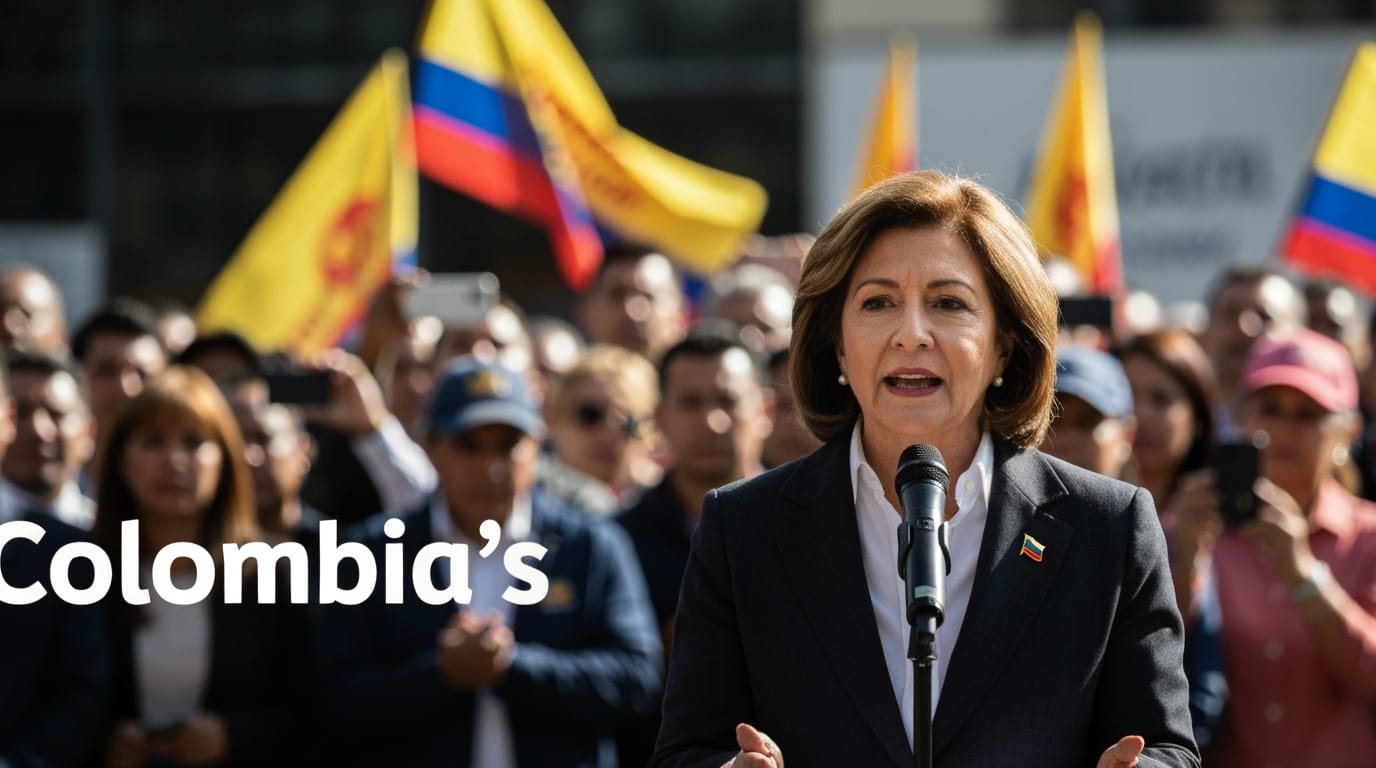
BOGOTÁ, Colombia – Colombians across the nation are casting their ballots today, March 8, 2026, in legislative elections that will shape the composition of the bicameral Congress for the next four years and serve as a crucial barometer for the upcoming presidential race in May. The vote, which will renew all 103 seats in the Senate and 183 in the House of Representatives, is unfolding against a backdrop of heightened security, significant political fragmentation, and widespread public concern over deteriorating security, a strained economy, and the future direction of the nation.
A Fragmented Political Landscape
The 2026 congressional elections are expected to reaffirm a politically fragmented Congress, with no single party or coalition likely to secure an outright majority. This scenario suggests a challenging legislative environment for the next presidential administration, requiring extensive negotiation and coalition-building to advance any political agenda.
President Gustavo Petro's left-wing Historic Pact coalition, which made significant gains in the 2022 elections but fell short of a majority, is once again projected to be a leading force. However, analysts widely anticipate that they will remain without a majority, necessitating alliances to govern effectively. The Historic Pact's Senate campaign is notably led by Carolina Corcho, who previously served as Health Minister under President Petro.
Traditional political heavyweights, including the Liberal Party and the Conservative Party, are expected to maintain their influence, often playing a pivotal role as "kingmakers" in legislative negotiations. The right-wing Democratic Center, a prominent opposition party still closely associated with former President Álvaro Uribe, also remains a significant force in the political landscape. Other parties, such as Radical Change, the Green Alliance, and the Ahora Colombia Coalition, are also vying for representation, contributing to the diverse and complex political mosaic.
The electoral system for Congress is multifaceted, combining national, territorial, and special constituencies. While many parties utilize open lists, allowing voters to choose specific candidates within a party, some, including the Historic Pact, employ closed lists where candidates appear in a predetermined order. Beyond the general seats, special allocations exist for minority groups: two seats for Afro-Colombian communities, one for Indigenous communities, and one for Colombian expatriates. Furthermore, 16 seats are reserved for transitional peace constituencies (CITREP) as part of the 2016 peace agreements, aimed at giving representation to regions heavily impacted by conflict. This election marks a shift, as it is the first since the peace accord where the FARC's successor party, Comunes, will not have guaranteed seats.
Security Concerns Overshadow the Vote
The electoral season has been marred by an alarming rise in political violence, contributing to a climate of anxiety across the country. A stark reminder of these tensions was the assassination of conservative Senator Miguel Uribe Turbay, a presidential pre-candidate, in June 2025, who later succumbed to his injuries. This tragedy, alongside other attacks against candidates, has underscored the precarious security situation, particularly in rural areas where illegal armed groups retain significant influence.
In response to these threats, Colombian authorities have launched a comprehensive "Plan Democracy," deploying a massive security presence. Over 126,000 law enforcement officers, comprising both police and military personnel, are stationed nationwide to safeguard polling stations and ensure a peaceful voting process. Adding to the security efforts, the National Liberation Army (ELN) declared a unilateral ceasefire to facilitate the elections. Strict measures are also in place, including the closure of land and sea borders and a "Ley Seca" (dry law) prohibiting alcohol sales from Saturday evening through Monday morning, reflecting the government's commitment to maintaining public order during this critical period.
Concerns about electoral integrity have also surfaced, with President Petro publicly expressing doubts about the reliability of electoral software. While authorities have sought to reassure the public and address these concerns, the President's remarks have sparked debate regarding the transparency and credibility of the election process.
Economic and Social Discontent Driving Voter Sentiment
Beyond security, the 2026 elections are significantly influenced by pervasive economic and social challenges confronting Colombia. Voters are grappling with a fragile economy characterized by unemployment and inflation, alongside a strained healthcare system. These issues have fueled public frustration and dissatisfaction, making them central to the campaign discourse.
The current administration's performance on these fronts is under scrutiny. President Petro, who is constitutionally barred from seeking a consecutive second term, has seen his approval ratings decline, and many of his proposed reforms in health, labor, and pensions have faced substantial resistance in Congress or have stalled altogether. This resistance highlights the difficulties of governing without a legislative majority and the deep political polarization within the country.
Voters' choices in the congressional elections are therefore seen as a direct reflection of their concerns regarding the direction of the economy, the effectiveness of social policies, and the government's ability to tackle pressing issues such as the alarming rise in coca production and persistent drug-related violence. The outcomes will determine the legislative support or opposition that the next presidential administration will face in addressing these critical national challenges.
The Road to the Presidency: Primaries and Projections
Concurrent with the legislative balloting, Colombians are also participating in inter-party primaries today. These primaries are designed to select presidential candidates from three major coalitions – center-left, center, and center-right – ahead of the first round of presidential elections scheduled for May 31, 2026.
The congressional results are widely viewed as an early indicator of public sentiment and potential alliances for the presidential race. While incumbent President Petro cannot run for re-election, the performance of his Historic Pact coalition will inevitably influence the momentum of their chosen presidential candidate.
Current polling suggests a highly competitive presidential contest, with several frontrunners emerging, though a significant portion of the electorate remains undecided. Key presidential hopefuls include Iván Cepeda from the Historic Pact coalition, centrist Sergio Fajardo, and far-right figure Abelardo de la Espriella. The fragmented nature of the political landscape, mirrored in the congressional projections, suggests that a presidential runoff election is highly probable.
Conclusion: A Nation at a Crossroads
Colombia's congressional elections are more than just a renewal of its legislative body; they represent a critical juncture for a nation grappling with complex challenges. The fragmented political outlook for Congress signals a likely era of intense negotiation and compromise, irrespective of who ultimately wins the presidency.
The electorate's decisions today will send a powerful message about their priorities, their trust in democratic institutions, and their vision for the country's future. The results will not only determine the legislative agenda for the next four years but also set the stage for the pivotal presidential elections in May, ultimately shaping Colombia's trajectory in addressing security, economic stability, and social well-being. As the polls close and the first preliminary results begin to emerge, the nation watches intently, awaiting the unfolding of its democratic future.


