Controversy Erupts in Italy Over U.S. ICE Agents' Role in Milan-Cortina 2026 Olympic Security
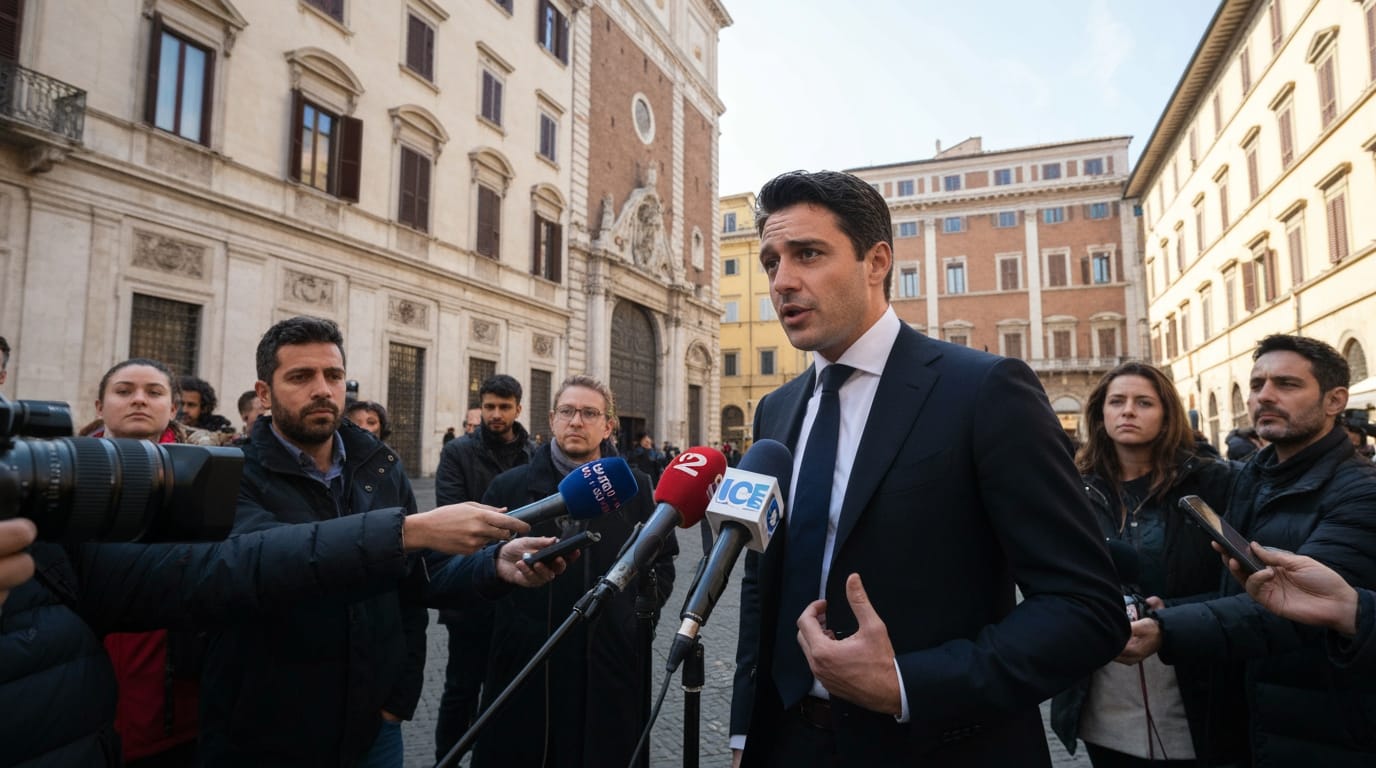
MILAN, Italy — The announcement that U.S. Immigration and Customs Enforcement (ICE) agents will have a security role at the upcoming Milan-Cortina 2026 Winter Olympics has ignited a firestorm of controversy across Italy, drawing sharp criticism from political leaders and civil liberties advocates. Milan's Mayor Giuseppe Sala has vehemently declared ICE agents "not welcome" in the host city, labeling the agency "a militia that kills," setting the stage for a tense backdrop to the international sporting event.
The dispute centers on concerns over national sovereignty, human rights, and the deeply negative perception of ICE's operations, particularly in light of recent events in the United States. While U.S. officials maintain that ICE's involvement, specifically through its Homeland Security Investigations (HSI) unit, is limited to supporting diplomatic security and vetting transnational criminal risks, many in Italy view any presence of the agency as an unacceptable infringement on Italian autonomy and values.
The Confirmation and Immediate Backlash
Speculation regarding ICE's participation at the Milan-Cortina Winter Olympics, scheduled from February 6 to 22, began circulating after reports emerged from Italian newspaper Il Fatto Quotidiano. This was later confirmed by sources at the U.S. Embassy in Rome, who stated that agents from ICE's Homeland Security Investigations (HSI) division would be on hand to support the U.S. Department of State's Diplomatic Security Service and assist the host nation. The stated mission of these agents is to "vet and mitigate risks from transnational criminal organizations," with an explicit clarification that they would not be conducting immigration enforcement operations on Italian soil.
Despite these assurances, the news triggered immediate and widespread condemnation from a diverse array of Italian political figures and civil society groups. The controversy quickly escalated, overshadowing preparations for the Games and forcing both Italian and U.S. officials to respond to the public outcry.
Milan's Mayor Leads the Charge Against Foreign Involvement
The strongest rebuke came from Milan's Mayor, Giuseppe Sala, who expressed profound disapproval of ICE's planned presence. In a candid interview, Sala described ICE as "a militia that kills" and asserted that "it's clear that they are not welcome in Milan." His remarks reflected a deep-seated apprehension among some Italians regarding an agency associated with controversial immigration crackdowns in the U.S. Sala notably questioned the broader geopolitical implications, pondering aloud, "Can't we just say no to Trump for once?"
This sentiment was echoed by other prominent voices. Alessandro Zan, a member of the European Parliament from the center-left Democratic party, voiced his objection, stating, "In Italy, we don't want those who trample on human rights and act outside of any democratic control." Opposition parties, including the Green and Left Alliance (AVS) and Azione, launched petitions to bar ICE agents from the Olympics. The centrist Italia Viva party labeled ICE "Trump's anti-immigration militia" and a "symbol of violence, repression, abuse and human-rights violations," advocating for their exclusion from Italy. These criticisms are further amplified by recent reports of fatal shootings involving ICE in Minneapolis, which have resonated across international borders and fueled the outrage in Italy. Concerns have also been raised about the potential for blurring jurisdictional lines and establishing a troubling precedent for foreign law enforcement agencies operating within Italian territory.
Official Explanations and Italy's Stance on Sovereignty
In response to the growing controversy, Italian Interior Minister Matteo Piantedosi initially sought to quell fears, stating he had "no record of any such plan" for ICE involvement beyond traditional diplomatic security. He emphasized that all security coordination for the Olympics would "remain entirely in Italian hands."
Piantedosi later clarified that while U.S. delegations, including high-profile attendees like U.S. Vice President JD Vance and Secretary of State Marco Rubio, are entitled to their own security details, these personnel would be limited to providing "passive escort services." He stressed that "all police activity in Italy is directed and managed exclusively by the Italian authorities," explicitly prohibiting foreign security services from conducting law enforcement or immigration enforcement activities on Italian soil. This firm stance underscores Italy's commitment to maintaining full control over its internal security, particularly during an event of such global magnitude.
The U.S. Embassy and ICE itself have consistently reiterated that the role of HSI agents is strictly advisory and supportive, focused on counter-transnational crime efforts, and operates under the ultimate authority of Italian security forces. HSI has a history of providing similar support at previous Olympic Games and other major international events, acting as an investigative component within the broader U.S. diplomatic security framework.
The Path Forward: Assurances Amidst Lingering Doubts
Despite the official clarifications from both Italian and U.S. authorities, skepticism and opposition persist among a significant segment of the Italian public and political landscape. Parliamentary committees have requested formal explanations from the Interior Ministry, signaling a desire for greater transparency and explicit guarantees regarding the scope and limitations of any foreign security presence.
The situation highlights the delicate balance host nations must strike between ensuring comprehensive security for international events and safeguarding national sovereignty and deeply held civic principles. The Italian government is reportedly preparing a Special Law on Olympic Security, which is expected to centralize all immigration, accreditation, and security vetting under a single national command, further solidifying Italian control over these critical aspects. This legislative move could serve to alleviate some of the lingering concerns by formally delineating responsibilities and ensuring that no foreign agency operates outside established Italian legal and operational frameworks. The controversy surrounding ICE's involvement at the Milan-Cortina 2026 Winter Olympics underscores the complex interplay of international diplomacy, national pride, and human rights considerations in the modern global arena.


