Tragic Coal Mine Blast in Northern China Claims Eight Lives, Dozens Remain Trapped
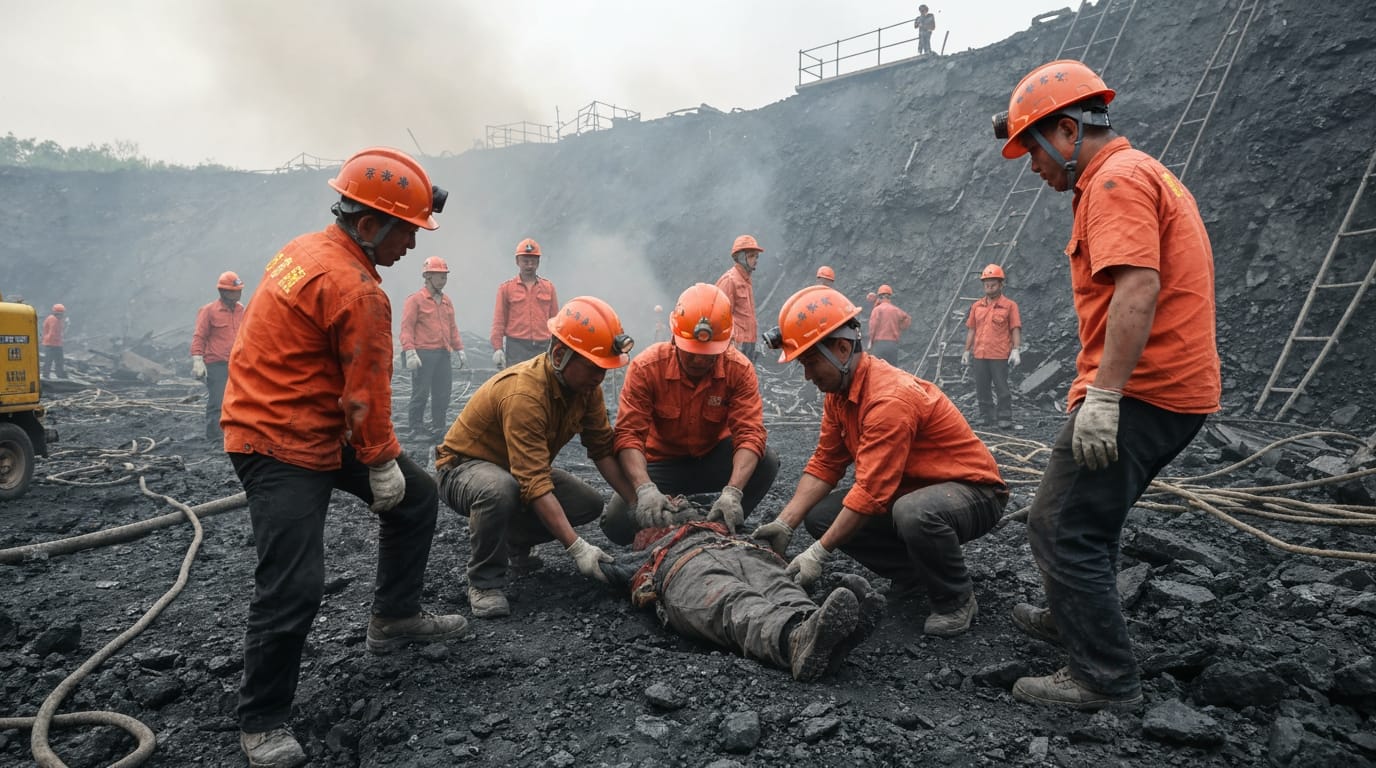
BEIJING, China – A powerful gas explosion ripped through a coal mine in China's northern Shanxi province late Friday, claiming the lives of at least eight miners and leaving 38 others trapped underground as frantic rescue efforts continue into Saturday. The incident at the Liushenyu coal mine, which occurred at approximately 7:29 PM local time on May 22, has once again cast a spotlight on the inherent dangers of the nation's vital, yet often perilous, mining industry.
Initial reports from state media indicate that 247 workers were present underground at the time of the blast. Swift action by emergency crews managed to bring 201 miners to safety by Saturday morning, but the fate of those still trapped remains a grave concern. Levels of carbon monoxide, a highly toxic and odorless gas, were reported to have "exceeded limits" within the mine, suggesting a gas-related explosion as the likely cause.
Immediate Aftermath and High-Stakes Rescue Operation
The explosion triggered an immediate and extensive emergency response. Rescue teams, including specialized mining rescue personnel, have been working tirelessly since Friday night to reach the trapped miners. The conditions underground are challenging, with high levels of hazardous gases and potential structural damage impeding progress. Authorities have not yet provided detailed information on the specific conditions of the trapped miners, though earlier reports noted some were in "critical condition."
President Xi Jinping issued a directive calling for "all-out efforts" to treat the injured and to ensure a thorough investigation into the causes of the catastrophic event. He stressed the critical importance of workplace safety across all sectors, urging regions and departments to learn from this accident to "resolutely prevent and curb the occurrence of major and catastrophic accidents." This presidential decree underscores the national significance and the human toll of such industrial disasters.
Shanxi: The Heart of China's Coal Industry
The Liushenyu coal mine is located in Shanxi province, a region often referred to as China's coal-mining capital. This province plays a pivotal role in fueling the nation's immense energy demands, making coal mining an economic backbone for the area. However, this dependence also means Shanxi frequently bears the brunt of mining-related accidents. The constant pressure to meet production quotas can sometimes lead to shortcuts in safety protocols, despite stringent regulations.
The vast majority of China's coal production originates from complex and often deep underground mines, where risks such as gas explosions, flooding, and tunnel collapses are ever-present. Miners often work in dangerous conditions, facing threats from highly flammable methane gas, coal dust, and structural instabilities.
A Persistent Challenge: Mine Safety in China
Despite significant advancements and a concerted push for improved safety standards over the past two decades, China's coal mining industry continues to grapple with a high incidence of accidents. Historically, Chinese coal mines have been among the deadliest globally, with thousands of fatalities reported annually in the early 2000s. For example, 2002 saw nearly 7,000 workers perish in mining accidents across the country.
In response to this grim record, the Chinese government has implemented a series of comprehensive measures to enhance mine safety. This includes enacting stricter laws and regulations, promoting technological upgrades such as digital mining systems and smart equipment, and investing in monitoring and early warning systems. Official statistics indicate a downward trend in both the number of accidents and fatalities in recent years. From 2021 to 2024, the annual average of mining accidents and fatalities reportedly decreased by nearly 30 percent compared to the preceding five-year period. New regulations, effective May 1, 2024, aim to further bolster production safety and hold operators and local officials accountable.
However, as Friday's tragic blast at Liushenyu underscores, these improvements have not eradicated the risks entirely. Accidents continue to occur, often attributed to the failure to strictly adhere to safety regulations, including proper ventilation and the provision of adequate fire control equipment. Experts point to the inherent challenges of managing vast networks of mines, some of which are smaller operations that may neglect safety protocols to cut costs.
The Human Cost and Broader Implications
The Liushenyu mine disaster serves as a stark reminder of the human cost associated with China's energy production. For the families of the deceased and those awaiting news of the trapped miners, the emotional toll is immeasurable. The incident also highlights the ongoing tension between rapidly expanding industrial output and the imperative of worker safety.
As rescue operations press on, the nation watches anxiously, hoping for more survivors to be brought to the surface. Beyond the immediate tragedy, this incident will undoubtedly intensify calls for even more rigorous enforcement of safety standards and further investment in technologies that can mitigate the dangers faced by miners daily. The lessons learned from this explosion and the subsequent investigation will be crucial in guiding future safety policies, aiming to prevent such heartbreaking losses in an industry essential to China's growth.