Cross-Border Fury: Afghanistan and Pakistan Engulfed in Escalating Border Conflict

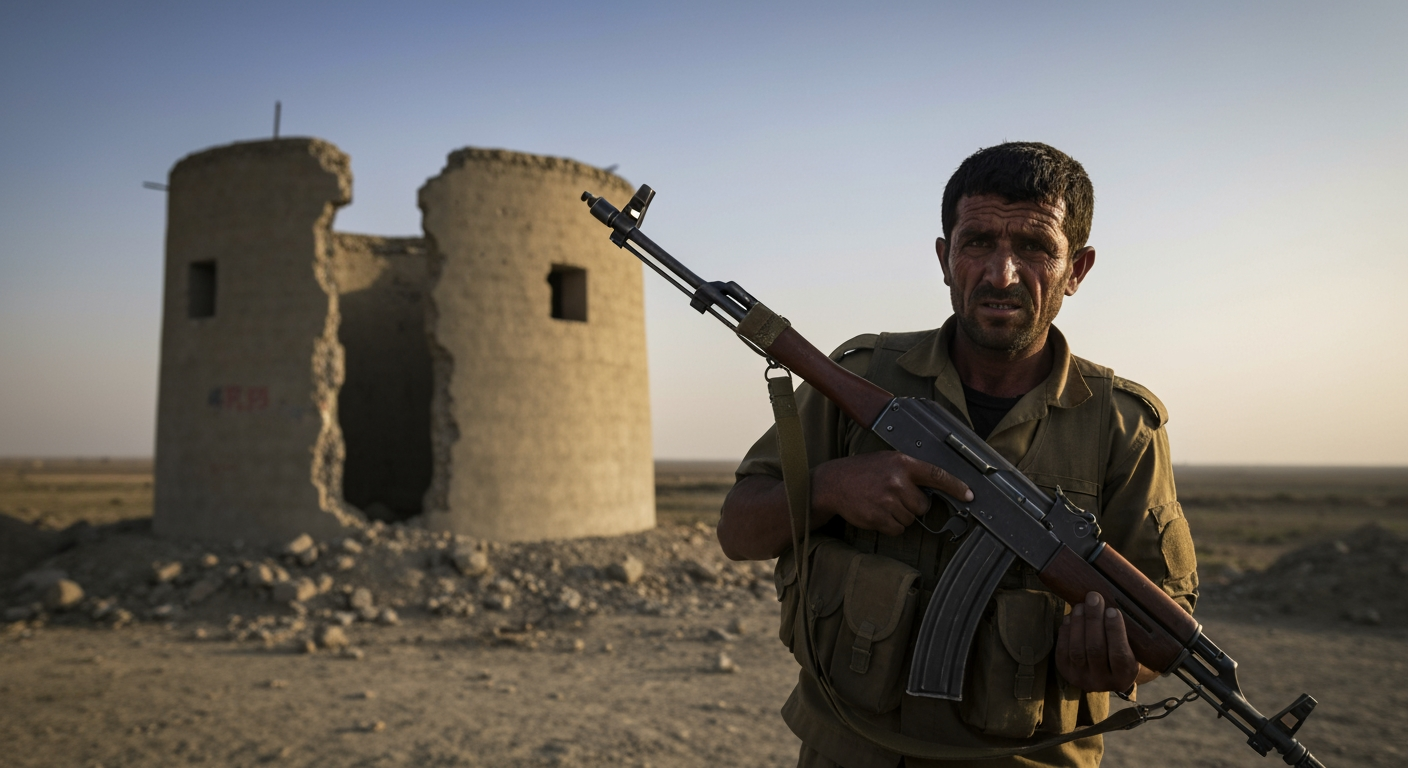
KABUL/ISLAMABAD – Tensions along the Afghanistan-Pakistan border have erupted into a full-blown military confrontation, with both nations trading heavy fire and accusing each other of initiating "unprovoked" attacks. The latest escalation, which unfolded on Thursday, February 26, 2026, marks a dangerous chapter in the long-standing and complex relationship between the two neighbors, drawing urgent calls for de-escalation from international bodies.
The clashes followed a series of Pakistani airstrikes days earlier that Kabul claims killed dozens of civilians, including women and children. Pakistan, in turn, maintains those operations targeted militant hideouts responsible for a surge in cross-border attacks on its territory. As reports of casualties mount on both sides, the volatile Durand Line, the disputed boundary separating the two countries, once again stands as a flashpoint for regional instability.
Taliban Launches "Large-Scale Offensive" in Retaliation
On Thursday, Afghanistan's Taliban administration announced it had launched a "large-scale offensive operation" against Pakistani military positions and installations along the Durand Line. Zabihullah Mujahid, the chief spokesperson for the Taliban, stated the offensive was a direct response to "repeated provocations and violations" by the Pakistani military.
Reports from the Afghan side claim significant gains, with Hamdullah Fitrat, a deputy spokesman for the Taliban, asserting that 55 Pakistani soldiers were killed in overnight clashes. He further claimed that 23 bodies were in Taliban custody, several other soldiers had been captured, one military headquarters was seized, and 19 border outposts were either captured or set ablaze. Another report indicated 40 Pakistani soldiers killed and 15 outposts captured. These alleged retaliatory attacks primarily targeted Pakistani military outposts near Afghanistan's eastern Nangarhar and Kunar provinces. The Taliban government's deputy spokesman, Hamdullah Fitrat, confirmed that "15 outposts have been captured" by Afghan forces.
Pakistan Condemns "Unprovoked Action," Responds Forcefully
Pakistan swiftly condemned Afghanistan's actions as "unprovoked fire" and affirmed its military's delivery of an "immediate and effective response." Pakistan's Information Minister, Attaullah Tarar, reported that two Pakistani security personnel were killed and three injured in the border clashes. Conversely, Pakistani forces inflicted heavy casualties on the Afghan side, with Tarar claiming at least 36 Afghan Taliban operatives were killed. Another Pakistani official placed the figure higher, stating 72 Afghan Taliban combatants were "terminated."
Pakistani security sources indicated that counterattacks destroyed "Taliban's hideouts" and that their forces targeted and destroyed an Afghan Taliban check post across the border from the Chitral sector, while also responding in full force in the Nawagai sector of Bajaur, Tirah Khyber, Mohmand district, and Arandu sector in Chitral. Pakistan's information ministry also stated that "Taliban regime forces are being delivered punishment in Chitral, Khyber, Mohmand, Kurram and Bajaur sectors." These actions follow earlier Pakistani airstrikes, which Islamabad described as "intelligence-based selective targeting of seven terrorist camps and hideouts belonging to Pakistani Taliban (TTP) and its affiliates."
The Shadow of the Durand Line and the TTP
The escalating conflict is deeply rooted in the contentious history of the Durand Line, the 2,640-kilometer international border established in 1893 between British India and Afghanistan. Afghanistan has historically refused to formally recognize the Durand Line as a legitimate international boundary, considering it an imposed colonial demarcation. This stance has been a continuous source of diplomatic and territorial disputes between successive Afghan governments and Pakistan. The border further complicates matters by bisecting Pashtun tribal areas, politically dividing ethnic groups who reside on both sides.
At the heart of the current crisis is Pakistan's persistent accusation that Afghanistan harbors militants from the Tehrik-i-Taliban Pakistan (TTP), a separate but ideologically aligned group with the Afghan Taliban. The TTP, designated a terrorist organization by the United Nations, aims to overthrow the Pakistani government and operates primarily along the Afghanistan-Pakistan border. Pakistan attributes a rise in deadly attacks on its soil to these Afghanistan-based militant groups.
While the Afghan Taliban deny these charges, a recent United Nations report indicates that the TTP enjoys "greater freedom of movement and facilitation" within Afghanistan. The report also suggests that Afghan authorities' claims of no terrorist organizations operating from their territory are not accepted by any member state of the UN Security Council. Concerns have also been raised that stockpiles of US and NATO weapons left in Afghanistan have increased the lethality of TTP attacks.
International Calls for Dialogue Amidst Rising Casualties
The renewed hostilities have triggered alarm within the international community. The UN human rights chief, Volker Türk, appealed for immediate dialogue between Afghanistan and Pakistan, emphasizing the need for de-escalation over the use of force. The UN Assistance Mission in Afghanistan (UNAMA) reported that 13 civilians were killed and several more injured in the earlier Pakistani airstrikes, adding to the human cost of the ongoing conflict.
Regional powers, including Qatar and Saudi Arabia, have also urged both nations to exercise restraint and prioritize diplomatic solutions. These calls highlight growing international apprehension over the deepening tensions and their potential to further destabilize an already fragile region. Previous clashes in October 2025 had also seen a period of heavy fighting and calls for a ceasefire mediated by Qatar.
Conclusion: A Cycle of Violence and Mistrust
The latest military confrontations along the Afghanistan-Pakistan border underscore a deeply entrenched cycle of violence and mistrust. The unresolved dispute over the Durand Line, coupled with the persistent issue of cross-border militant activity, continues to fuel animosity and undermine regional stability. Both nations accuse the other of harboring hostile elements, with Pakistan pointing to the TTP and Afghanistan denying complicity while itself retaliating against perceived Pakistani aggression.
As casualties mount and diplomatic efforts call for calm, the path forward remains fraught with challenges. The humanitarian cost of continued conflict, particularly for civilians caught in the crossfire, is a grave concern. Without a fundamental shift towards mutual recognition of borders, genuine cooperation on counter-terrorism, and sustained diplomatic engagement, the volatile border region risks remaining a perpetual hotbed of conflict, with profound implications for the wider South Asian landscape.
Related Articles

Ratko Mladić, "Butcher of Bosnia" and Convicted War Criminal, Dies at 84
THE HAGUE, Netherlands – Ratko Mladić, the former Bosnian Serb military commander known as the "Butcher of Bosnia" and convicted of genocide, war crimes, and crimes against humanity, has died at the age of 84. Serbian...

Long-Awaited 9/11 Mastermind Trial Set for 2028, Decades After Attacks
GUANTANAMO BAY, Cuba – Nearly a quarter-century after the devastating terror attacks of September 11, 2001, a military judge has finally set a trial date for Khalid Sheikh Mohammed, the alleged mastermind behind the...