Czech President Rejects Nominee Amidst "Hitler Salute" Controversy, Citing Unsuitability for Public Office
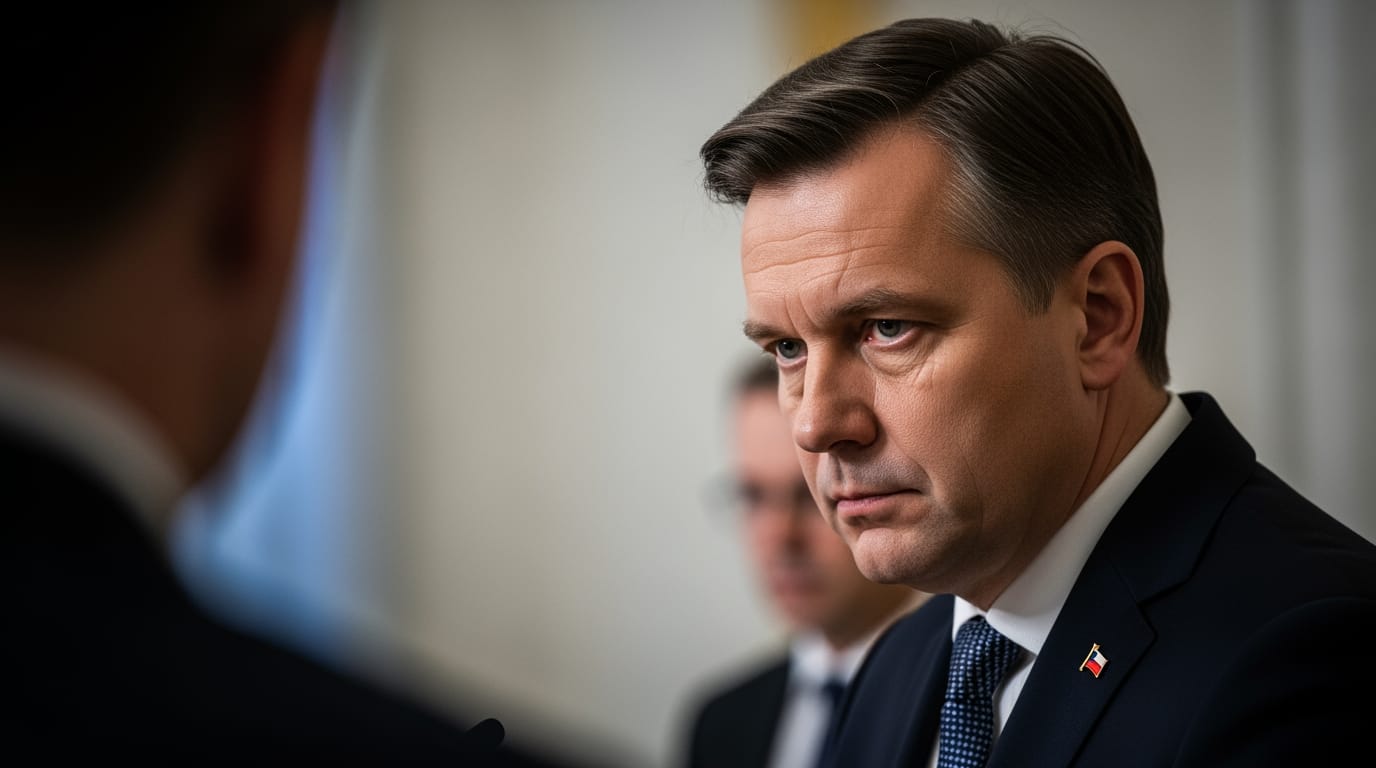
Prague, Czech Republic – Czech President Petr Pavel has unequivocally rejected the nomination of Filip Turek for a ministerial position, citing an ongoing criminal investigation into allegations of hate speech, racism, and extremist remarks, including reported "Hitler salute" gestures. The presidential veto, delivered in late November, has cast a shadow over the formation of the new coalition government and underscored the stringent moral and legal standards expected of public officials in the Central European nation.
Turek, a member of the right-wing Motorists Party, was initially put forward for the role of Foreign Minister, a proposal that swiftly drew public scrutiny and media attention to his controversial past. As damning reports surfaced, the coalition partners reportedly attempted a compromise, shifting his proposed portfolio to the Environment Ministry, but President Pavel remained resolute in his decision, declaring Turek unsuitable for any cabinet post. This firm stance by the head of state has set a significant precedent regarding the vetting of candidates for high-level government positions.
The Controversial Nominee and Allegations
Filip Turek's nomination became contentious following revelations of his social media activities and past conduct. Czech media unearthed numerous posts allegedly referencing figures like Adolf Hitler and Benito Mussolini, alongside reports of repeated racist and sexist remarks. Most disturbingly, Turek is reported to have described the tragic 2019 terrorist attacks on mosques in Christchurch, New Zealand, which claimed 51 lives, as a "cleaning." These revelations quickly triggered a criminal investigation into allegations including incitement to hatred, insulting a nation or race, and approving criminal acts.
Beyond online rhetoric, Turek faced accusations of engaging in Nazi gestures, specifically threatening to perform a "Nazi salute" in the presence of an opponent during the commemoration of the Velvet Revolution anniversary on November 17. Further reports suggested allegations of owning Nazi paraphernalia. While Turek has vehemently denied all accusations, labeling them a "disgusting smear campaign" and "media fabrications," and dismissing the "Nazi salute" reference as "bad humor," President Pavel publicly stated that he found Turek's explanations to be arrogant rather than humble, indicating that the controversies were not merely media-driven.
President Pavel's Unyielding Stance
President Petr Pavel, a former NATO general, has consistently maintained that individuals nominated for ministerial roles must meet exceptionally high standards of integrity and public trust. Upon reviewing the allegations and the ongoing investigation, Pavel concluded that Turek's qualities and his approach to the law were incompatible with the demands of a ministerial position. He emphasized that while the presumption of innocence applies in legal proceedings, politicians are held to a higher ethical and moral standard.
The president's rejection was not limited to the specific ministry for which Turek was nominated, signifying a broader judgment on his suitability for any role within the government. This firm decision highlights the president's role as a guardian of democratic values and a check on the executive power, particularly in the context of forming a new government. Pavel indicated that he found it difficult to imagine any explanation from Turek that could reverse his opinion or that of a significant portion of the Czech public.
Political Fallout and Coalition Dynamics
The rejection of Filip Turek complicates the formation of the new coalition government, which includes the ANO movement led by Andrej Babiš, the far-right Freedom and Direct Democracy (SPD) party, and the Motorists Party. Andrej Babiš, expected to be the next Prime Minister, was tasked with presenting the cabinet line-up to President Pavel. The president's veto means the coalition must now find an alternative nominee, potentially leading to further negotiations and delays in establishing a fully functional government. Babiš acknowledged the president's decision and indicated discussions would ensue with the Motorists Party to resolve the issue.
This incident also brings into sharper focus other political challenges facing the incoming administration. President Pavel additionally requested Andrej Babiš to clarify potential "conflict of interest" concerns stemming from his extensive business activities with the Agrofert conglomerate before his appointment as Prime Minister. This dual challenge to ministerial nominations and the prime minister-designate underscores a period of significant political scrutiny and emphasizes the president's active role in ensuring governmental accountability and adherence to ethical standards. The ongoing discussions about Turek's replacement and Babiš's business interests are critical steps before the new government can be officially sworn in, which some reports suggest could happen by mid-December.
Broader Implications for Czech Politics
President Pavel's decisive action against a nominee associated with extremist views sends a powerful message about the boundaries of acceptable political discourse and conduct in the Czech Republic. In a country with a complex 20th-century history under both Nazi occupation and Communist rule, the symbolism of "Hitler salutes" and associated ideologies carries a profound historical weight and remains deeply offensive. This makes the rejection particularly resonant, reinforcing democratic principles and the rejection of extremism in public life.
The episode sets a precedent that future coalition governments and presidential appointments will likely face enhanced scrutiny regarding candidates' past statements and affiliations. It highlights the constitutional powers of the Czech president in a parliamentary system, demonstrating that the office is not merely ceremonial but can actively intervene to uphold the integrity of the government. By drawing a clear line on what constitutes acceptable behavior for a minister, President Pavel's decision could influence the political culture and candidate selection processes for years to come, encouraging a more careful vetting of nominees across the political spectrum. This serves to protect the nation's democratic institutions and its international standing against the backdrop of rising populist and extremist sentiments across Europe.
The resolution of this political impasse will be closely watched, not only within the Czech Republic but also by international observers, as it reflects on the nation's commitment to democratic values and its resilience against the normalization of extremist rhetoric in mainstream politics. The incoming government now faces the imperative of nominating a candidate who can meet both the political demands of the coalition and the exacting standards set by the presidency.


