Danish Prime Minister Warns U.S. Takeover of Greenland Would Signal NATO's Demise
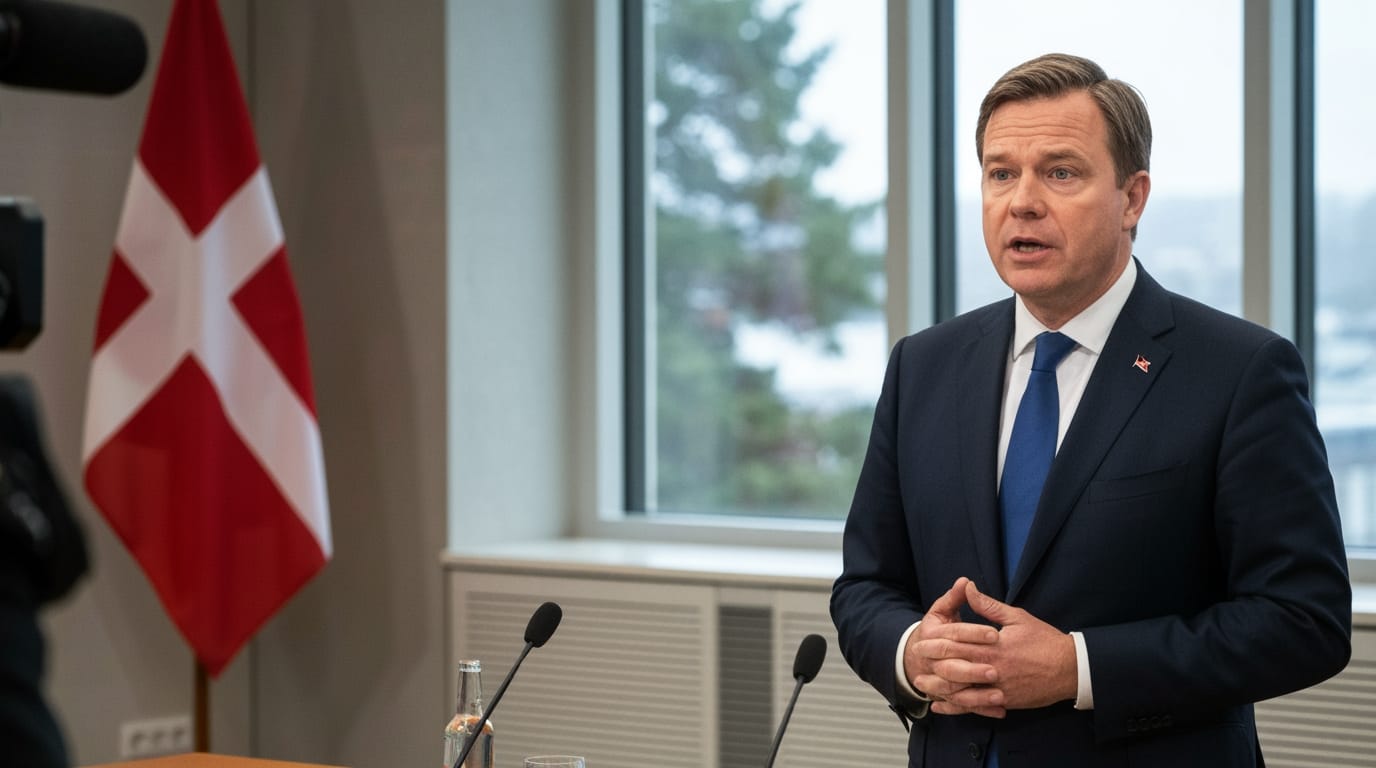
COPENHAGEN – The foundation of the North Atlantic Treaty Organization (NATO) faces an unprecedented challenge after Danish Prime Minister Mette Frederiksen issued a stark warning this week: any U.S. attempt to take control of Greenland would effectively spell the end of the transatlantic military alliance. The dramatic declaration comes amid renewed calls from former U.S. President Donald Trump for American jurisdiction over the vast Arctic island, escalating an already tense diplomatic standoff over Greenland's strategic future.
Prime Minister Frederiksen's comments, made to Danish broadcaster TV2 on Monday, January 5, 2026, underscored the gravity of the situation. "If the United States chooses to attack another NATO country militarily, then everything stops," Frederiksen stated unequivocally. "That is, including our NATO and thus the security that has been provided since the end of the Second World War." Her remarks were echoed by Greenland's Prime Minister Jens Frederik Nielsen, who also condemned the U.S. rhetoric, emphasizing that Greenland cannot be compared to other regions facing U.S. military intervention. The Danish and Greenlandic leaders received solidarity from numerous European counterparts, highlighting the collective concern across the continent regarding the potential implications for international law and alliance cohesion.
Trump's Renewed Ambitions for Greenland
The current diplomatic crisis was ignited by former President Trump's persistent and recently intensified interest in acquiring Greenland. His renewed calls for U.S. control of the Arctic island followed a weekend military operation in Venezuela, which reportedly involved U.S. forces. Trump has long championed the idea of purchasing Greenland, first raising the prospect publicly in 2019 during his initial presidential term, an offer that was firmly rejected by both Danish and Greenlandic authorities. Since his return to political prominence, his rhetoric has escalated. In December 2024, Trump publicly stated that U.S. ownership and control of Greenland were "essential" for national security and global freedom. He further fueled anxieties by indicating a specific timeline for action, telling reporters, "let's talk about Greenland in 20 days," and suggesting he would address the issue in "about two months." Trump has not ruled out the use of military force to achieve this objective.
The former president has consistently argued that Greenland's strategic importance necessitates U.S. control, dismissing Denmark's capacity to manage the territory's security. He reportedly mocked Denmark's defense efforts, suggesting they had only added "one more dog sled" to the Arctic territory's arsenal, while asserting that Greenland was "covered with Russian and Chinese ships all over the place," requiring U.S. intervention due to Danish inability to secure it. This narrative, however, has been challenged by experts, who point out that claims of widespread Russian and Chinese naval presence visible from Greenland are exaggerated.
Greenland's Indispensable Strategic Value
Greenland, the world's largest island, holds immense strategic importance due to its unique geographical position and rich natural resources. Situated between North America and Europe, it straddles crucial air and sea routes across the Arctic and North Atlantic. This makes it a pivotal location for monitoring and defending against potential threats from the polar region. The island hosts the Pituffik (Thule) Space Base, a critical U.S. military installation. This base serves as a vital component of NATO's defense architecture, housing missile warning systems, satellite tracking capabilities, and radar surveillance that monitor vast swathes of the Arctic. Its position provides the shortest route for air and naval operations between Europe and North America, offering significant tactical advantages in an increasingly competitive Arctic environment.
Beyond its military significance, Greenland is a treasure trove of critical natural resources. Surveys indicate the presence of large deposits of rare earth elements, graphite, lithium, and other vital minerals. These resources are essential for modern technologies, including electric vehicles, renewable energy systems, and advanced military hardware. With China currently dominating the supply chain for many rare earth metals, U.S. policymakers view Greenland's resources as a key to diversifying and securing essential materials. Furthermore, the ongoing melting of Arctic ice due to climate change is creating new shipping lanes, such as the Northwest Passage and Northeast Passage, which could significantly shorten global trade routes. Control over Greenland would grant substantial influence over access to these emerging economic and strategic arteries.
A History of U.S. Interest and Danish Sovereignty
American interest in Greenland is not a new phenomenon, with historical records detailing U.S. aspirations dating back to the 19th century. In 1867, then-Secretary of State William Seward, fresh from orchestrating the Alaska Purchase, eyed Greenland as a potential acquisition. A more concrete offer came after World War II, in 1946, when President Harry Truman secretly proposed to buy Greenland from Denmark for $100 million in gold, an offer the Danish government ultimately rejected. Despite the rejection, an agreement was reached allowing the U.S. to establish Thule Air Base in 1951, integrating Greenland into Western defense strategies during the Cold War.
Greenland remains an autonomous territory within the Kingdom of Denmark, a relationship that grants it significant self-governance while retaining ties to Copenhagen. Both Danish and Greenlandic leaders have consistently and unequivocally rejected any notion of a sale or annexation, underscoring their commitment to international law and Greenland's right to self-determination. Greenlanders have repeatedly expressed their desire to define their own future and identity, asserting that they are Greenlanders, not Americans. The Danish government maintains that Greenland is not for sale, viewing its historical ties and sovereignty over the island as integral to its national identity.
Existential Threat to NATO and Arctic Security
Prime Minister Frederiksen's stern warning highlights the potential for an unprecedented crisis within NATO. The alliance operates on the principle of collective defense, enshrined in Article 5, which stipulates that an attack on one member is considered an attack on all. A U.S. military action against a fellow NATO member, Denmark, or its autonomous territory, Greenland, would fundamentally breach this core tenet, dismantling the very security framework that has underpinned post-World War II stability. Such a move would not only fracture the alliance but also severely destabilize transatlantic relations and global security at a time of heightened geopolitical tensions, particularly in the Arctic.
NATO's role in the Arctic has become increasingly significant, especially with new members like Finland and Sweden, further expanding the alliance's footprint in the region. The Arctic is witnessing growing competition from global powers, including Russia and China, making adherence to international norms and alliances more crucial than ever. Denmark and Greenland are integral parts of this collective Arctic security effort, and any unilateral U.S. action would undermine decades of cooperation and trust. The international community watches closely as the diplomatic friction intensifies, with the future of Greenland, Denmark, and potentially NATO itself, hanging in the balance.


