Deadly Blast Rips Through Myanmar Rebel-Controlled Area, Killing Dozens
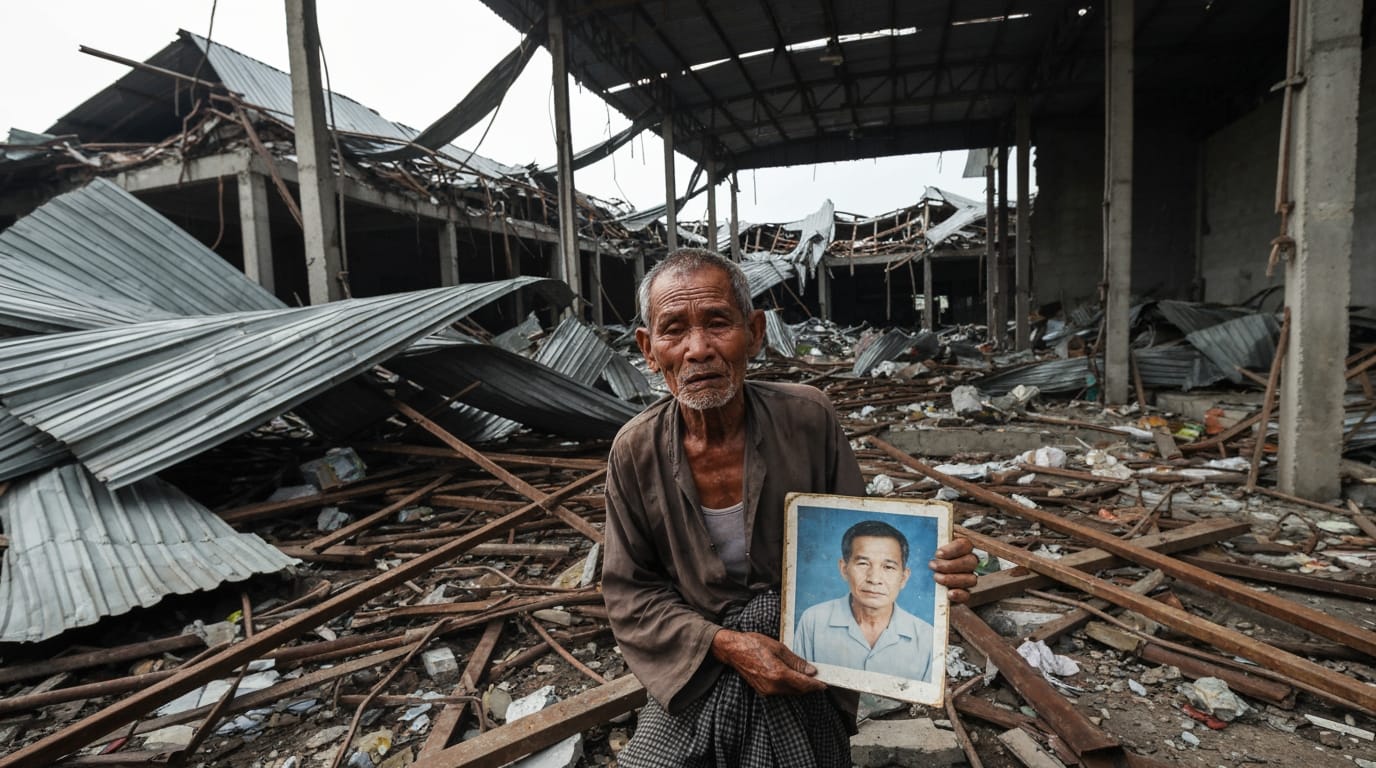
KAUNGTUP, Myanmar – A catastrophic explosion at an explosives storage facility in a rebel-controlled area of northeastern Myanmar on Sunday, May 31, 2026, has claimed the lives of at least 46 people, including six children, and left approximately 70 others injured. The devastating blast, which occurred in Kaungtup village, Namhkam township, Shan State, highlights the inherent dangers and civilian toll in regions embroiled in Myanmar's protracted conflict, where the presence of explosive materials, intended for both military and civilian purposes, poses an ever-present threat. Rescuers continue to work through the aftermath, as over 100 homes were reportedly damaged in the powerful detonation.
The Devastation in Kaungtup
The deadly incident unfolded around noon on Sunday in Kaungtup, a village situated approximately three kilometers south of the Chinese border, an area under the control of the Ta'ang National Liberation Army (TNLA), an ethnic armed group engaged in sporadic clashes with Myanmar's central government. Initial reports from rescue workers indicate that 46 bodies had been recovered by Sunday evening, with 74 injured individuals transported to a local township hospital for urgent medical attention. Media outlets within Myanmar, including the Shan State's Shwe Phee Myay news agency, reported even higher fatality figures, ranging from 50 to 55. The TNLA, in a statement released via its Telegram channel, confirmed that the explosion originated from stored gelignite, designated for use in mining operations. The blast's intensity was such that it not only caused immediate fatalities and injuries but also inflicted extensive structural damage, leveling numerous houses and spreading debris across the village. Local authorities have initiated relief efforts, providing medical care and assistance for resettlement to the affected residents.
A Perilous Landscape: Explosives in Rebel-Held Territories
This latest catastrophe in Kaungtup is not an isolated event but rather underscores a recurring danger in Myanmar's conflict-ridden borderlands, where non-state armed groups often manage their own economies, including extractive industries like mining. Just weeks prior, on April 7, 2026, an explosives factory in Yawngban Village, near Panghsang Town, an area controlled by the United Wa State Army (UWSA) in Shan State, also experienced a massive detonation. While the exact death toll from that incident remains unconfirmed, local sources suggested it could exceed 100, indicating that gunpowder stockpiles had exploded, causing widespread destruction. Residents of Panghsang believed that facility produced explosives for mining rather than weapons. A similar incident had occurred in the UWSA-controlled area in March 2019, further illustrating the long-standing risks associated with the storage and handling of explosive materials in these regions. The proliferation of explosive weapons, both purpose-built and improvised, and the often-unregulated nature of their storage, contribute significantly to civilian casualties, exacerbating the humanitarian crisis in a nation already reeling from decades of internal conflict.
Myanmar's Enduring Conflict: A Backdrop of Violence
Myanmar has been entangled in armed conflict since its independence in 1948, a struggle rooted in ethnic tensions and aspirations for self-determination. The situation dramatically escalated following the military coup in February 2021, which overthrew the democratically elected government. This event ignited widespread resistance, leading to the formation of numerous People's Defense Forces (PDF) and intensifying clashes between the military junta (Tatmadaw) and a multitude of ethnic armed organizations (EAOs), including the TNLA and UWSA. The conflict has since evolved into a complex civil war involving over a hundred armed groups, with fighting frequently spilling into civilian areas.
The use of explosive weapons in populated areas has become pervasive, causing substantial harm to civilians and infrastructure. While the Kaungtup blast appears to have been an internal accident related to storage, other incidents demonstrate the direct targeting of areas with explosives. For example, on April 11, 2023, the Myanmar military conducted an airstrike on Pa Zi Gyi village in the Sagaing Region, targeting an opposition-led administrative office that also housed some ammunition for the PDF. That attack, which utilized an "enhanced-blast" munition, resulted in the deaths of over 160 individuals, including 40 children, and was widely condemned as a potential war crime. Such events underscore the catastrophic consequences when explosives, whether through accident or deliberate action, impact civilian populations in a country gripped by ongoing violence.
Humanitarian Crisis and Lingering Questions
The blast in Kaungtup adds another tragic chapter to Myanmar's unfolding humanitarian crisis. The high number of civilian casualties, particularly children, highlights the vulnerability of communities living in conflict zones, often far from the direct front lines but constantly exposed to the collateral risks of armed struggle and the handling of dangerous materials. Rescue operations are challenging in these remote and often contested territories, with access for independent assessment and comprehensive aid often restricted. While local authorities and rescuers are providing immediate assistance, the long-term impact on the displaced and injured, coupled with the psychological trauma inflicted on survivors, will be profound. The incident also raises questions about safety protocols for storing such volatile materials, particularly in areas near civilian habitations, even if intended for non-military uses. In a country where the military has been responsible for the majority of explosive weapon incidents causing civilian harm since 2021, according to ACLED data, events like the Kaungtup blast serve as a stark reminder of the multifaceted dangers confronting Myanmar's populace.
The tragic incident in Kaungtup village serves as a grim illustration of the devastating human cost of Myanmar's ongoing civil conflict. Beyond the direct clashes, the presence and precarious storage of explosive materials, whether for combat or economic activities like mining, create a pervasive hazard for civilian populations. As the conflict continues to rage, claiming thousands of lives and displacing millions, the international community faces persistent calls to address both the direct violence and the systemic dangers that contribute to such catastrophic loss of life in the absence of peace and stability. The echoes of the Kaungtup blast resonate across a nation desperate for an end to the violence that has become its daily reality.


