Deadly Blast Rocks Bandar Abbas Residential Building Amid Regional Tensions
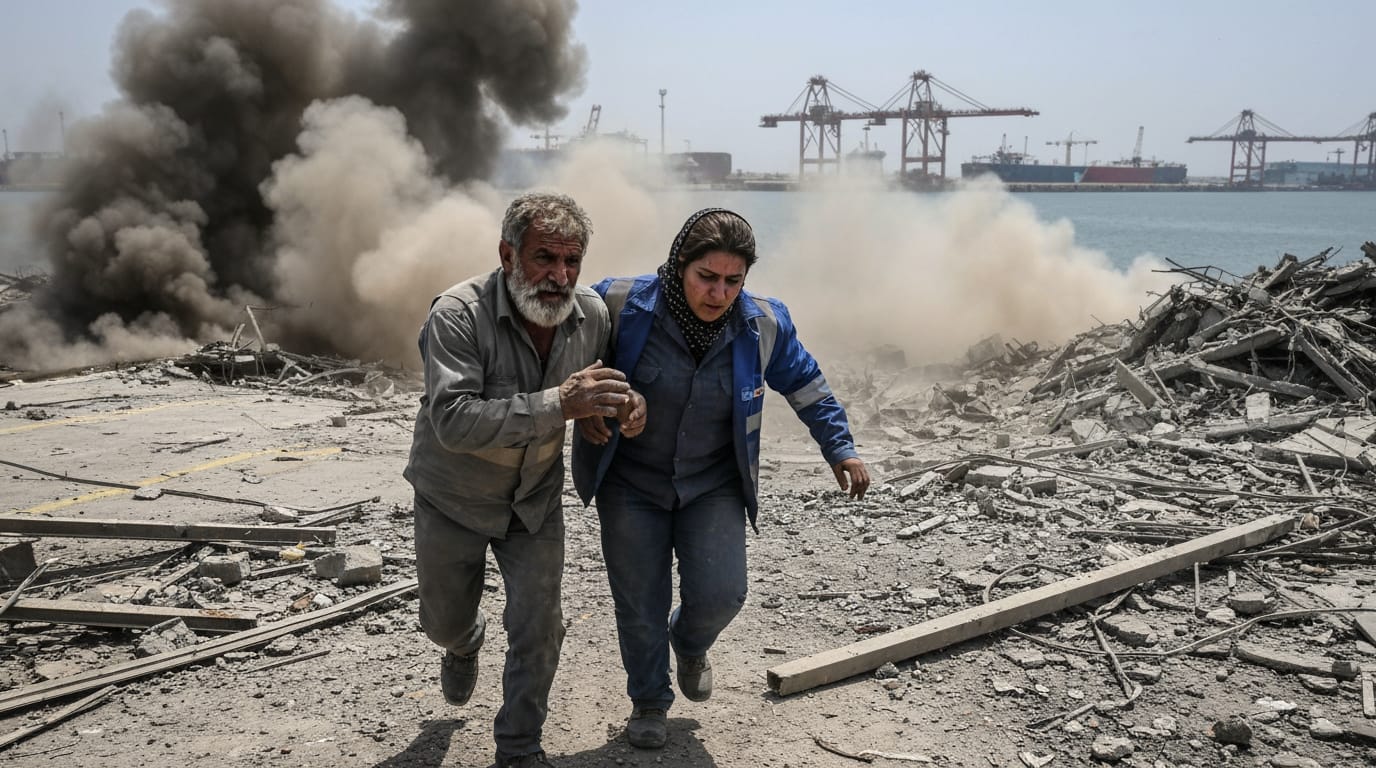
Bandar Abbas, Iran – A powerful explosion ripped through an eight-story residential building in Iran's vital port city of Bandar Abbas on Saturday, January 31, 2026, leaving at least one person dead and 14 others injured. The cause of the blast remains under investigation by Iranian authorities, as the incident unfolds amidst a period of escalating regional tensions and domestic unrest.
The blast, reported around 2:10 PM local time, caused significant structural damage to the building, particularly impacting its first to third floors, and shattered windows throughout the structure. Debris was scattered across Moallem Avenue, where the building is located, and several nearby vehicles and shops also sustained damage. Rescue and firefighting teams were immediately dispatched to the scene, working to provide assistance and transport the injured to local hospitals.
The Incident Unfolds
Initial reports from local media confirmed the explosion in Bandar Abbas, a city strategically located on Iran's southern coast, overlooking the Strait of Hormuz. While the precise cause of the blast is yet to be determined, Iranian state media, including the semi-official Tasnim news agency, swiftly moved to debunk social media rumors suggesting the explosion targeted a commander of the Revolutionary Guard navy. Tasnim explicitly labeled these claims as "completely false," aiming to control the narrative surrounding the unexplained incident.
Footage broadcast by state television depicted the immediate aftermath, showing the building's facade partially blown out and exposing parts of its interior. Glass and rubble littered the ground, indicative of the force of the explosion. Mokhtar Salahshoor, head of the provincial Red Crescent Society, confirmed the casualties and the ongoing rescue operations, emphasizing that the focus was on understanding the incident's origins.
Damage and Casualties Confirmed
The human toll of the explosion included one fatality and 14 individuals requiring medical attention for their injuries. While authorities did not immediately release details regarding the severity of all injuries, the deployment of emergency responders to shift the wounded to hospitals underscored the impact on the local populace. The physical damage extended beyond the primary structure, with more than ten vehicles parked near the building reported to have sustained damage. Shops and other adjacent properties on Moallem Boulevard also experienced varying degrees of destruction, contributing to a scene of widespread disruption in the bustling city street. Firefighters and crisis management officials from Hormozgan province are leading the investigation into the exact nature and cause of the explosion.
Bandar Abbas: A Strategic Hub
The city of Bandar Abbas holds immense strategic importance for Iran and global commerce. It serves as the country's largest port and a crucial gateway for international trade, handling a significant portion of Iran's imports and exports. More broadly, its location on the Strait of Hormuz is critical, as approximately one-fifth of the world's seaborne oil passes through this narrow waterway. Any incident in or around Bandar Abbas inevitably draws international attention due to its vital role in global energy supply chains. The port infrastructure, particularly Shahid Rajaee Port, is a key component of this strategic complex. While the current explosion occurred in a residential building within the city, rather than directly at the port's shipping facilities, its proximity to such a critical economic artery adds a layer of concern to the unfolding situation.
This incident is not the first time the broader Bandar Abbas area has experienced such an event. On April 26, 2025, an explosion and subsequent fire at Shahid Rajaee Port, part of the larger Bandar Abbas infrastructure, resulted in 57 deaths and over 1,000 injuries. That blast was attributed to several containers, possibly holding ammonium perchlorate, a component used in rocket fuel. Such past occurrences underscore the inherent risks associated with industrial and commercial activities in a major port complex, though the current investigation will determine if any parallels exist.
Regional Tensions and Political Climate
The explosion in Bandar Abbas comes at a particularly sensitive time for Iran and the wider Middle East. The region has been experiencing heightened tensions, marked by a significant U.S. military buildup, including the deployment of an aircraft carrier strike group and P-8 Poseidon anti-submarine patrol aircraft near Iranian airspace. This military posturing follows strong rhetoric from U.S. President Donald Trump, who recently spoke of an "armada" heading toward Iran and indicated that his administration was weighing various options against the country.
Domestically, Iran has been grappling with widespread protests over economic hardship, which have at times escalated into calls for governmental change. These protests, which began in December, posed a significant challenge to the country's clerical rulers, with reports suggesting thousands of casualties, including security forces, during their suppression. Earlier on the day of the explosion, Iranian President Masoud Pezeshkian accused U.S., Israeli, and European leaders of exploiting Iran's economic woes to incite unrest and destabilize the nation. The combination of internal dissent and external pressures creates a complex backdrop for any unexplained incident within Iran's borders.
Conclusion
As investigations continue into the cause of the deadly explosion in Bandar Abbas, the incident serves as a stark reminder of the volatile environment surrounding Iran. While authorities have moved quickly to dismiss speculation about specific targets, the lack of immediate clarity on the blast's origins leaves room for concern and questions. The focus remains on the humanitarian effort and determining what triggered the destructive event in this strategically vital city, as both local and international observers closely monitor developments in a region already on edge.


