Middle East Engulfed as Iran War Nears Two-Week Mark with No End in Sight
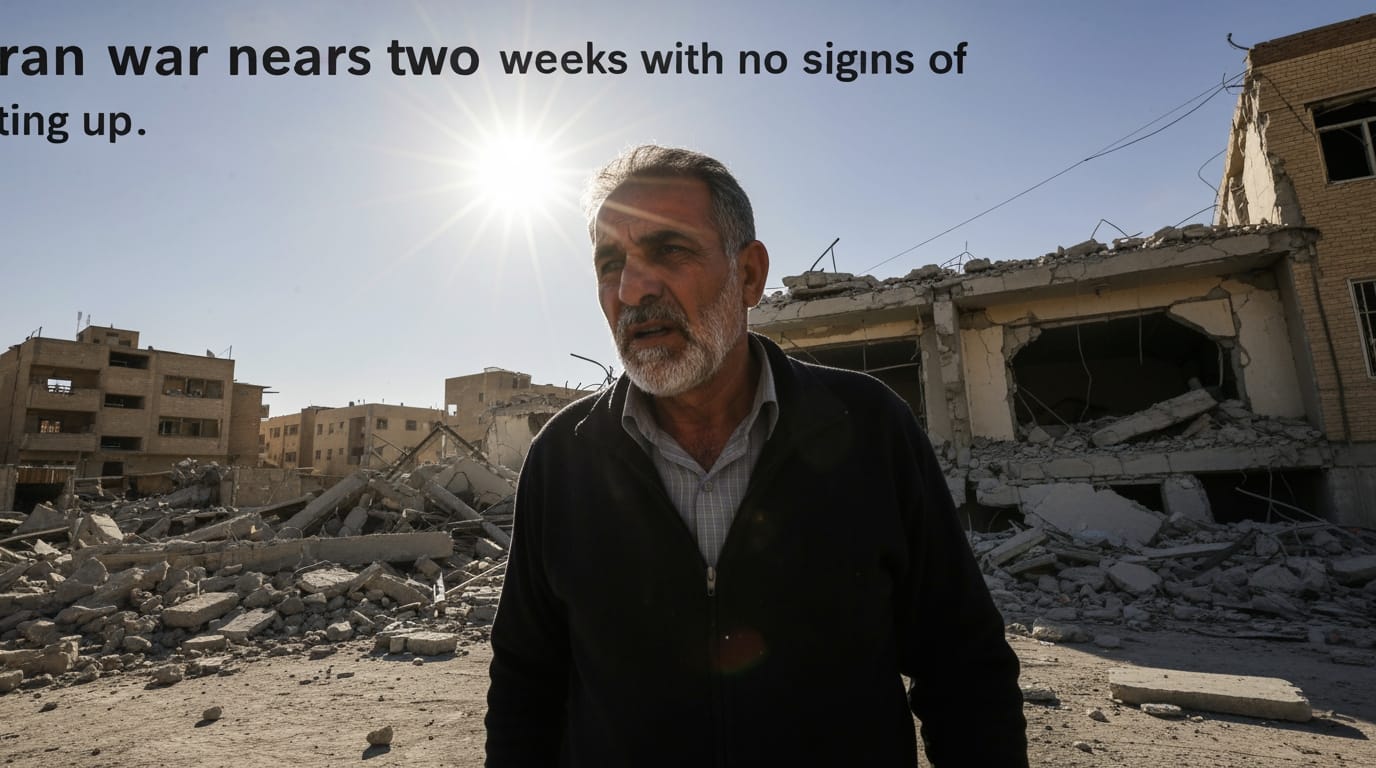
The Middle East finds itself plunged into an escalating and brutal conflict, nearing its second week with the United States and Israel engaged in extensive military operations against Iran, drawing in numerous regional and international actors. Launched on February 28, 2026, under the codename "Operation Epic Fury," the initial offensive targeted Iranian leadership and military infrastructure, immediately eliciting a fierce retaliatory response from Tehran that has sent shockwaves across the globe. As of March 13, the conflict shows no signs of de-escalation, leaving a trail of thousands dead, millions displaced, and a global economy grappling with severe disruptions.
The hostilities commenced with a series of nearly 900 U.S. and Israeli strikes within the first 12 hours, a concentrated effort that notably resulted in the death of Iranian Supreme Leader Ali Khamenei, alongside other senior officials. This aggressive opening salvo marked a dramatic intensification of long-standing tensions fueled by Iran's nuclear ambitions, ballistic missile program, and its extensive regional military influence. Attempts to renegotiate the Joint Comprehensive Plan of Action (JCPOA) in 2025 and 2026 had proven unsuccessful, setting the stage for the current confrontation amidst a backdrop of Iran's weakened state following years of sanctions, internal protests, and a prior 12-day conflict with Israel in June 2025. Despite an announced "breakthrough" in nuclear talks by Oman just a day before the strikes, the military action proceeded, signaling a decisive shift from diplomacy to force.
Iran's retaliation was swift and severe, unleashing hundreds of missiles and thousands of drones across the region. These counterattacks struck U.S. embassies, military installations, and critical oil infrastructure, including vessels in the Strait of Hormuz. The strategic Strait of Hormuz, a vital chokepoint for a fifth of global crude oil, has since been effectively shut down by Iranian actions, triggering a substantial surge in global oil prices, which have hovered around $100 per barrel with threats of further increases. This disruption, coupled with widespread attacks on energy facilities in Bahrain and Saudi Arabia, has generated significant concerns about air pollution and environmental exposure. The aviation sector has also been heavily impacted, with major airports across the Middle East canceling or delaying flights due to safety concerns.
The conflict's geographical spread has rapidly widened beyond Iran's borders, drawing in a complex web of actors. Immediately following the initial strikes, Hezbollah, an Iranian-allied group in Lebanon, launched its own series of missile and drone attacks on northern Israel, sparking what has been termed the "2026 Lebanon war." Since March 2, Hezbollah has conducted over 325 waves of attacks against Israel, leading to extensive Israeli airstrikes and ground operations across Lebanon, resulting in significant casualties and massive displacement within the country. Simultaneously, Iran-backed militias in Iraq, notably the Popular Mobilization Forces (PMF) and the Islamic Resistance in Iraq, have launched numerous drone and missile attacks on U.S. and Israeli targets. The extensive involvement of regional states, including Bahrain, France, Iraq, Italy, Jordan, Kuwait, Oman, Qatar, Saudi Arabia, Turkey, the United Arab Emirates, and the United Kingdom, underscores the broad destabilization of the Middle East. Notably, Ukrainian drone warfare experts have been deployed to assist Gulf states and U.S. bases in countering Iranian attack drones, highlighting the conflict's unexpected international dimensions.
The human toll of this intensifying conflict has been devastating. Initial reports indicated over 2,000 fatalities across Iran, Lebanon, and Israel. More granular data reveals at least 1,348 civilians killed and over 17,000 injured in Iran, with a harrowing incident involving a strike on a girls' school in Minab that killed approximately 170 people, including over 160 schoolgirls. In Lebanon, official figures cite 634 deaths and 1,586 injuries, with an alarming 800,000 people displaced, many seeking shelter in overcrowded collective facilities facing deteriorating public health conditions. Within Iran, over 100,000 people have been relocated, and U.S.-Israeli attacks have temporarily displaced up to 3.2 million people. The World Health Organization has verified 18 attacks on healthcare facilities in Iran, resulting in 8 deaths, and 25 attacks in Lebanon, causing 16 deaths and 29 injuries, further crippling essential services. Meanwhile, Israel has reported 14 civilian deaths and 2,745 injured since the war began. The immense and rapidly growing humanitarian crisis is straining aid efforts, with global humanitarian organizations struggling to cope with the scale of displacement and urgent needs for food, water, medicine, and shelter.
Amidst the escalating violence, diplomatic pathways to resolution remain largely elusive. While international bodies, including the United Nations, have called for an immediate end to hostilities and a return to negotiations, concrete steps towards de-escalation have been minimal. Iran's new Supreme Leader, Mojtaba Khamenei, has outlined conditions for ending the war, demanding recognition of Tehran's legitimate rights, reparations for damages, and firm international guarantees against future aggression. However, the U.S. and Israeli objectives for the conflict, which some officials have framed as an opportunity for the Iranian people to overthrow their government, complicate any potential diplomatic overtures. The financial cost of the conflict is also mounting rapidly; the Pentagon reported that the war has already exceeded $11.3 billion in its first six days for the U.S. alone, with the true cost likely far higher as the duration and intensity continue to climb.
As the "Iran war" enters its third week, the Middle East remains a volatile epicenter of a conflict whose profound and far-reaching consequences are only just beginning to unfold. The sustained military engagements, the catastrophic human cost, and the significant global economic ramifications paint a grim picture for regional stability and international security. Without a clear path to de-escalation, the prospect of a protracted and even wider conflict looms large, threatening to reshape geopolitical landscapes for years to come.


