NASA Clears Artemis II for April 1 Launch, Paving Way for Crewed Lunar Return
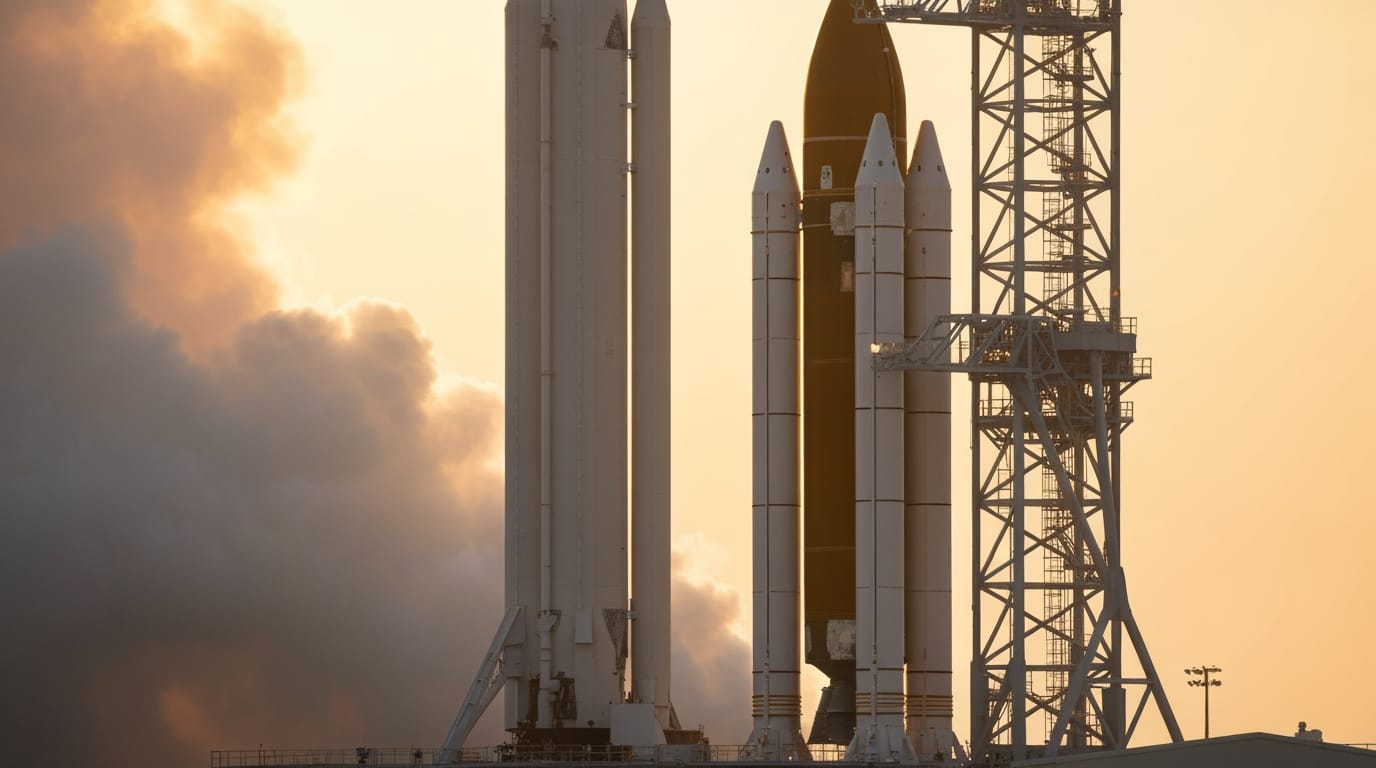
CAPE CANAVERAL, Fla. — NASA has officially set a target launch date of April 1, 2026, for its historic Artemis II mission, marking a pivotal step toward returning humans to the vicinity of the Moon for the first time in over five decades. The decision follows rigorous testing and the successful resolution of technical issues that had prompted previous delays. This ambitious mission will send four astronauts on a journey around the Moon, serving as a critical precursor to future lunar landings and the long-term goal of establishing a sustainable human presence beyond Earth.
Overcoming Technical Hurdles on the Path to Launch
The road to the April 2026 launch window has been punctuated by meticulous preparations and necessary adjustments. NASA officials confirmed the "go" for the mission after a comprehensive flight readiness review, signaling confidence in the readiness of the Space Launch System (SLS) rocket and the Orion spacecraft. The agency had previously targeted earlier launch windows in February and March 2026, but these were scrubbed due to technical challenges.
One significant hurdle involved hydrogen fuel leaks detected during a wet dress rehearsal in February, a recurring issue also encountered during the uncrewed Artemis I tests. While those leaks were successfully addressed at the launchpad, a subsequent problem arose with the helium flow system in the rocket's upper stage. Helium is crucial for pressurizing fuel tanks and supporting engine systems during launch. This helium issue necessitated rolling the massive 322-foot SLS rocket and Orion capsule back from Launch Complex 39B to the Vehicle Assembly Building (VAB) for further inspections and repairs in late February. NASA emphasized that astronaut safety remains its highest priority, and such rigorous testing is designed to identify and resolve problems before flight. With these issues reportedly fixed, the rocket is scheduled to be rolled back to the launchpad as early as March 19, ahead of the April 1 target. The initial launch window for Artemis II extends from April 1 to April 6, with additional opportunities later in the month and potentially into May and June.
A Diverse Crew Charting New Deep Space Territory
The Artemis II mission will carry a crew of four astronauts on its approximately 10-day journey around the Moon. This diverse crew includes NASA astronauts Reid Wiseman (commander), Victor Glover (pilot), Christina Koch (mission specialist), and Canadian Space Agency (CSA) astronaut Jeremy Hansen (mission specialist). Their selection in April 2023 marked a significant moment for human space exploration.
The crew's journey will be historic on several fronts. Victor Glover will become the first person of color, Christina Koch the first woman, and Jeremy Hansen the first non-American to venture into deep space and the vicinity of the Moon. Commander Wiseman brings prior experience from the International Space Station, having logged over 165 days in orbit. Glover, too, is a veteran of the International Space Station and participated in four spacewalks. Koch holds the record for the longest single spaceflight by a woman, with 328 days in space, and was part of the first all-female spacewalk. Hansen, making his first flight to space, will represent Canada in this groundbreaking lunar mission. These four individuals have undergone extensive training, preparing them for the challenges of deep space travel and the operation of the Orion spacecraft.
Mission Objectives and Advanced Technology
Artemis II is designated as the first crewed flight test of NASA's Space Launch System rocket and the Orion spacecraft. While it will not land on the lunar surface, its primary objective is to thoroughly test the Orion capsule's systems with astronauts aboard in the harsh environment of deep space. This includes verifying life-support systems, communications, navigation, and critical crew interfaces to ensure they perform as expected during a human mission beyond low-Earth orbit.
The mission profile involves Orion orbiting Earth twice to ensure all systems are functioning correctly while still relatively close to home. Following these checks, a powerful engine burn by the European Service Module (ESM), which provides Orion with propulsion, power, and life support, will propel the spacecraft on a four-day journey to the Moon. Orion will perform a lunar flyby, using the Moon's gravity for a free-return trajectory back to Earth. During this phase, the crew will monitor spacecraft systems, gather data on the effects of deep space travel, and conduct trajectory correction burns. They will also perform a proximity operations demonstration, manually controlling Orion with the ESM's engines, a capability vital for future missions involving docking with elements like the Lunar Gateway. The spacecraft is designed to withstand extreme conditions, including re-entry into Earth's atmosphere at speeds of approximately 25,000 miles per hour.
The SLS rocket itself is a super-heavy-lift vehicle, the only one capable of sending Orion, its crew, and cargo directly to the Moon in a single launch. It comprises a core stage, which delivers propellants to four RS-25 engines, and an upper stage that boosts Orion out of Earth's orbit. The Orion spacecraft, built by Lockheed Martin, is designed to carry and sustain astronauts beyond low-Earth orbit and safely return them home, incorporating advanced propulsion, launch abort systems, and cutting-edge avionics.
The Broader Artemis Vision: Moon to Mars
Artemis II is an integral part of NASA's overarching Artemis program, which aims to return humans to the Moon for the first time since the Apollo 17 mission in 1972. The program's long-term vision extends beyond merely repeating past achievements; it seeks to establish a sustainable human presence on and around the Moon, ultimately laying the groundwork for human missions to Mars.
The Artemis program builds on the success of Artemis I, an uncrewed test flight in November 2022 that saw the Orion spacecraft travel around the Moon and back, validating the performance of the SLS and Orion systems. Following Artemis II, the program envisions Artemis III, which was originally planned as the first mission to land astronauts on the lunar surface. However, recent announcements indicate a shift in strategy for Artemis III, which will now focus on testing lunar landers in Earth orbit, potentially docking with landers developed by commercial partners like SpaceX or Blue Origin, and testing advanced spacesuits. The first crewed lunar landing is now anticipated with Artemis IV, planned for early 2028. This phased approach aims to mitigate risks and ensure the necessary technologies and procedures are thoroughly validated.
The Artemis program represents a fundamental shift from the short-duration, high-intensity missions of the Apollo era. Instead, it is designed as a multi-phase campaign to enable long-term research, scientific discovery, and technological development in deep space, ultimately serving as a "stepping stone and a launchpad" for humanity's journey to Mars.
Conclusion
With the April 1, 2026, launch window confirmed, anticipation is building for the Artemis II mission. This crewed lunar flyby is not merely a repeat of past endeavors but a crucial test of next-generation space exploration systems and a bold step towards a sustained human presence on the Moon and, eventually, Mars. The mission, with its diverse crew and cutting-edge technology, embodies humanity's enduring drive to explore, push boundaries, and unlock the mysteries of the cosmos. As the SLS rocket and Orion spacecraft prepare for rollout, the world watches, poised for the next chapter in human spaceflight.


