Cross-Border Fury: Pakistan Strikes Kabul as "Open War" Declared with Afghanistan
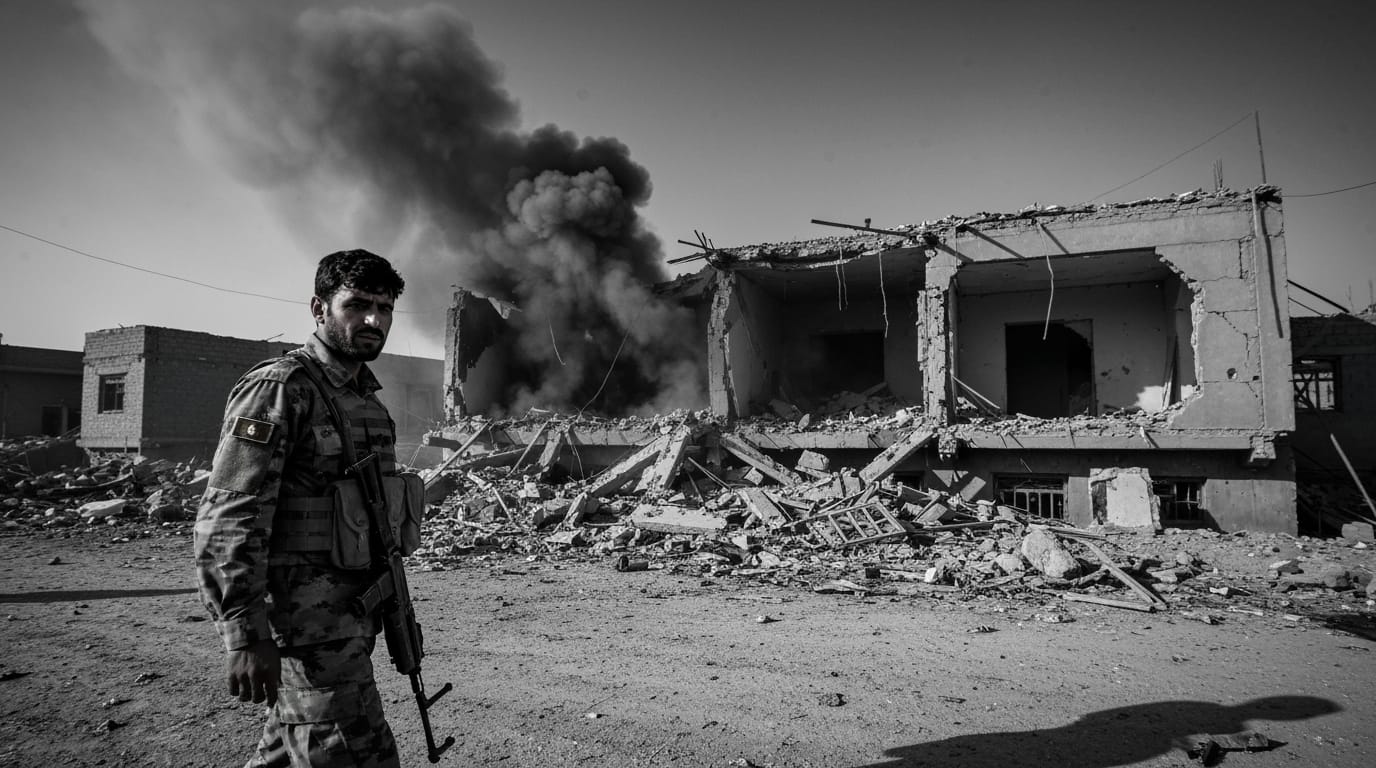
Intensified hostilities between Pakistan and Afghanistan have plunged the volatile border region into a state of "open war," as Pakistani airstrikes targeted the Afghan capital, Kabul, and several border provinces in late February and early March 2026. This dramatic escalation follows a series of tit-for-tat cross-border attacks, marking a severe deterioration in relations between the two neighbors and raising profound concerns about regional stability and humanitarian consequences. Islamabad asserted its strikes were intelligence-based operations aimed at militant groups, while Kabul vehemently condemned the actions, reporting civilian casualties and launching its own retaliatory measures.
Waves of Strikes Batter Afghan Territories
The recent military actions reached a critical peak in late February 2026, when Pakistan conducted airstrikes in Kabul, Kandahar, and Paktia provinces, among others. These strikes, which included the targeting of Bagram airbase and other military facilities, were described by Pakistani officials as a response to recent attacks on its border posts. Reports indicated at least three explosions in Kabul, though immediate details on exact locations or casualties in the capital were initially scarce. However, Pakistan's Information Minister, Attaullah Tarar, confirmed that "Afghan Taliban defence targets" were struck in Kabul, Paktia, and Kandahar, with state media claiming the destruction of a Taliban brigade headquarters and ammunition depot in Kandahar.
These February 2026 strikes followed an earlier series of Pakistani Air Force operations on February 21, 2026, which targeted alleged militant camps in Nangarhar, Paktika, and Khost provinces. The Taliban-led Afghan government's deputy spokesperson, Hamdullah Fitrat, reported that these Pakistani attacks resulted in 52 deaths and 66 injuries across Paktika, Khost, Kunar, Nangarhar, and Kandahar provinces. The International Organization for Migration (IOM) has since expressed grave concern over the escalating hostilities, noting civilian casualties, damage to critical infrastructure, and the displacement of nearly 66,000 people in eastern and southeastern Afghanistan.
Pakistan's Stated Rationale: Counter-Terrorism and Retaliation
Pakistan has consistently framed its cross-border military actions as necessary measures against militant groups, primarily the Tehrik-i-Taliban Pakistan (TTP), which it alleges operates from Afghan soil. Islamabad contends that the Afghan Taliban government provides sanctuary to these groups, enabling them to launch attacks within Pakistan. The February 2026 strikes, for instance, were explicitly linked by Pakistan to retaliation for recent terrorist attacks in Islamabad, Bajaur, and Bannu, which Pakistan attributed to the TTP and Islamic State – Khorasan Province (ISIS-K).
Pakistan's Defense Minister, Khawaja Asif, characterized the situation as "open war" with Afghanistan, declaring that Islamabad's patience had run out with the Afghan Taliban authorities. This sentiment underscores a growing frustration in Pakistan over what it perceives as the Afghan interim government's unwillingness or inability to curb cross-border militancy. The cross-border operations are seen by some analysts as a form of strategic signaling, combining military force with economic and diplomatic pressure to compel a change in the Afghan Taliban's behavior regarding militant groups.
Afghanistan's Fierce Condemnation and Counter-Attacks
In response, the Afghan Taliban government vehemently condemned the Pakistani airstrikes, calling them a violation of Afghanistan's sovereignty and territorial integrity. Afghan officials denied Pakistan's claims of harboring militants, asserting that the Pakistani strikes hit "ordinary people" and civilian areas, including a religious madrassa and several homes. The Taliban's Ministry of Defense announced "large-scale offensive operations" against Pakistani military positions along the Durand Line in retaliation for the airstrikes.
Afghan authorities claimed their military launched attacks across the border into Pakistan, capturing over a dozen Pakistani army posts. While Pakistan dismissed these claims of captured posts as unprovoked, the Afghan Ministry of Defense asserted that 110 Pakistani soldiers had been killed and 27 Pakistani border posts captured in these counter-attacks. The Afghan Taliban also reported that Pakistan's February 26 strikes occurred hours after Afghanistan had already launched its own cross-border attack in retaliation for earlier Pakistani actions. Gunfire and shelling were reported near key border crossings like Torkham, with Afghan soldiers moving towards the frontier.
Deep Roots of a Fractured Relationship
The current "open war" is the culmination of long-standing tensions and historical grievances between Afghanistan and Pakistan. A core issue remains the disputed Durand Line, the 2,600-kilometer border drawn in 1893, which Afghanistan's successive governments have never formally recognized. This contested border divides ethnic Pashtun areas, fueling nationalist sentiments in Afghanistan and contributing to recurrent instability.
Since the Taliban's return to power in Afghanistan in August 2021, cross-border clashes and Pakistani airstrikes have become increasingly frequent. Significant incidents include strikes in April 2022, March 2024 (in Khost and Paktika, reportedly killing civilians), and December 2024 (in Paktika). October 2025 also witnessed intense clashes and Pakistani airstrikes in several Afghan provinces and Kabul, followed by Afghan retaliatory attacks on Pakistani military posts. This cycle of violence highlights the deep mistrust and strategic divergence between the two nations, despite initial hopes that the Afghan Taliban's ascendancy might stabilize the region. Pakistan's decision to close its border and suspend trade, combined with the forced repatriation of Afghan refugees, further exacerbates Afghanistan's already dire economic and humanitarian situation.
Humanitarian Crisis and Regional Destabilization
The escalating conflict carries a heavy humanitarian toll. The International Organization for Migration (IOM) has voiced profound concern, highlighting that the military confrontation has led to widespread displacement, civilian casualties, and damage to vital infrastructure. The closure of border crossings like Torkham and Bahramcha due to security concerns has severely restricted humanitarian access and the delivery of much-needed assistance. This comes at a time when Afghanistan is already grappling with one of the world's largest displacement crises, with millions of returnees, including 2.6 million in 2025 alone. Further conflict-driven displacement, forced returns, or deportations from neighboring countries would place immense strain on already overstretched public services and host communities.
The declaration of "open war" signals a critical juncture in Afghanistan-Pakistan relations, moving beyond limited skirmishes to direct military engagements targeting urban centers and military facilities. With both sides heavily armed and neither willing to concede, the potential for further escalation and broader regional destabilization is substantial. The international community, preoccupied with other global conflicts, faces the challenge of de-escalating a rapidly intensifying confrontation that threatens to deepen a humanitarian crisis and destabilize a strategically crucial region. The focus remains on whether diplomatic efforts can curtail the violence before it spirals into a protracted and devastating conflict.


